Higher ethanol blend means lower mileage, so why do race cars use it for performance?
Petroleum Minister Hardeep Singh Puri has once again defended the government's push towards ethanol blending, arguing that the biofuel is not only cleaner but is
Petroleum Minister Hardeep Singh Puri has once again defended the government's push towards ethanol blending, arguing that the biofuel is not only cleaner but is also capable of delivering impressive performance. Addressing concerns over fuel efficiency while speaking about the government's ethanol programme, Puri pointed to one of motorsport's biggest examples. "Somebody is saying that fuel mileage is going to drop. It is now well established that ethanol is even used in racing cars. Acceleration improves. Knocking also improves. Mileage? Yes, it may drop a little. But it may drop slightly due to various factors," Puri said. Read Full Story Kamlesh Kishore Singh, News Director, India Today Digital on X wrote, "The minister is right. Kerosene is used in aeroplanes. But selling kerosene-blended petrol is a punishable offence. Why? Because the cars aren't made for kerosene, even though they can run on that fuel. This strawmanning by strawmen has no feet. Nobody is asking you to scrap the ethanol policy. They just want the appropriate fuel for their cars. E10 for E10 compliant. E20 for E20 compliant. And E0 for non-compliant." Ethanol contains significantly less energy than petrol. E85, for instance, has around 21 per cent lower energy content per litre than E20, which ordinarily translates into lower fuel economy. So how can a fuel with less energy deliver better acceleration? The science behind ethanol's performance advantage Speaking exclusively to Auto Today, Vikram Gulati said the answer lies not in ethanol's energy density but in the way an engine is engineered to use it.
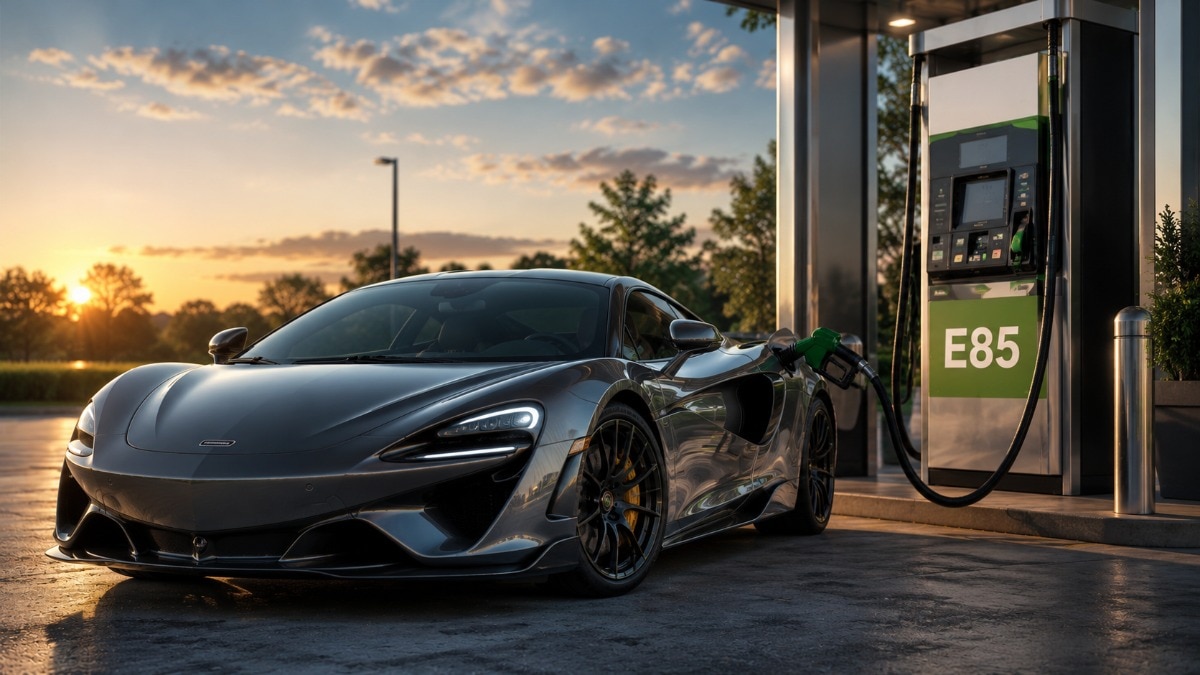
"Formula One cars, which represent the best of performance, use ethanol, so you get much better torque and much better acceleration using ethanol than with petrol," Gulati said. He, however, acknowledged that ethanol's lower energy density is a scientific reality. "The issue really is the lower energy density of ethanol versus petrol. Therefore, your mileage does drop, but there is science behind it. If you look at the chemical formula of the two products and the energy content, you can easily figure out that the difference is going to be around 30 per cent if you're using E100. Some of that can be recovered by engineering the engine to some extent," he explained. The engineering Gulati refers to revolves around ethanol's much higher octane rating. E85 typically has an octane rating of around 105-108 RON, compared to roughly 95 RON for E20. This allows engineers to run higher compression ratios, more aggressive ignition timing and, in turbocharged engines, higher boost pressure without causing engine knock, enabling greater power and torque. Ethanol also absorbs significantly more heat as it evaporates, cooling the intake charge. The cooler, denser air entering the engine contains more oxygen, improving combustion efficiency while further reducing the risk of knocking. These characteristics make ethanol particularly attractive for high-performance engines. Why most road cars won't feel faster on E85 Gulati emphasised that the performance benefits seen in racing applications cannot automatically be expected from everyday fle fuel vehicles.
 The BriefWire