Kielce pogrom in Poland: 80th anniversary of 1946 massacre
Just over a year after World War II ended, a mob in the Polish city of Kielce killed around 40 Jews, some of them Holocaust
Just over a year after World War II ended, a mob in the Polish city of Kielce killed around 40 Jews, some of them Holocaust survivors. A lie about ritual child murder escalated the violence. Eighty years ago, the city of Kielce in southern Poland was the scene of the worst pogrom in postwar Polish history. In 1946, just 14 months after the allies' victory over Nazi Germany and the end of the World War II, an estimated 40 Jewish Holocaust survivors were robbed, beaten and brutally murdered by their neighbors. On the morning of July 4, 1946, an angry mob gathered in front of what was known as the "Jewish House" at 7 Planty Street, the headquarters of several Jewish aid organizations. The two-story building also served as temporary accommodation for over 150 Jews who had survived the Nazi regime, by hiding in Poland or by going into exile in the Soviet Union. These traumatized individuals were trying to build new lives in Poland or planning to emigrate to Palestine. "Death to the Jews!" the mob shouted as they gathered in front of the building, armed with stones and clubs. The house at 7 Planty Str. in Kielce, scene of a massacre Image: Jacek Lepiarz/DW A rumor was spreading around the town: That the Jews had kidnapped and murdered Christian children. A civic militia was sent to the house and they told others they were going to look for children, which only incited the crowd further. Then, instead of protecting the people inside the house, militia members and soldiers shot at the Jews inside and dragged others out to where the crowd could beat them, sometimes to death.
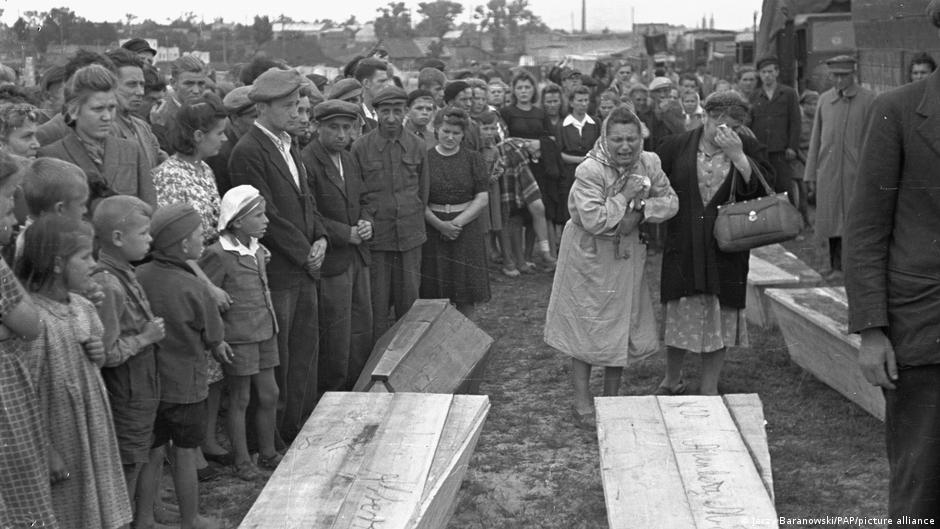
Men and women were thrown from second-floor balconies. "The soldiers started shooting, but not at the attackers, at us," Chil Alpert, who survived the pogrom, later testified. "The soldiers shot at our windows. Inside the house, the military murdered the Jews. They initially shot through the doors, then forced their way in, shooting at people, throwing the victims into the crowd where they were beaten to death." A child's lie The massacre was triggered by a young boy who fabricated a story to avoid getting into trouble. Henryk Blaszczyk, who was either eight or nine at the time, had visited another village near Kielce but didn't tell his parents and was gone for two days. His parents reported him missing. To avoid getting into trouble, Blaszczyk said he had been lured into a trap by a Jew and held captive in a basement with other Polish children. After his father reported the incident at the nearest police station, the boy went on a walk with police officers and identified a Jewish man, a resident of the house on Planty Street, as the alleged kidnapper. The child even pointed out the "Jewish House" as the place he was held captive, although later it became clear that could not have been true. The house does not have a basement. The victims of the pogrom were buried in a mass grave Image: AP Photo/picture alliance A second wave of violence erupted in the early afternoon after the rumor of the murder of children reached workers at the Ludwikow metalworks in Kielce. Several hundred workers then joined the pogrom, armed with their tools.
 The BriefWire