When does a building become unsafe? Check rules in Delhi, Mumbai, Bengaluru
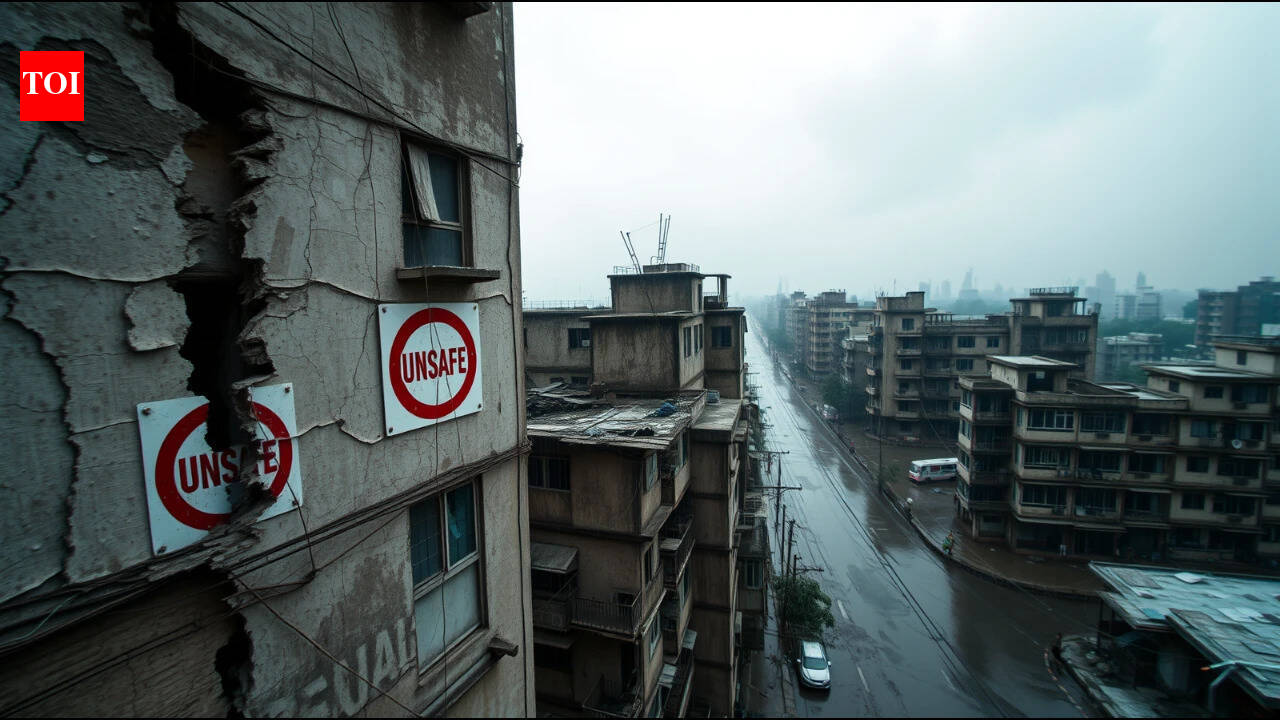
Ageing, unsafe buildings succumbing to the monsoon's relentless downpour, revealing their vulnerability. AI-generated image Delhi Mumbai Section 264: Ruinous or dangerous structures Poll Vote &
Ageing, unsafe buildings succumbing to the monsoon's relentless downpour, revealing their vulnerability. AI-generated image Delhi Mumbai Section 264: Ruinous or dangerous structures Poll Vote & Share your view Do you believe that structural audits are essential for maintaining building safety in urban areas? Strongly Agree Strongly Disagree 3k+ users shared opinion today 5k+ users already voted today 3k+ users shared opinion today Share Opinion Section 265 Periodic inspection duty Section 265A Structural Stability Certificate Section 266 Dangerous openings Section 300 Insanitary buildings (unfit for human habitation) Bengaluru Clause 22 — Definition of "unsafe building" is structurally unsafe, or is insanitary, or lacks adequate means of ingress or egress (escape routes), or constitutes a fire hazard, or is dangerous to human life, or in relation to its existing use, constitutes a hazard to safety, health, or public welfare by reason of poor maintenance, dilapidation, or abandonment. Clause 3.6.4(b) — Land unfit for construction Clause 3.7 — Reconstruction Clause 3.8 — Existing approved buildings Clause 13.6 — Heritage-listed buildings Recent building collapses during the monsoon have once again raised concerns about the safety of ageing residential and commercial structures across India. While cracks in walls, leaking ceilings or visible deterioration may alarm residents, the decision on whether a building is unsafe is governed by municipal laws, structural audits and engineering assessments.A structural audit is one of the key tools used by authorities to determine whether a building remains fit for occupation. However, the rules on when audits are required and what qualifies as an "unsafe" building vary across cities and states.Under Delhi's building bye-laws, an unsafe building is defined broadly as any structure that is structurally unsound, insanitary, lacks adequate means of escape, poses a fire hazard, or is otherwise dangerous to human life, including buildings that, through inadequate maintenance, dilapidation, or abandonment, become a threat to safety, health, or public welfare.Even an existing approved building isn't automatically protected from action; the bye-laws allow its continued use only until the Sanctioning Authority forms the opinion that it has become hazardous to occupants or neighbouring property, at which point removal or alteration can be required.Delhi also layers in environmental compliance audits alongside structural ones.
For buildings between 5,000 and 20,000 sq.m (Category 1), a self-declaration and certification by a Qualified Building Environment Auditor accompany the permission application, with the local authority incorporating environmental conditions into the permit.For buildings bigger than 20,000 sq. m, a dedicated Environment Cell appraises the project, integrates conditions into the building permission, and requires the proponent to submit a Certificate of Continued Compliance every five years covering energy use, water and waste treatment, and green cover, with penalties and possible auditor blacklisting for false declarations.Mumbai Municipal Corporation Act (MMC Act, 1888) offers the criteria under different sections for auditing buildings like 354 (Dangerous Structures), 265A (Structural Stability Certificate), 300 (insanitary), 303 (obstructive).A structure (building, wall, parapet, floor, steps, railings, doors, windows, roof, or anything projecting from it) is actionable if it is "in a ruinous condition or likely to fall, or in any way dangerous" to anyone occupying, passing by, or in the neighbourhood. On this finding, the Designated Officer can order the owner to pull down, secure, remove, or repair it — and if the danger is imminent, can act immediately without waiting out the notice period.Every owner must maintain the building "to prevent its becoming dangerous." The Commissioner can order periodic inspections; if repairs are found necessary "for the purpose of securing the stability of the structure," the owner must complete them within two months and certify compliance.This is the core "structural audit" provision: once a building turns 30 years old (from completion certificate, occupation permission, or 50% physical occupation, whichever is earliest), the owner must get it examined by a registered Structural Engineer and submit a Structural Stability Certificate confirming fitness for human habitation, within a year of that 30-year mark, and every 10 years thereafter (or earlier if the Commissioner directs).
 The BriefWire