Google, Amazon emissions rise sharply, driven by AI boom
US tech giants Google and Amazon have reported a strong increase in greenhouse gas emissions in 2025. AI data centers are behind the rise, challenging
US tech giants Google and Amazon have reported a strong increase in greenhouse gas emissions in 2025. AI data centers are behind the rise, challenging the companies' climate pledges. Google warned that reaching its climate goals was "getting harder" amid the AI boom, with the business reporting a 16% annual jump in its carbon emissions. "Our AI infrastructure buildout is currently accelerating faster than the grid is decarbonizing," said Kate Brandt, Google's chief sustainability officer. The company's report for 2025, released on Tuesday, came just a day before Amazon published its own figures, showing an 18% rise compared to 2024. Put in a long-term perspective, Amazon, which emitted 80.85 million tons of CO2 equivalent last year, saw a 58% increase compared to 2019. Google, which had 18.8 million tons of CO2-equivalent emissions, saw an 82% rise in the same period.
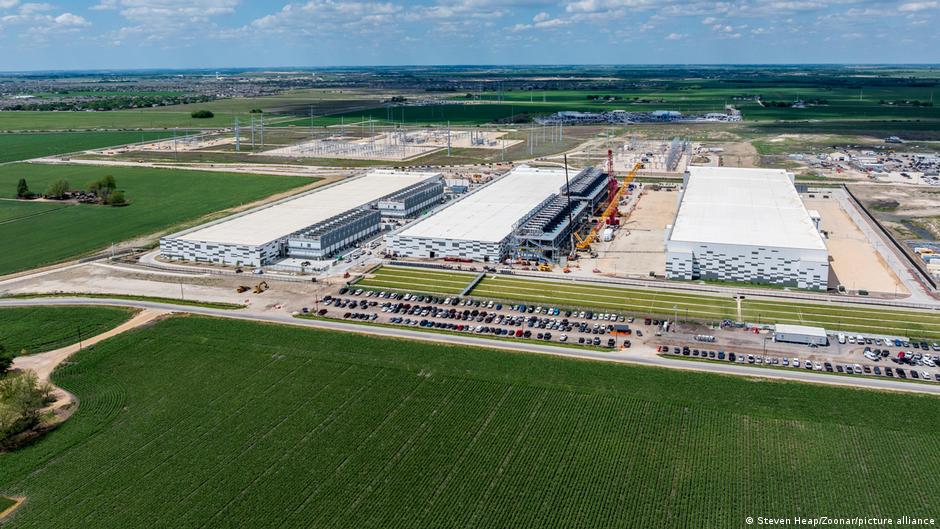
Amazon's emissions are more than those of the entire country of Austria (71 million tons) or Greece (71.5 million tons) and less than the Netherlands (145 million tons), according to 2024 figures from the EU's Emissions Database for Global Atmospheric Research. AI fuels tech giants' emissions Both Big Tech companies have invested heavily in AI data center construction. Amazon's emissions from buying electricity rose by 34% in the last year, which the company attributed to the data center boom and the electrification of its delivery network. Google also pointed to the resources needed to construct and run data centers, as well as the supply chain for chips and servers, to explain its growing carbon footprint. Why people are throwing AI data centers into the ocean To view this video please enable JavaScript, and consider upgrading to a web browser that supports HTML5 video Google, Amazon climate goals growing distant The large rise in emissions has cast doubt on both tech companies' climate goals.
Amazon, for its part, has pledged to reach net-zero carbon emissions by 2040. But in this week's report, Kara Hurst, Amazon's chief sustainability officer, acknowledged new hurdles toward reaching the company's climate benchmarks. "We may be able to move faster — or the demand may slow us down," Hurst said on the impact of AI technology on Amazon's environmental targets. Google's climate pledge is to cut its 2019-level emissions in half by 2030. AI poses a challenge to climate action In the past, sustainability reports such as these have served to showcase the companies' climate achievements — but the AI boom of recent years has transformed their function, highlighting the increased energy consumption. Even so, both of the US digital platforms made an effort to spin the latest data to their advantage. For instance, Google claims that, had it not introduced its decarbonization initiatives, its 2025 emissions would be five times higher.
 The BriefWire