'China Out Of Tibet': Activist’s Fatal Protest Outside UN Sparks Global Outcry Over Beijing’s New Ethnic Law | Exclusive Details
'China Out Of Tibet': Activist’s Fatal Protest Outside UN Sparks Global Outcry Over Beijing’s New Ethnic Law | Exclusive Details Reported By, Last Updated: July
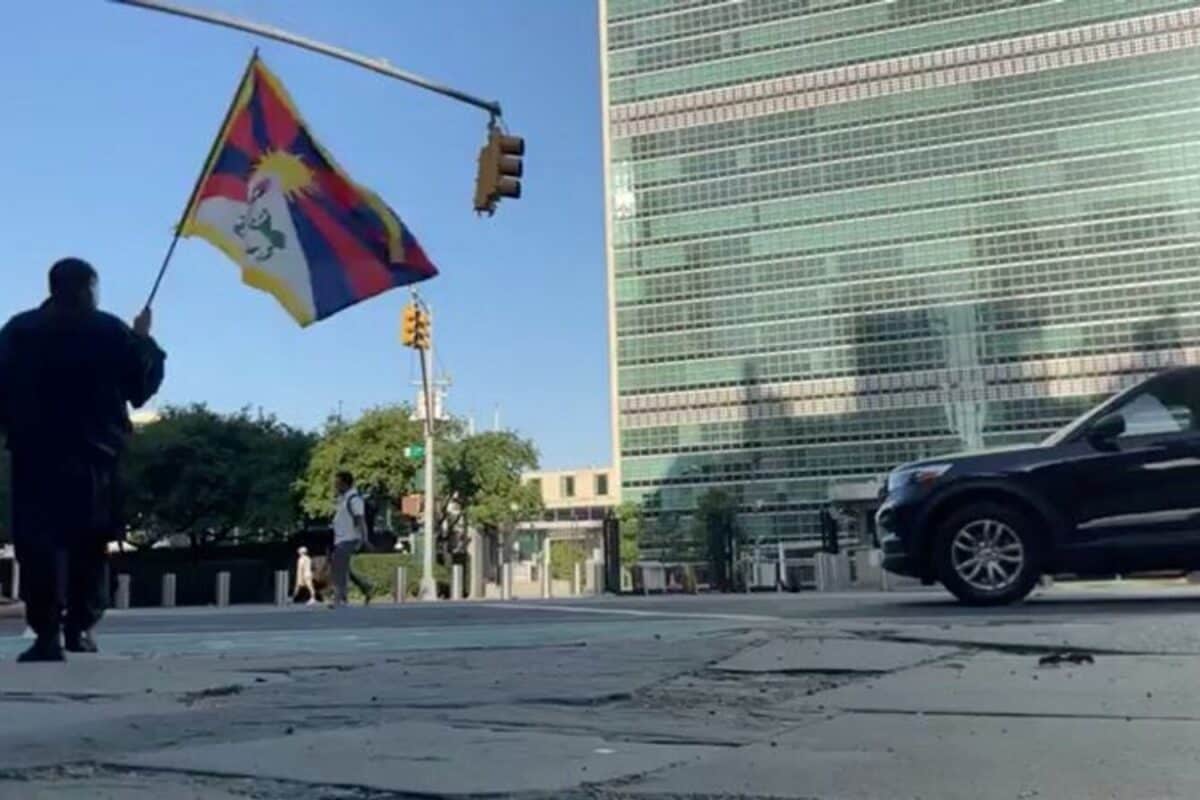
'China Out Of Tibet': Activist’s Fatal Protest Outside UN Sparks Global Outcry Over Beijing’s New Ethnic Law | Exclusive Details Reported By, Last Updated: July 03, 2026, 19:14 IST Critics say the law provides a direct mechanism for China to monitor, intimidate, and target the Tibetan diaspora and human rights advocates worldwide The incident occurred just twenty-four hours after Beijing officially implemented its highly controversial Law on Promoting Ethnic Unity and Progress. Pic/Reuters A Tibetan independence activist has died after setting himself on fire outside the United Nations Headquarters in New York City, in what exile groups are calling a final, tragic act of protest against Chinese repression. Lobga Rangzen, a 42-year-old Tibetan refugee who worked as an Uber driver and served as a regional leader for the Tibetan Congress, carried a Tibetan flag to the scene before self-immolating during the evening rush hour. He was rushed to Bellevue Hospital, where he later succumbed to severe burn injuries.
Leaving behind a written message reading “CHINA OUT OF TIBET“, Rangzen’s actions have thrown a stark international spotlight on a major legislative shift inside China. The incident occurred just twenty-four hours after Beijing officially implemented its highly controversial Law on Promoting Ethnic Unity and Progress. While Chinese state officials frame the new legal guidelines as an effort to foster national cohesion, human rights groups and international observers have condemned the framework as the systematic, legalised codification of cultural erasure. Global Scope and Extraterritorial Policing The most alarming facet of the new law lies in its unprecedented global ambitions. Under Article 63, the Chinese government has established a formal framework that extends its legal reach far beyond its physical borders. The clause explicitly states that individuals, activists, or organisations operating entirely outside of China can be held legally accountable if Beijing determines that their statements or actions undermine national ethnic unity. Legal experts and diplomats warn that this clause provides a direct mechanism for China to monitor, intimidate, and target the Tibetan diaspora and human rights advocates worldwide.
Both the United States and the European Union have raised deep apprehensions over this extraterritorial overreach, with the US State Department calling the law highly problematic for attempting to coerce people globally into promoting the Chinese Communist Party’s domestic agenda under the threat of retaliation. Systematic Criminalisation of Culture According to top Tibetan sources, the enactment of this legislation marks a dangerous shift from sporadic bureaucratic pressure to permanent, institutionalised police state tactics. Previously, the Sinicisation of Tibet—forcing alignment with Han culture—was carried out through localised school directives or temporary security crackdowns. By writing forced assimilation directly into federal statute, Beijing has given regional authorities a permanent, standardised mandate to dismantle Tibetan identity. Under this strict counter-terrorism framework, traditional practices and everyday acts of cultural survival are now being prosecuted as federal crimes against national security. Activities such as a monk teaching traditional Tibetan script or a family holding a conventional gathering are no longer merely culturally discouraged; they are legally treated as acts of separatism.
 The BriefWire