Can inspectors return to Iran's nuclear sites?
The UN nuclear watchdog says inspections of Iran's nuclear program are possible in principle. The bigger question is whether Tehran will allow meaningful access. International
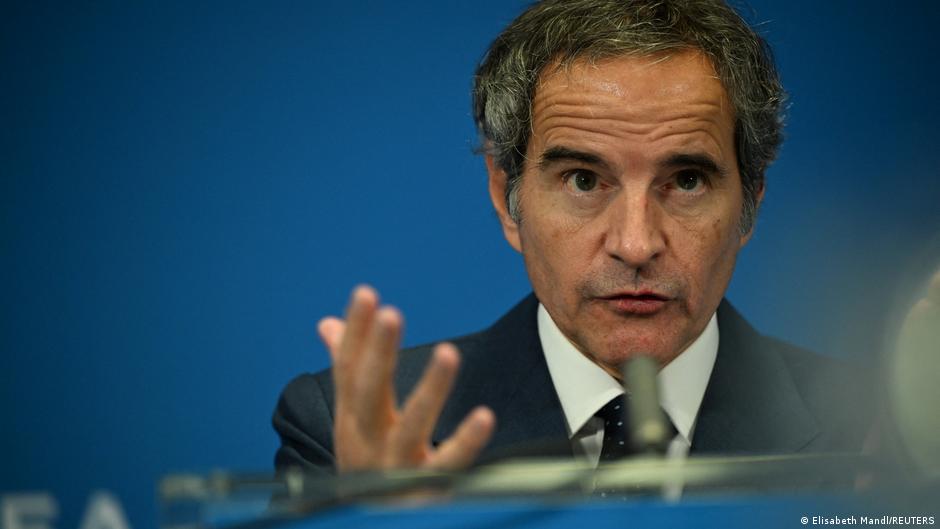
The UN nuclear watchdog says inspections of Iran's nuclear program are possible in principle. The bigger question is whether Tehran will allow meaningful access. International Atomic Energy Agency (IAEA) head Rafael Grossi is confident that the UN nuclear watchdog will inspect Iranian nuclear sites in the foreseeable future. Grossi told reporters on Wednesday that the interim deal signed by Iran and the United States provides for such inspections. "Whether this happens the day after tomorrow or in one week or in 10 days, it's important, but not essential," Grossi said. "This is going to happen." In response to Grossi's remarks, Iran's deputy foreign minister, Kasem Gharibabadi, said that these issues "will be reviewed and decided only within the framework of a final agreement" and after progress was made with regard to ending sanctions against Tehran. Iran's parliamentary speaker and head of the negotiating team called the interim deal a US 'declaration of defeat' Image: Icana/ZUMA/picture alliance Iran's ambassador to the United Nations in Geneva also recently stressed that Tehran had not yet agreed to the return of IAEA inspectors into the country. Inspections face political obstacles The question is therefore whether the new agreement can actually facilitate the international oversight of Iran's nuclear program. Experts say comprehensive inspections would be possible in principle. Politically, however, considerable obstacles remain. "Uranium enrichment takes place in large, conspicuous industrial plants," said Georg Steinhauser, a radiochemistry professor at the Vienna University of Technology (TU Wien).
"So it's inconceivable that someone secretly builds an atomic bomb in a basement and only shows the inspectors the ground floor," Steinhauser told DW. Uranium enrichment is an extraordinarily complex process that requires massive plants and thousands of centrifuges. As a result, such programs are generally considered easier to monitor and verify than activities that leave a smaller industrial footprint. Hessam Habibi Doroh, a political scientist from the Institute for Peace Support and Conflict Management (IFK) in Vienna, said it is positive that inspections and greater transparency are once again being discussed in Iran. However, he noted that there are considerable political reservations. A law passed by the Iranian parliament significantly restricts cooperation with the IAEA. "There are currently quite influential voices in parliament that speak out against comprehensive inspections," Habibi Doroh told DW. Uranium enriched to 60% The IAEA itself stresses that its main challenge at present is not a lack of technical capabilities. In a recent report, the agency noted that it has lost access to key uranium enrichment facilities since last year's attacks on Iranian nuclear sites. Currently, surveillance is based primarily on satellite images. The IAEA can therefore no longer verify whether Iran has stopped uranium enrichment, where the existing uranium stockpiles are located or how many centrifuges are still in operation. According to the IAEA, Iran still has around 440 kilograms (970 pounds) of uranium with an enrichment level of about 60%.
 The BriefWire