Right-wing AfD threatens eastern Germany's energy transition
Germany's right-wing AfD wants to revive coal and nuclear power and curb non-EU immigration. Businesses in eastern Germany warn that its policies could harm the
Germany's right-wing AfD wants to revive coal and nuclear power and curb non-EU immigration. Businesses in eastern Germany warn that its policies could harm the economy. Hannes Loth drives an electric car and wants to install wind turbines in his municipality. Loth, Germany's first full-time mayor from the right-wing, populist Alternative for Germany (AfD), is promoting the expansion of renewable energy — even though it runs counter to his party's platform. The farmer has been mayor of Raguhn-Jeßnitz since 2023 and has ambitious plans. In the town of around 8,600 people in the eastern German state of Saxony-Anhalt, he wants to build a battery storage facility with a substation, and six new wind turbines. Tilo Hörtzsch, a local councilor for the conservative Christian Democratic Union (CDU) in Raguhn-Jeßnitz, confirmed the plans. "Mr. Loth isn't someone who brings ideology into everything," the owner of a local electrical engineering company told DW. "We need these key technologies in Saxony-Anhalt — they're important." Fears of a policy reversal With the AfD's polling numbers rising ahead of the state election in Saxony-Anhalt on September 6, Hörtzsch fears the state could reverse course politically. "I'm worried we could end up taking a step backwards," he said. His concerns are not unfounded. In its election manifesto for Saxony-Anhalt, the AfD pledges to "halt the coal phase-out, initiate a return to nuclear power and end energy-related sanctions against Russia." It also wants to impose a moratorium on new wind turbines and a halt to the admission of non-EU nationals.
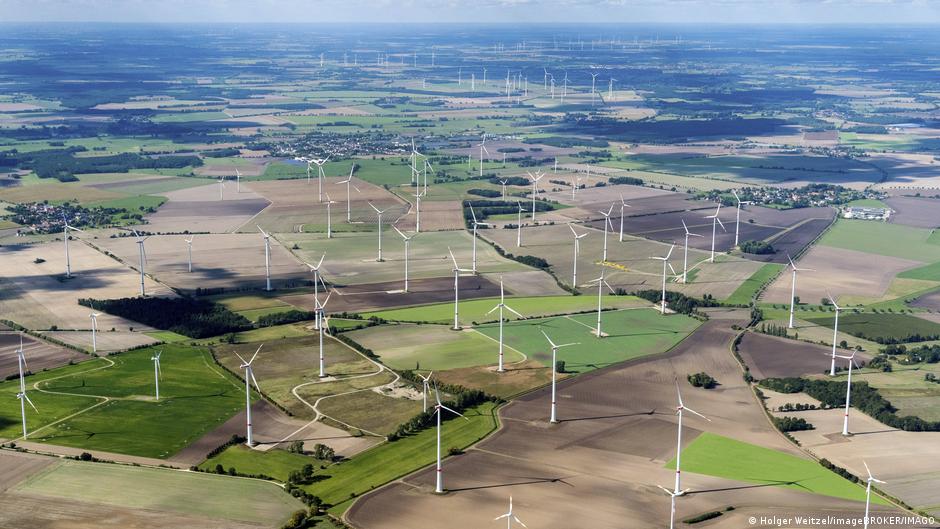
According to the latest opinion polls, the AfD — led by its top candidate Ulrich Siegmund — is polling at around 41% in Saxony-Anhalt. The CDU's candidate, incumbent state premier Sven Schulze, is on around 26%, according to infratest dimap, a polling institute. Saxony-Anhalt is one of Germany's pioneers in the transition to renewable energy. Thanks to its extensive wind and solar power capacity, renewable sources accounted for 57% of the state's gross electricity consumption in 2025, according to the German Environment Agency. By comparison, the nationwide figure was 55%. Wind power faces political headwinds It's something of a parado The eastern German states of Saxony-Anhalt, Brandenburg and Mecklenburg-Vorpommern are among the country's leaders in expanding renewable energy, yet they are also where the AfD has made significant electoral gains. For pollster Roland Abold, managing director of infratest dimap, economic issues such as the state's energy mix "play a relatively minor role in the voting decisions of AfD supporters in Saxony-Anhalt." "According to our latest survey from May 2026, the issues voters in Saxony-Anhalt consider most important are refugees and asylum policy, followed by education and the economy," he told DW. New report backs ban of German far-right party To view this video please enable JavaScript, and consider upgrading to a web browser that supports HTML5 video Johannes Kieß, a researcher specialising in right-wing extremism at Leipzig University, offers another explanation.
 The BriefWire