Can Your Electric Cars Or Bikes Be Hacked? Experts Explain After E-Rickshaw Shutdown Videos Go Viral
Can Your Electric Cars Or Bikes Be Hacked? Experts Explain After E-Rickshaw Shutdown Videos Go Viral Reported By, Last Updated: July 03, 2026, 18:18 IST
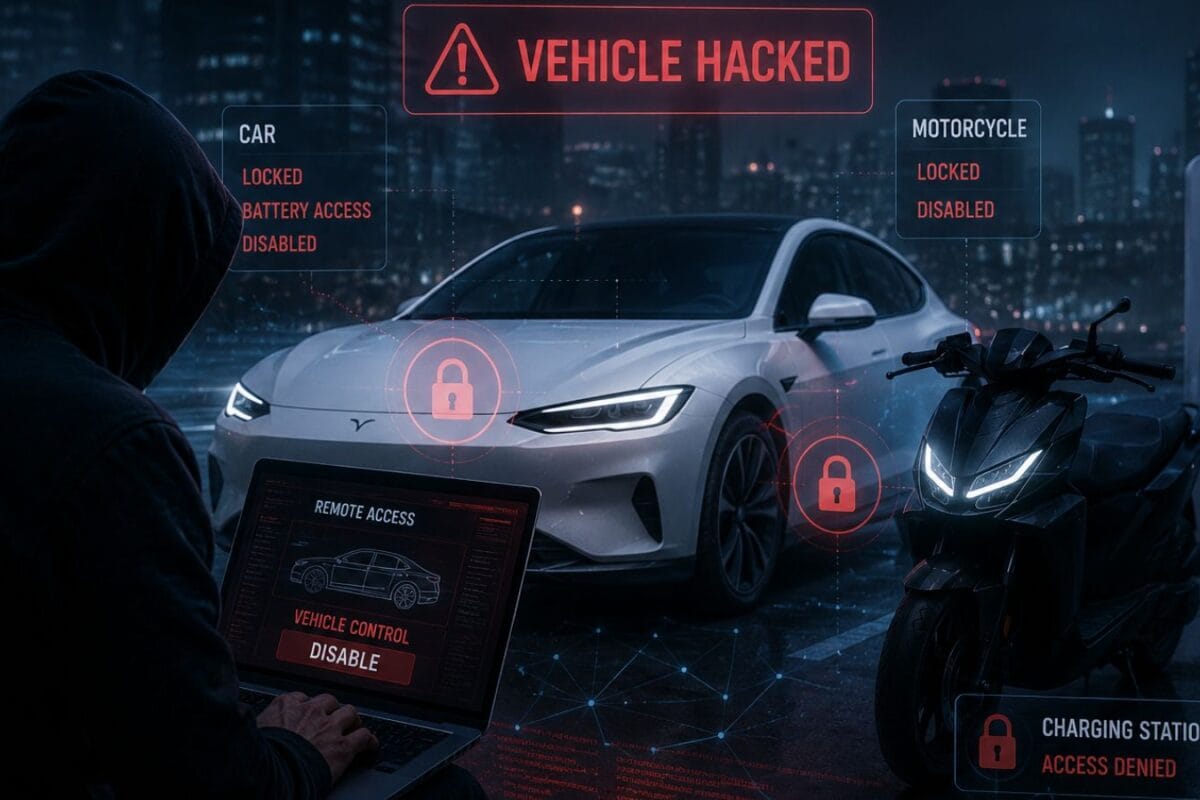
Can Your Electric Cars Or Bikes Be Hacked? Experts Explain After E-Rickshaw Shutdown Videos Go Viral Reported By, Last Updated: July 03, 2026, 18:18 IST Experts say modern EVs are essentially computers on wheels, relying on software, sensors, wireless connectivity and cloud services. Rapid Read Vikash Chaudhary, Founder and CEO of HackersEra Automotive Cybersecurity, identified Bluetooth connectivity, diagnostic systems, telematics applications, charging infrastructure and over-the-air (OTA) software updates as the biggest cybersecurity risk areas. (AI-generated photo) Imagine driving your car when, without warning, someone remotely disables it. While such scenes are common in Hollywood movies like The Fate of the Furious, recent incidents involving e-rickshaws in India have raised fresh questions about the cybersecurity of connected vehicles. The controversy erupted after videos showed people allegedly using a smartphone application called BAT-BMS to remotely disable moving e-rickshaws through Bluetooth. The incident prompted the Ministry of Electronics and Information Technology (MeitY) to direct the removal of three mobile applications—BAT-BMS, Epoch-i-ion and Lossigy—from Android and iOS app stores after concerns that they were being misused. How Were E-Rickshaws Being Disabled? Many lithium-ion batteries used in e-rickshaws are equipped with Bluetooth-enabled Battery Management Systems (BMS), allowing owners to monitor battery health through mobile applications. Cybersecurity experts say some of these systems lack proper authentication, allowing anyone within Bluetooth range to connect and disable the battery’s discharge function, abruptly stopping the vehicle. Older lead-acid battery-powered e-rickshaws are generally unaffected. The alleged misuse has left drivers worried. “Some people are locking the battery using the app. Now, e-rickshaw drivers also have to download the same application to unlock it in an emergency. Sometimes only the person who has the app can unlock the battery.
It is creating huge problems for drivers. If the e-rickshaw stops on the main road, it becomes a major safety risk," said Mohammad Siraj, an e-rickshaw driver in Delhi. Cybersecurity expert Dr Rakshit Tandon said the issue stems from poor implementation rather than sophisticated hacking. “A lot of these low-cost e-rickshaws have Bluetooth-enabled batteries but no authentication. Owners should either get Bluetooth disabled by the vendor or pair the battery with their own phone. Once it is paired, another device generally cannot connect, which significantly reduces the risk of misuse," he said. Can Electric Cars, Bikes Be Hacked? The incident has naturally raised questions over whether electric cars and bikes are also vulnerable. Experts say modern EVs are essentially computers on wheels, relying on software, sensors, wireless connectivity and cloud services. However, the risk is not unique to electric vehicles. Modern petrol and diesel cars also contain dozens of electronic control units (ECUs), wireless communication systems and connected features that could become targets if vulnerabilities exist. One of the best-known examples came in 2022 when German security researcher David Colombo demonstrated remote access to certain functions of 25 Tesla vehicles across 13 countries. The incident, however, resulted from exposed credentials on third-party software rather than a vulnerability in Tesla’s own systems. A government official, speaking to News18.com on condition of anonymity, said the possibility of cyberattacks/hacking of EVs cannot be ruled out. “There is always a potential for hacking. In many cases, an attacker would first need physical access to the vehicle, such as connecting a laptop to the On-Board Diagnostics (OBD) port. Whether there is a practical exploit available today is debatable, but you can never say the threat does not exist," the official said.
 The BriefWire