Oil slips to pre-Iran war levels: Is a petrol, diesel price cut coming?
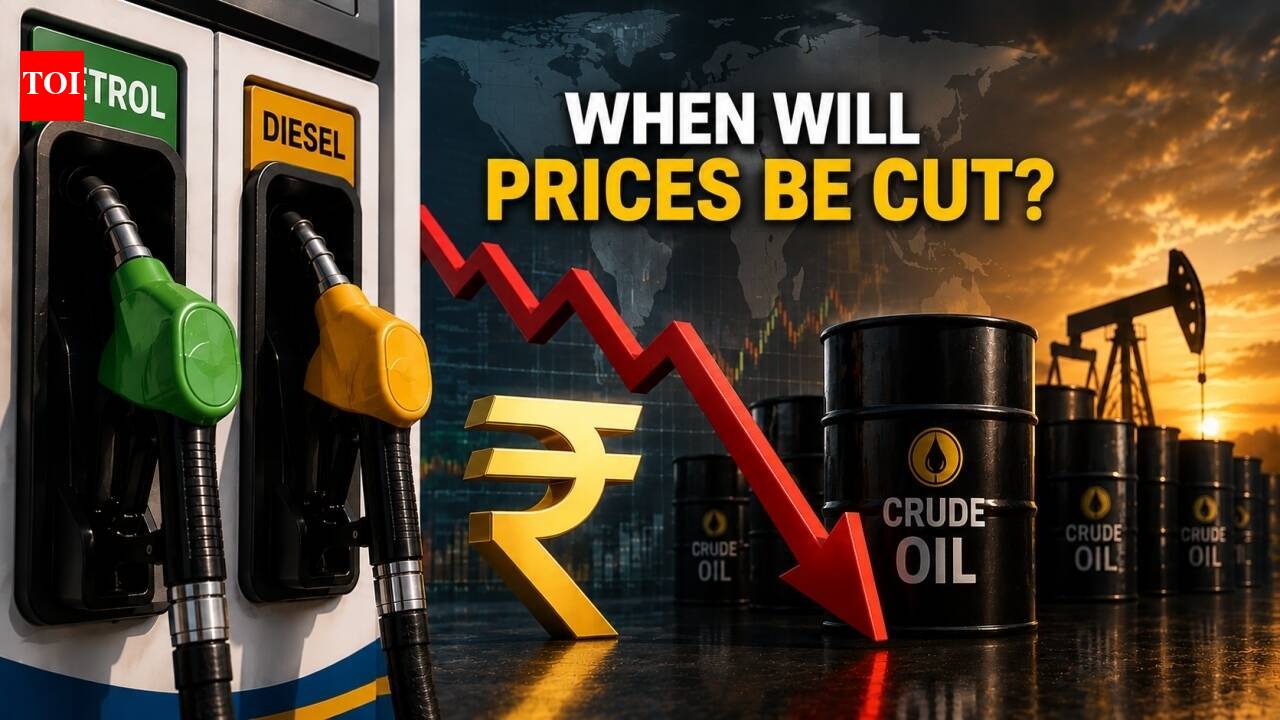
When will state-run oil marketing companies like Indian Oil Corporation, Hindustan Petroleum, and Bharat Petroleum cut rates? (AI image) Excise duty cut: The government revenue
When will state-run oil marketing companies like Indian Oil Corporation, Hindustan Petroleum, and Bharat Petroleum cut rates? (AI image) Excise duty cut: The government revenue loss OMCs suffer losses Brent crude futures: The rise and fall Why petrol, diesel prices have not been cut so far Wait-and-watch mode What Oil minister has said Case for strategic pricing reserves Global crude oil prices have crashed to a four month low and are now hovering around the pre-war levels. From around $120 per barrel to near $70 per barrel - the crash has been driven by the US-Iran ceasefire and reopening of the Strait of Hormuz. The big question now is: when will petrol and diesel prices come down in India?Petrol and diesel prices in India have risen by around Rs 7.5 per litre since May 15. The first hike in the retail rates came over two and a half months after the US-Iran war began. Private retailer Nayara Energy has already cut rates of petrol and diesel. So when will state-run oil marketing companies like Indian Oil Corporation, Hindustan Petroleum, and Bharat Petroleum cut rates? Not soon, indicate experts.According to the government, India’s hike in petrol and diesel rates was much less compared to the rise seen in other major economies of the world. There are several reasons why petrol and diesel prices may not come down anytime soon.The fundamental reason is the same as why India did not see a big hike in petrol and diesel rates in line with the global economies.The government cut excise duties on petrol and diesel, hence absorbing the impact of higher crude prices in the form of a revenue loss.The excise duties were cut by Rs 10 per litre on petrol and diesel, resulting in a fortnightly revenue loss of around Rs 7,000 crore per fortnight, according estimates.It’s important to understand that the government's move to reduce excise duties is not a long-term structural change. It’s a response to the crisis, and is hence likely to be temporary in nature.In fact, DK Srivastava, Chief Policy Advisor, EY India is of the view that a price cut and restoration of excise duties is likely to be related.“These two actions may be taken close to each other. The government may restore excise duties on petrol and diesel ahead of price cut after making an assessment of its fiscal situation,” he says.Sourav Mitra, Partner – Oil & Gas, Grant Thornton Bharat cites historical precedent: When global crude prices fall sharply, the government has often increased excise duties on petrol and diesel to capture part of the benefit and support fiscal revenues, rather than immediately passing through the full benefit to consumers.“The same logic is likely to be applied in reverse: as crude prices decline, the Centre will first roll back the emergency excise concessions, either partially or fully, before considering any reduction in retail prices,” he tells TOI.Ranen Banerjee, Partner and Leader, Economic Advisory, PwC India also points to other expenditures or taxes foregone by the government.“Given the requirement for the government to continue with the capex push and impending pay commission related pressures on the fiscal that are on the horizon, the government could continue with the higher prices,” he tells TOI.Oil marketing companies are still losing crores every day at the current retail rates.
 The BriefWire