Texas school was secretly using stolen gas to heat its classrooms, then one invisible leak killed 295 people in seconds
How stolen natural gas ended up heating a Texas school An invisible danger building beneath the classrooms The spark that destroyed a school in seconds
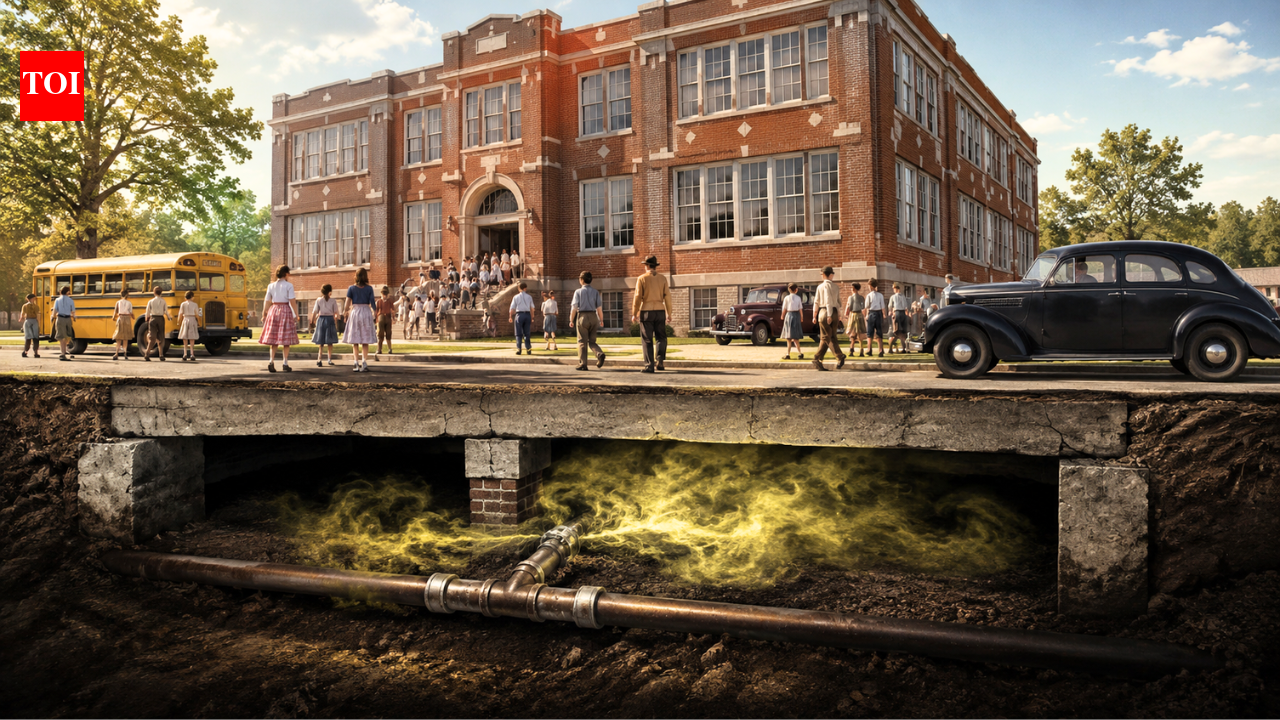
How stolen natural gas ended up heating a Texas school An invisible danger building beneath the classrooms The spark that destroyed a school in seconds The deadliest school disaster in US history The tragedy that changed natural gas safety forever A safety measure born from tragedy A disaster whose legacy still protects millions A routine school day in the small town of New London, Texas, turned into one of the deadliest disasters in American history when a massive explosion ripped through the New London Consolidated School, reducing much of the five-year-old building to rubble in just a few seconds. By the time the dust settled, 295 people, most of them children, had lost their lives, making it the deadliest school disaster in US history. The tragedy unfolded on March 18, 1937, after an odorless natural gas leak beneath the school ignited without warning. Investigators later discovered that the school had been using natural gas taken illegally from a nearby pipeline, a cost-cutting decision that ultimately transformed gas safety regulations around the world.During the 1930s, the New London Consolidated School District stood in the middle of the East Texas Oil Field, one of the richest oil-producing regions in the United States.The school was originally supplied with natural gas by a utility company. However, as the Great Depression put pressure on public finances, officials looked for ways to reduce heating costs.
They disconnected from the paid gas supply and secretly tapped into a pipeline carrying residue natural gas, a by-product of oil production that was often treated as waste.The fuel was essentially free, but it came with a dangerous drawback. Because the pipeline was not part of a regulated public gas system, there were no safeguards to detect leaks or ensure the installation was safe.The gas flowing through the pipeline had no smell at all.Unlike the natural gas supplied to homes today, it contained no warning odorant. As a result, leaking gas slowly accumulated inside the crawlspace beneath the school building without anyone noticing.For days, and possibly weeks, the invisible gas spread beneath classrooms, corridors and offices. Students attended lessons, teachers carried on with their work and hundreds of people walked above an increasingly dangerous pocket of explosive gas, completely unaware of what was happening below their feet.At about 3.17 pm on March 18, 1937, a shop teacher switched on an electric sander during a manual training class.Investigators concluded that the electrical spark ignited the gas trapped beneath the building.The explosion was so powerful that much of the steel-and-concrete school collapsed in roughly nine seconds. The blast was felt up to 40 miles (64 kilometres) away, overturned cars parked outside and threw massive slabs of concrete hundreds of feet across the surrounding area.Parents, volunteers and rescue workers rushed to the scene, digging through the wreckage with their bare hands in a desperate search for survivors.Around 700 students, teachers and staff were believed to have been inside the school when the explosion occurred.The official death toll stands at 295 people, although some historians believe the true number may have been slightly higher because records from the time were incomplete.
 The BriefWire