After the Great Wall of China, Africa is building an 8,000-km 'Wall of Trees' to fight climate change, restore land and feed millions
What is Africa's 8,000-km 'Wall of Trees'? Why does Africa need a 'Wall of Trees'? It is much more than planting trees The numbers behind
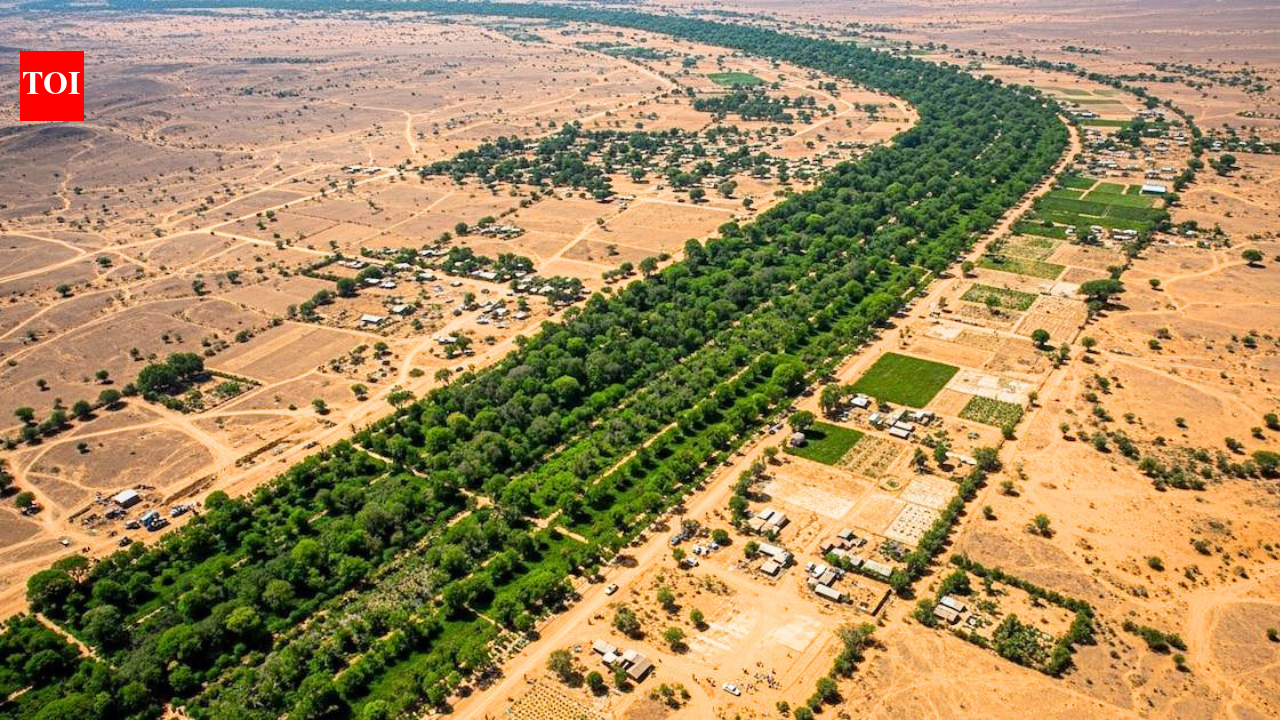
What is Africa's 8,000-km 'Wall of Trees'? Why does Africa need a 'Wall of Trees'? It is much more than planting trees The numbers behind the project Restore 100 million hectares of degraded land, an area roughly the size of Egypt. Capture 250 million tonnes of carbon dioxide from the atmosphere. Create 10 million green jobs across Africa. Improve food security and livelihoods for millions of people living in the Sahel. Progress has already begun Restoring nature One of the world's biggest climate projects A living wall for the future Stretching from the Atlantic coast of Senegal to the shores of Djibouti on the Red Sea, Africa is undertaking one of the most ambitious environmental projects ever attempted. Known as the Great Green Wall, the initiative spans around 8,000 kilometres across the Sahel, a vast semi-arid region bordering the Sahara Desert. Its goal is far more than planting trees. The project aims to restore degraded land, tackle desertification, strengthen food security, create millions of jobs and help communities adapt to climate change. The Great Green Wall combines tree planting with the restoration of forests, grasslands, farmland and wetlands, bringing life back to one of the world's most climate-vulnerable regions.The Great Green Wall was launched by the African Union in 2007 as a long-term effort to combat the growing environmental challenges facing the Sahel.
The region stretches across the width of Africa, separating the Sahara Desert from the greener savannas further south.The original vision was to create a continuous belt of trees approximately 8,000 kilometres long and about 15 kilometres wide. Over time, however, scientists and conservationists realised that restoring landscapes would be far more effective than planting a single line of trees. Today, the initiative focuses on reviving forests, grasslands, wetlands, farmland and native vegetation according to local conditions.For decades, the Sahel has faced the combined impacts of desertification, prolonged droughts, land degradation and climate change.Millions of people living across the region depend on farming and livestock for their livelihoods. As fertile land has deteriorated and rainfall has become increasingly unpredictable, communities have struggled with declining crop yields, food insecurity and poverty.The Great Green Wall seeks to reverse this trend by restoring healthy soils, improving water retention, increasing vegetation cover and making farmland more productive. The initiative is also expected to strengthen biodiversity and reduce the pressure that forces many people to leave their homes in search of better opportunities.Despite its name, the Great Green Wall is not a single uninterrupted line of trees stretching across the continent.Instead, it is a collection of restoration projects tailored to local ecosystems.
 The BriefWire