Crocodile wedding: A Mexican mayor marries a caiman every year, but the real story is about people and nature
Why a Mexican mayor marry a caiman every year? An ancient peace agreement still remembered today A bride unlike any other The moment that captures
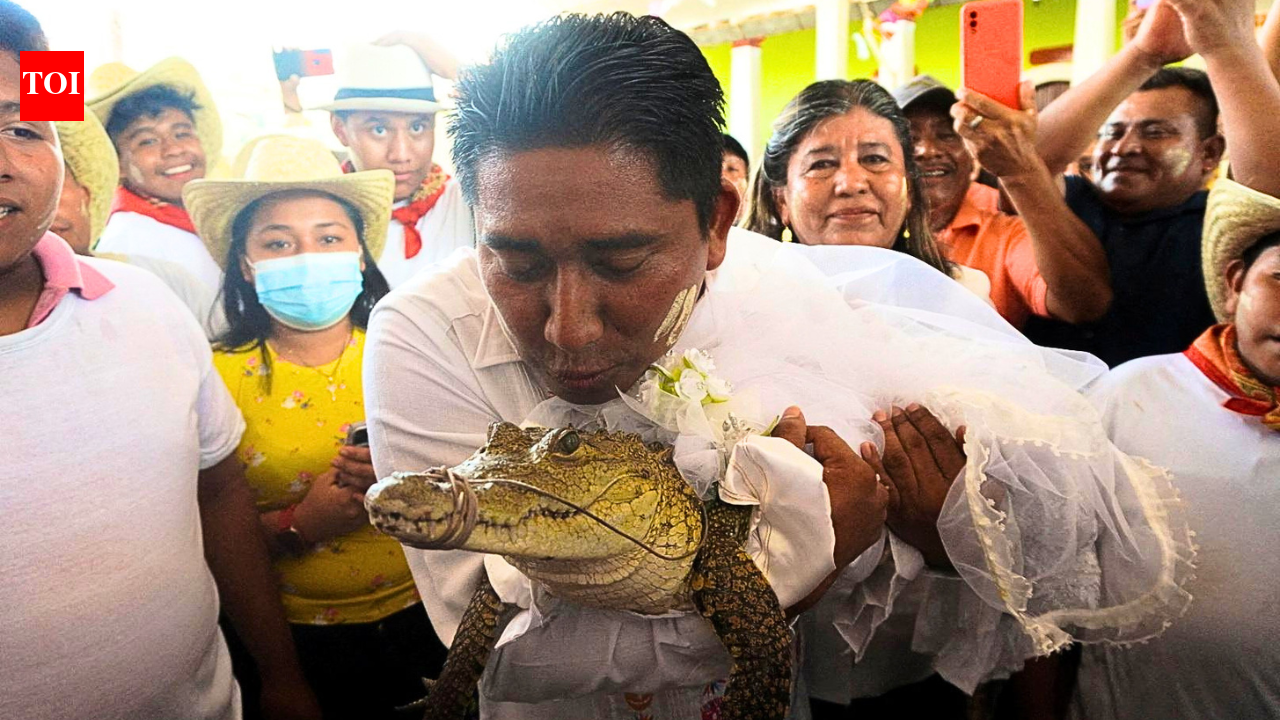
Why a Mexican mayor marry a caiman every year? An ancient peace agreement still remembered today A bride unlike any other The moment that captures the world's attention A tradition where Indigenous beliefs meet Catholic faith More than an unusual festival Every year, a small town in southern Mexico stages one of the world's most unusual wedding ceremonies. A mayor dresses for the occasion, a bride wears a white gown adorned with flowers, music fills the streets, and hundreds of residents gather to celebrate. The only difference is that the bride is not a person but a female caiman, a crocodile-like reptile native to Central and South America. At first glance, the ceremony appears bizarre, but for the people of San Pedro Huamelula in the Mexican state of Oaxaca, it is a sacred tradition that symbolises harmony with nature, peace between Indigenous communities and hopes for prosperity in the year ahead.The symbolic wedding is held every year in San Pedro Huamelula, a coastal town in the Mexican state of Oaxaca. The ceremony is believed to be more than 230 years old, although local historians say its roots stretch back even further to pre-Hispanic Indigenous traditions.The groom is the town's mayor, while the bride is a female caiman, locally regarded as an Indigenous princess and a symbol of Mother Earth.
This year's ceremony was led by Mayor Daniel Gutierrez, who symbolically married a caiman named Ana Cintia Ramirez Ahumada.Far from being a publicity stunt, the ceremony is one of the town's most cherished cultural events and forms part of annual celebrations honouring Saint Peter the Apostle, the community's patron saint.Despite its unusual appearance, the ceremony is not about marrying an animal. Instead, it represents the bond between people and the natural world.For generations, residents have believed the symbolic union brings good harvests, plentiful fishing, rain, peace and prosperity. These blessings are especially important in a community where many families have traditionally depended on farming, fishing and coastal resources for their livelihoods.To locals, the caiman represents the natural world that sustains them, while the mayor symbolises the community. Their ceremonial marriage serves as a reminder that people and nature thrive only when they exist in harmony.The ritual also commemorates an old Indigenous legend.According to local tradition, the symbolic marriage recalls a historic alliance between the Chontal and Huave (Ikoots) peoples. Legend says that centuries ago, a marriage between a Chontal king and a Huave princess ended conflict between the two communities and brought peace.Today, the mayor represents the Chontal ruler, while the caiman symbolises the Huave princess. The annual wedding celebrates unity, friendship and cooperation between the two Indigenous cultures.Long before the ceremony begins, the caiman is treated much like any other bride.She is dressed in a white wedding gown before later changing into colourful traditional Indigenous clothing decorated with ribbons, flowers and elaborate headpieces.
 The BriefWire