AI drones made in Germany see duty on Ukraine's front line
The German defense company Helsing is supplying combat drones to Ukraine and will soon provide them to the Bundeswehr. How effective are they on the
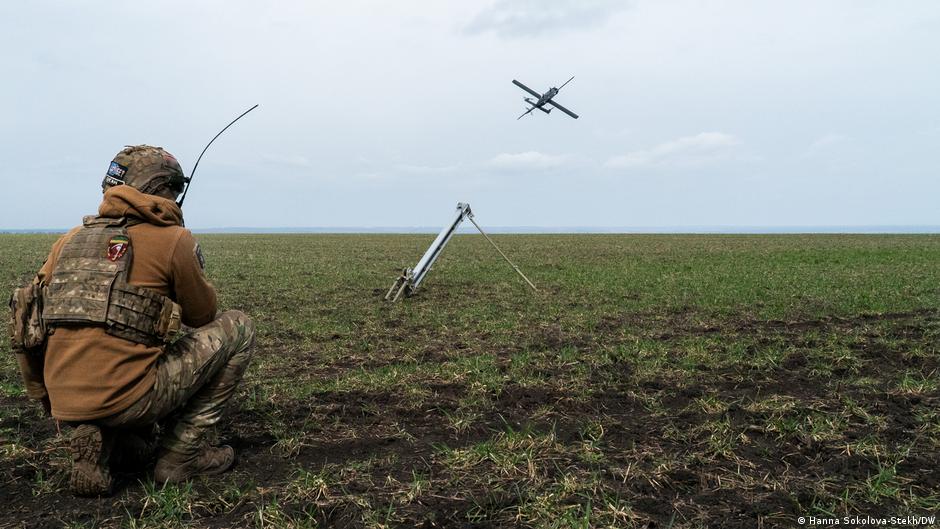
The German defense company Helsing is supplying combat drones to Ukraine and will soon provide them to the Bundeswehr. How effective are they on the front line? DW joined a Ukrainian combat mission to find out. In a forested strip, two Ukrainian soldiers — a technician and an electrician — attach wings to a large black box. The kit is an H 2 combat drone from the German manufacturer Helsing, equipped with artificial intelligence. The billion-dollar startup from Bavaria is supplying thousands of these to the Ukrainian military, funded by the German government. Germany's armed forces have also recently awarded Helsing a multimillion-euro contract. At the beginning of the year, critical reports about the drones appeared in Western media, including German outlets. They cited Ukrainian soldiers who reportedly identified technical issues during test deployments last year. According to a report by the newspaper Die Welt, many drones were not flight-ready or crashed shortly after takeoff. The hit rate was also said to be low. Its report quoted Ukrainian soldiers fighting at the front in eastern Ukraine. The manufacturer, however, refuted these reports. "Members of the Ukrainian armed forces are testing the H 2 drone together with Helsing staff at the front," a spokesperson told DW at the end of January. The first results of the tests, it said, were "encouraging." How Ukraine's drone pilots help hold front near Pokrovsk To view this video please enable JavaScript, and consider upgrading to a web browser that supports HTML5 video Combat deployment near Pokrovsk The soldiers repeatedly glance up at a detector mounted on a tree.
It tracks Russian drones flying over their position. Inside a shelter, two other soldiers — a pilot and a navigator — prepare to launch the German drone. They switch on their laptops and monitors, and also arrange a string of lights meant to create a bit of atmosphere. The crew is operating in the frontline section in Ukraine’s eastern Donbas coal region. The Russian army is advancing. "Our task is to destroy their logistics routes," says the pilot and commander, who goes by the call sign Black. Helsing initially delivered its earlier, simpler HF-1 model, developed with a Ukrainian manufacturer. At the time, the order covered 4,000 drones. In early 2025, the German company announced delivery of an additional 6,000 drones of the new H 2 model. Black's crew, currently operating the H 2, had first used Helsing’s first drone, the HF-1. The H 2 is described as fast and agile. "It gives us a major advantage in the air — for the enemy it is harder to shoot down," says Ukrainian commander Black. Target acquisition is carried out using artificial intelligence. "Normally we fly toward the target that reconnaissance drone pilots show us. However, the H 2 system can independently identify targets. That said, it still can't tell if a target has already been destroyed or not," says Black. Once the pilot confirms the target selected by the artificial intelligence, the drone continues its flight autonomously. According to commander Black, the H 2 — like most drones — is vulnerable to electronic warfare.
 The BriefWire