Trump's big bang theory: Patriotism over pollution
TOI correspondant from Washington Some two centuries after Tipu Sultan’s Mysore projectiles, parlayed by the British into Congreve missiles, led Francis Scott Key to note
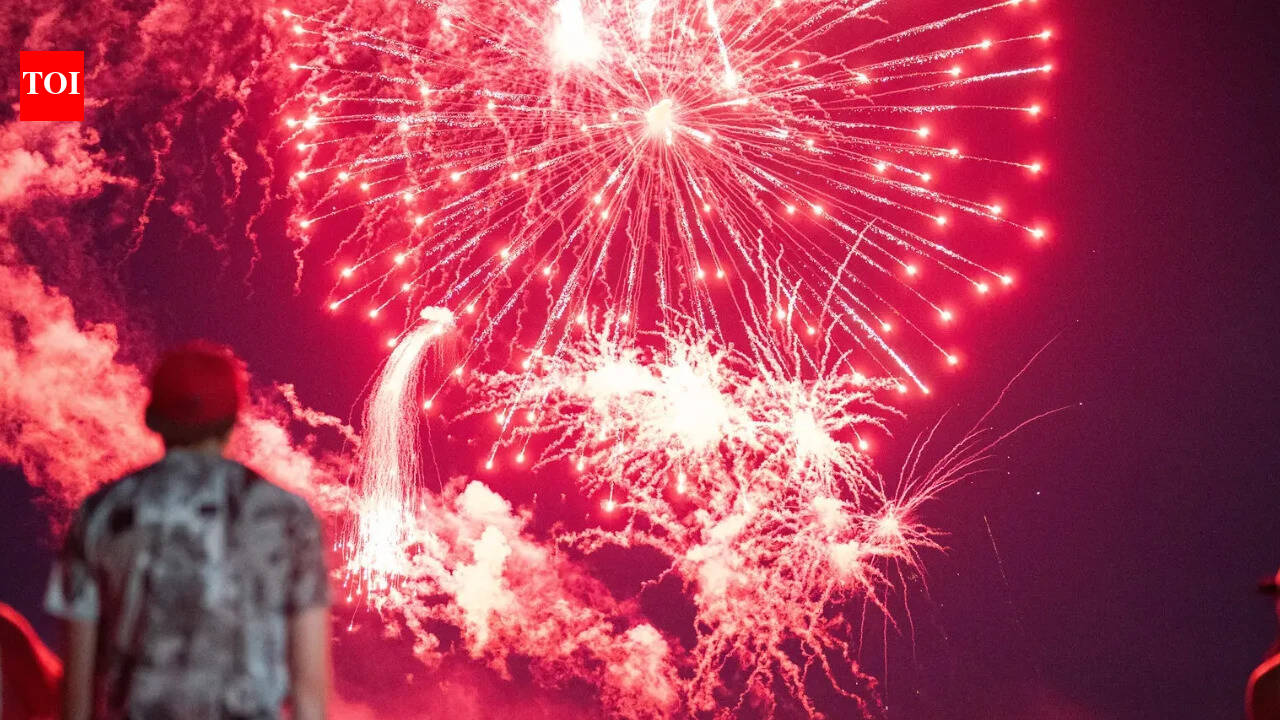
TOI correspondant from Washington Some two centuries after Tipu Sultan’s Mysore projectiles, parlayed by the British into Congreve missiles, led Francis Scott Key to note the “rocket’s red glare” in the Star Spangled Banner, the US capital is about to discover that fireworks, no matter where they come from, are no fun on a fiendishly hot summer night.As temperatures in much of the US are forecast hit record highs on July 4, the Trump administration is pressing ahead with what it promises will be the biggest pyrotechnics gala in history to mark America's 250th birthday, an extravaganza so enormous it aims to earn a Guinness World Record while simultaneously testing the atmosphere's capacity to absorb smoke.Washingtonians are accustomed to spectacular Independence Day displays over the Mall. This year, however, "spectacular" is being bumped up to "supersized." Organizers say more than 860,000 pyrotechnic effects will light up the skies during a 40-minute finale, roughly 50 times the number used in a typical Fourth of July celebration, which usually features 17,000 to 20,000 shells over less than 20 minutes.The Pennsylvania-based fireworks company Pyrotecnico, one of the country's largest specialists in the business, has brought in more than 50 truckloads of fireworks, with launches coordinated from the Lincoln Memorial Reflecting Pool, West Potomac Park and eight barges anchored on the Potomac River.Around 60 technicians will synchronize the display in what organizers hope will become the world's largest fireworks show.Environmentalists, however, are not impressed.
Fireworks are essentially colorful chemical explosions, releasing clouds of fine particulate matter, sulfur compounds, heavy metals and greenhouse gases into the air. Studies have consistently shown that air pollution spikes dramatically during major fireworks displays, sometimes reaching levels considered unhealthy, particularly for children, older adults and people with respiratory illnesses. To say nothing of what it does to terrified pets.Meteorologists are predicting afternoon highs to touch 104°F (40°C), with a stagnant air index that already has local pulmonologists hyperventilating. In Washington, a city built on an actual swamp, high heat traps particulate matter close to the ground, creating a toxic dome of ozone and smog. Adding tens of thousands of chemical explosions to this mix is akin to throwing a gasoline party inside a greenhouse.The Environmental Protection Agency (EPA), currently operating under leadership that views carbon emissions as a minor irritant, has remained predictably sanguine. Activists warn that the massive release of fine particulate matter (PM2. 5), barium, copper, and strontium will spike air toxicity levels to "hazardous" within minutes of the grand finale, but no one in the administration is particularly exercised about it. In the Trump universe, if the air gets a little smoky, or the thermometers threaten to melt, it is simply proof that America is generating more energy than anyone else.The irony is especially striking because Trump has made little secret of his disdain for global warming.
 The BriefWire