EU targets Chinese imports amid trade talks
Brussels has ended a customs exemption for low-value imports from China while agreeing with Beijing to monitor trade flows and improve access to rare earth
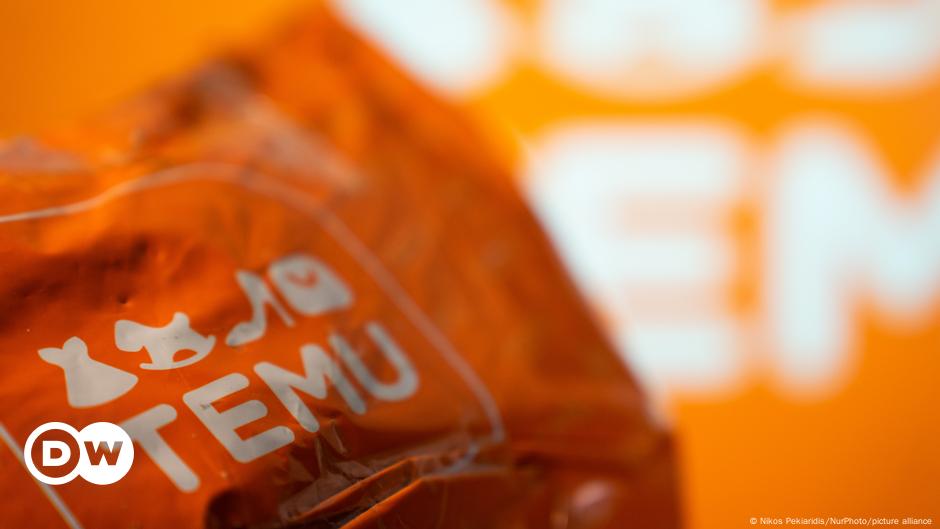
Brussels has ended a customs exemption for low-value imports from China while agreeing with Beijing to monitor trade flows and improve access to rare earth materials. Every day, around 16 million small, low-value packages arrive in the EU, 91% of which come from China. Many of those parcels contain items that European shoppers order from cheap Chinese online shopping platforms such as Temu, Shein and AliExpress. Until now, parcels valued at less than €150 ($171) were exempt from customs duties. However, the EU this week ended that exemption and imposed a €3 ($3.40) levy on low-value imports in a move to curb what it sees as unfair competition and keep products that do not meet the bloc's safety standards out of the European market. "Temu and Shein often fail to comply with legal and regulatory requirements, introduce unsafe products into our market that may pose health risks, and are driving many domestic retailers to the brink of ruin," said Alexander von Preen, president of the German Retail Association (HDE). New tariffs on low-cost goods from China To view this video please enable JavaScript, and consider upgrading to a web browser that supports HTML5 video The customs duty exemption cost public finances at least €400 million annually, according to the association. In 2025, Temu overtook Allegro as Poland's most-visited e-commerce platform, according to Mediapanel data. Justyna Szczudlik, a China analyst with the Polish Institute of International Affairs (PISM), pointed to data protection risks, intellectual property violations, and the possibility that Chinese platforms may collect large amounts of consumer data from Polish users.
What comes next? The new €3 flat-rate charge is a temporary measure that is expected to remain in place until July 1, 2028, while the EU develops a new digital services platform. Once the new system is operational, standard customs duties based on a product's value, origin and classification will apply. The EU also plans a handling fee to start in November 2026 to help customs authorities with their surging costs as more and more parcels arrive. The amount of that fee has yet to be decided. "The status quo is not an option," EU Trade Commissioner Maros Sefcovic said after meeting Chinese Commerce Minister Wang Wentao in Brussels. "My objective from the outset has been clear: to begin balancing the trade relationship between the European Union and China. The gap is widening. China's exports to the EU keep rising while our market share in China keeps shrinking. This trend is not sustainable." Bridging the trade gap In 2025, the EU exported goods worth €199.6 billion to China and imported goods worth €559.4 billion, resulting in a trade deficit of €359.8 billion. Rafael Jimenez Buendia, a senior researcher at the Mercator Institute for China Studies (MERICS), noted that China has been speaking for more than a decade about creating balanced trade relations with Europe. However, the trade data continue to show a growing imbalance. "There is no need to speculate about internal politics. China's own public record is revealing enough," said Buendia. "For a period, the language of rebalancing coexisted with trade data that appeared broadly consistent with it." As a result, Minister Wang and Commissioner Sefcovic agreed to establish, without delay, a joint mechanism for monitoring trade flows that will help restore balance in bilateral trade.
 The BriefWire