How many entrance exams will it take to become a doctor in India? Debate over NEET
For India's medical aspirants, uncertainty no longer ends with preparing for NEET. It now extends to the exam itself. Will there be one NEET every
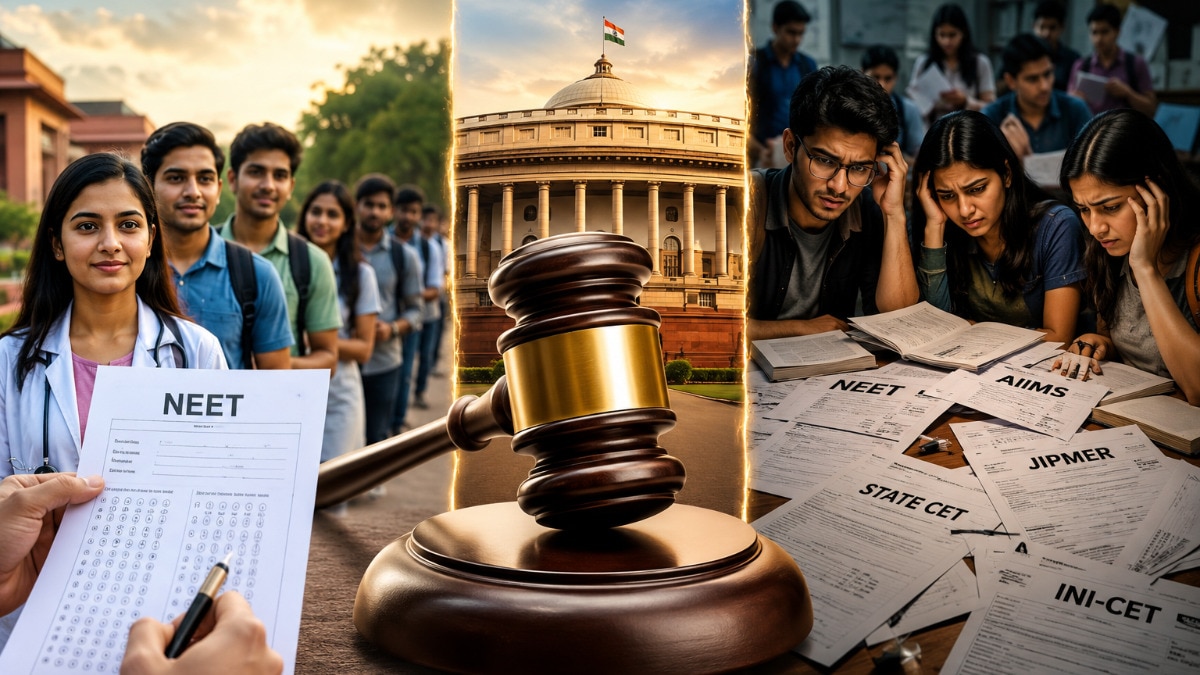
For India's medical aspirants, uncertainty no longer ends with preparing for NEET. It now extends to the exam itself. Will there be one NEET every year, or three? Will MBBS have a separate entrance test? Will engineering and medical aspirants eventually sit for the same national examination? As policymakers debate sweeping changes to India's admission system, students are left wondering what the roadmap to a medical seat will look like in the years ahead. Read Full Story The debate has intensified after the Parliamentary Standing Committee on Education proposed a series of reforms in the wake of the NEET-UG paper leak, including conducting NEET in multiple phases, allowing multiple attempts each year, and exploring separate entrance examinations for MBBS, AYUSH and Nursing. Alongside these proposals, the Centre is exploring a common entrance examination for engineering and medical admissions. Though still at a preliminary stage, the move could significantly reshape India's entrance system. Career coach Pradeep Jain says the debate goes beyond NEET itself. "For years, India's admission system has revolved around one principle: one nation, one entrance exam. After repeated controversies over national entrance examinations, policymakers are once again asking whether the current model needs a rethink," says Pradeep Jain. The objective behind these proposals is clear: reduce logistical challenges, improve exam security and make admissions more student-friendly. But together they raise a more fundamental question: are India's admission reforms simplifying access, or adding new layers of complexity for lakhs of aspirants? ARE MORE ENTRANCE EXAMS THE ANSWER? One of the key recommendations before the government is to examine whether NEET should be conducted two or three times a year, similar to engineering entrance examinations. The logic is straightforward. A single high-stakes examination places enormous pressure on students, and multiple attempts would give candidates another opportunity to improve their scores without waiting an entire year. The Parliamentary Committee has also suggested evaluating the feasibility of conducting the examination in phases across states, a move aimed at reducing logistical pressure and strengthening security after the paper leak exposed vulnerabilities in an exam taken by more than 22 lakh candidates.
Another proposal under discussion is holding separate entrance examinations for MBBS, AYUSH and Nursing, instead of relying on a single NEET score for all three streams. Jain believes the larger issue is not just NEET's format but the cumulative burden of entrance examinations. According to him, a typical Class 12 student today often moves from board exams to NEET, CUET, state-level entrance tests and private university examinations, while engineering aspirants may additionally appear for JEE Main, JEE Advanced, BITSAT, VITEEE, COMEDK and several institutional tests. "Every additional examination brings another application fee, another travel plan, another round of preparation and another layer of anxiety," he says. While the proposals seek to make the examination process more flexible, they also raise practical questions about how admissions would eventually be managed. WHY DOES NTA SAY SEPARATE EXAMS ARE NOT FEASIBLE? The Testing Agency (NTA) has maintained that separate entrance examinations for MBBS, AYUSH and Nursing are not feasible under the existing admission framework. At present, admissions to all three streams are linked to a common NEET score. Introducing separate examinations would therefore require a complete restructuring of the admission process, counselling mechanism and seat allocation system, rather than merely changing the examination calendar. In other words, separating the exams is not simply an administrative decision, it would require redesigning the entire admission ecosystem. Jain notes that while multiple entrance tests may appear to offer greater flexibility, they also increase logistical complexity and costs for students unless accompanied by broader reforms in admissions. IS COUNSELLING THE BIGGER CHALLENGE? While the debate has largely centred on how often NEET should be conducted, many education experts argue that the real bottleneck begins after the examination. Medical admissions involve multiple rounds of counselling, during which candidates often retain seats in BDS, AYUSH or allied medical courses while continuing to compete for MBBS seats in subsequent rounds. This means thousands of seats remain blocked for weeks before becoming available again, delaying admissions and creating uncertainty across the counselling process.
 The BriefWire