54 Years Of Simla Agreement: Pact, Promise And Why India Says Pakistan Broke Its Spirit
54 Years Of Simla Agreement: Pact, Promise And Why India Says Pakistan Broke Its Spirit Published By, Last Updated: July 02, 2026, 11:05 IST More
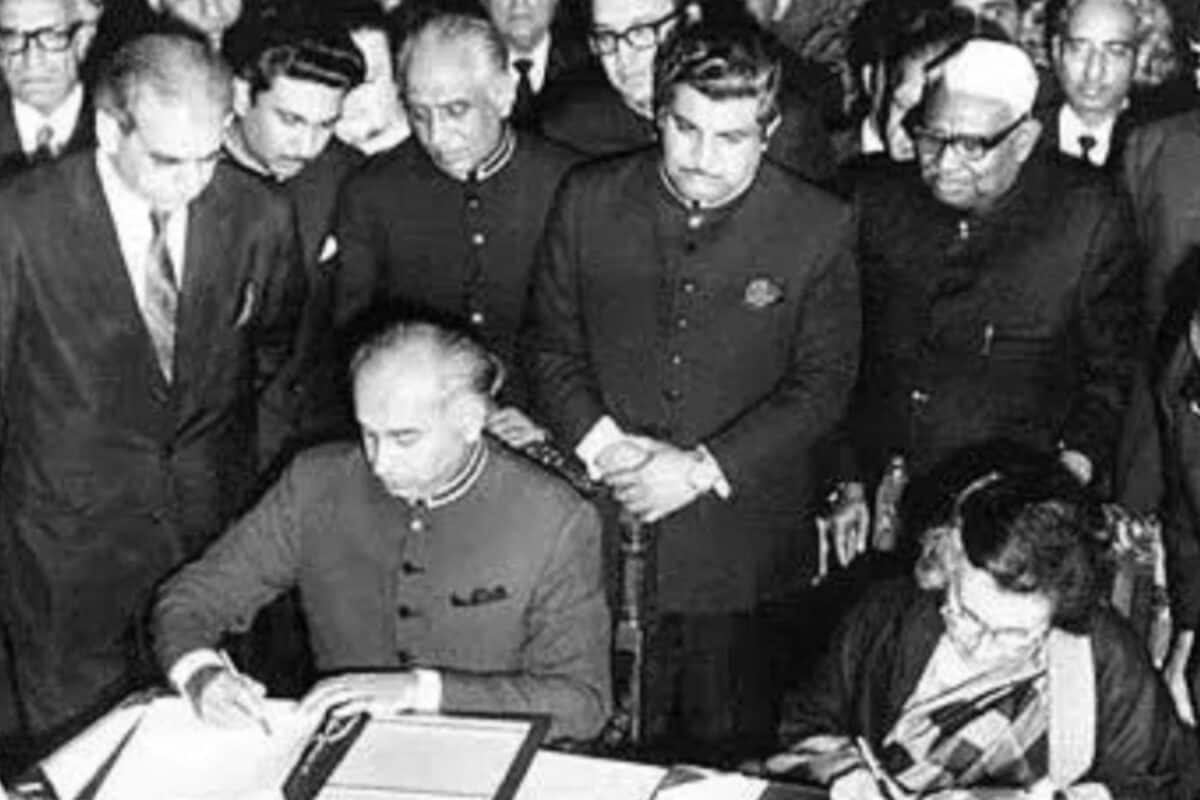
54 Years Of Simla Agreement: Pact, Promise And Why India Says Pakistan Broke Its Spirit Published By, Last Updated: July 02, 2026, 11:05 IST More than 50 years after it was signed, the Simla Agreement continues to be the foundation of diplomatic engagement between India and Pakistan. Rapid Read India also accuses Pakistan of departing from the agreement by repeatedly taking the Kashmir issue to international forums (Credits: X) The Simla Agreement, signed after the 1971 war, was meant to usher in a new phase of peaceful India-Pakistan relations. Five decades later, India says cross-border terrorism and repeated attempts to internationalise Kashmir have undermined the landmark pact. A Pact Born After The 1971 War On July 2, 1972, India and Pakistan signed the Simla Agreement in an effort to rebuild relations after the 1971 war, which resulted in the creation of Bangladesh. Signed by then Prime Minister Indira Gandhi and Pakistan President Zulfikar Ali Bhutto, the agreement was intended to move both countries away from military confrontation and towards dialogue. It also recognised the Line of Control (LoC) in Jammu and Kashmir, which continues to serve as the de facto military boundary between the two sides. More than five decades later, the agreement remains the foundation of diplomatic engagement between India and Pakistan. What Did The Agreement Promise? The Simla Agreement was not limited to resolving disputes through bilateral talks. Both countries agreed to settle their differences peacefully, respect each other’s sovereignty and territorial integrity, and avoid the use of force.
The agreement also placed broader responsibilities on both sides. India and Pakistan pledged not to allow activities from their territories that could harm bilateral relations. They also agreed to discourage hostile propaganda and promote the exchange of information that would strengthen trust between the two neighbours. These commitments were seen as essential to restoring confidence after the 14-day war. Why Do Both Countries Interpret It Differently? The biggest point of disagreement has been the Kashmir issue. Pakistan maintains that the dispute should be resolved in accordance with United Nations resolutions. India, however, has consistently maintained that the Simla Agreement leaves no room for third-party mediation and requires all outstanding issues, including Jammu and Kashmir, to be resolved only through bilateral dialogue. This difference in interpretation has remained at the centre of India-Pakistan diplomacy for decades. Why Does India Say Pakistan Has Failed To Honour The agreement? India argues that the agreement cannot be viewed only through its legal provisions. According to New Delhi, the conduct of both countries is equally important. India maintains that Pakistan has repeatedly violated the spirit of the agreement by allowing cross-border terrorism and carrying out disinformation campaigns that have damaged bilateral relations. New Delhi has frequently cited Pakistan-based terror groups such as Lashkar-e-Taiba and Jaish-e-Mohammed. Lashkar-e-Taiba, which carried out the 2008 Mumbai terror attacks, is listed as a terrorist organisation by the United Nations Security Council. Pakistan also remained on the Financial Action Task Force (FATF) grey list between 2018 and 2022 over concerns related to terror financing.
 The BriefWire