'Terrorist Is A Terrorist': India Rejects Justification For Terrorism, Urges Zero Tolerance At UNGA
'Terrorist Is A Terrorist': India Rejects Justification For Terrorism, Urges Zero Tolerance At UNGA Published By, Last Updated: July 02, 2026, 08:15 IST India urged
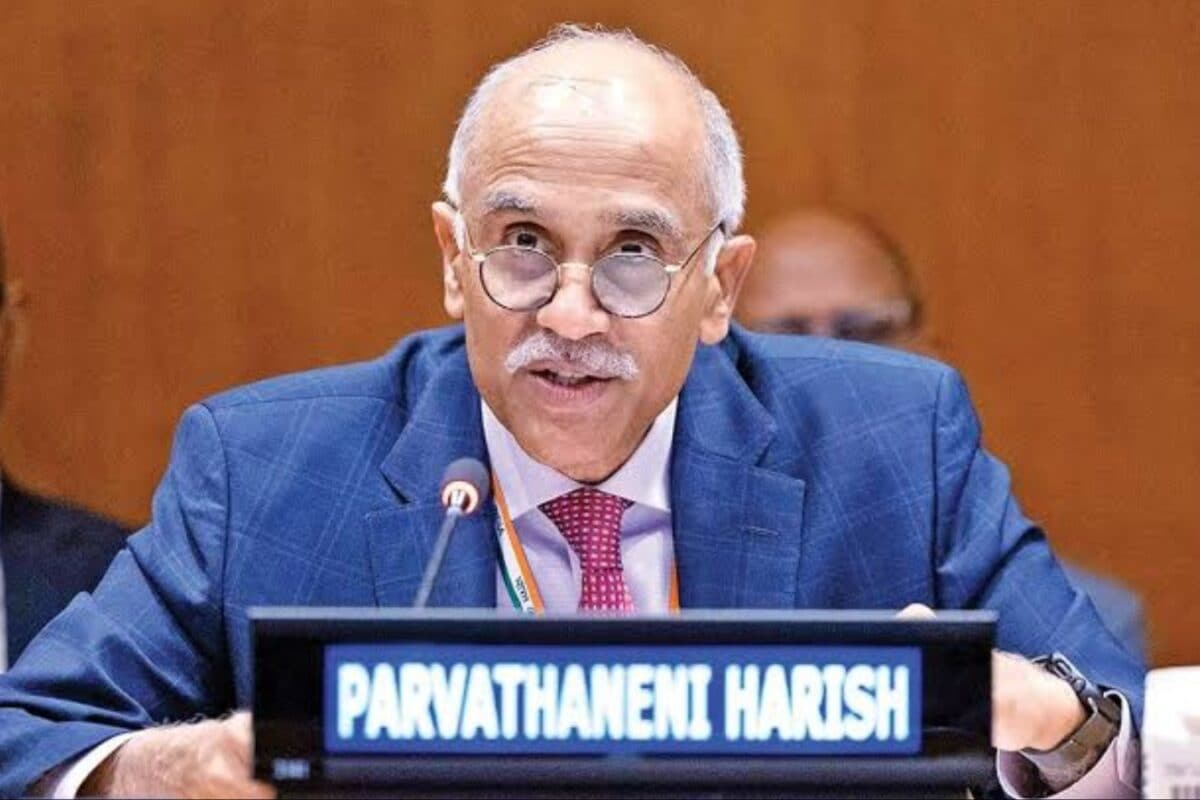
'Terrorist Is A Terrorist': India Rejects Justification For Terrorism, Urges Zero Tolerance At UNGA Published By, Last Updated: July 02, 2026, 08:15 IST India urged the UN to reject double standards on terrorism, push the long-pending CCIT, curb terror financing and prioritise justice for victims. A file photo of Parvathaneni Harish (PTI) India’s Permanent Representative to the United Nations, Parvathaneni Harish, delivered a strong message against terrorism at the UN General Assembly during the adoption of the Ninth Review of the United Nations Global Counter-Terrorism Strategy (GCTS), asserting that terrorism can never be justified under any circumstances and calling for a united global response against the menace. Addressing the General Assembly, Harish underlined India’s long-standing position on counter-terrorism and said, “A terrorist is a terrorist!! We must work hand in hand to root out the murderous ideology without finding any grievance to justify terrorism." Reiterating India’s zero-tolerance approach, he said the international community must unequivocally condemn terrorism in all its forms and manifestations. “India has been a victim of cross-border terrorism for decades. Our people have paid the price of terrorism in lives lost, families scarred, and societies shattered. This experience has shaped India’s approach: there can be no justification for terrorism. Irrespective of any grievance, political cause or strategic calculation, terrorism in all its forms and manifestations must be condemned unequivocally," Harish said. He said the adoption of the Ninth Review comes at a significant moment, recalling that the international community had adopted the Global Counter-Terrorism Strategy 20 years ago after recognising terrorism as a threat to humanity that can only be defeated through international cooperation.
He also renewed India’s call for the adoption of the Comprehensive Convention on International Terrorism (CCIT), noting that India had first proposed the convention a decade before the Global Counter-Terrorism Strategy was adopted in 2006. “The absence of a universally agreed legal framework continues to hobble collective action against terrorism. This legal instrument is essential to close normative gaps, strengthen prosecution and extradition, and deny terrorists and their sponsors access to safe havens, funds and arms," he said. Calling the nearly three-decade delay a setback to global counter-terrorism efforts, Harish added, “The time has come to demonstrate political will to conclude the CCIT." REJECT DOUBLE STANDARDS, CURB TERROR FINANCING Listing India’s priorities under the Ninth Review, Harish said the international community must reject double standards in combating terrorism and ensure that perpetrators, organisers, financiers and sponsors are held accountable. He stressed that countering terror financing should remain central to global efforts and called for better financial intelligence sharing, stronger implementation of Financial Action Task Force (FATF) standards and action to ensure that no jurisdiction serves as a safe conduit for terror financing. Harish also highlighted the growing misuse of emerging technologies by terrorist organisations, warning that groups are exploiting encrypted communications, drones, autonomous weapons, artificial intelligence, deepfakes, virtual assets, the dark web, online radicalisation platforms and specialised mapping applications. He said India supports “a safe, secure, trusted and accessible digital ecosystem" while ensuring that terrorists are denied technological tools for their activities, but expressed disappointment that negotiations on the review failed to arrive at what he described as “an acceptable landing point" on the issue.
 The BriefWire