How cryptocurrencies are changing global politics
Despite once dismissing them, Donald Trump made over $1 billion from cryptocurrency sales last year. But the digital currencies, and their lobbyists, are having an
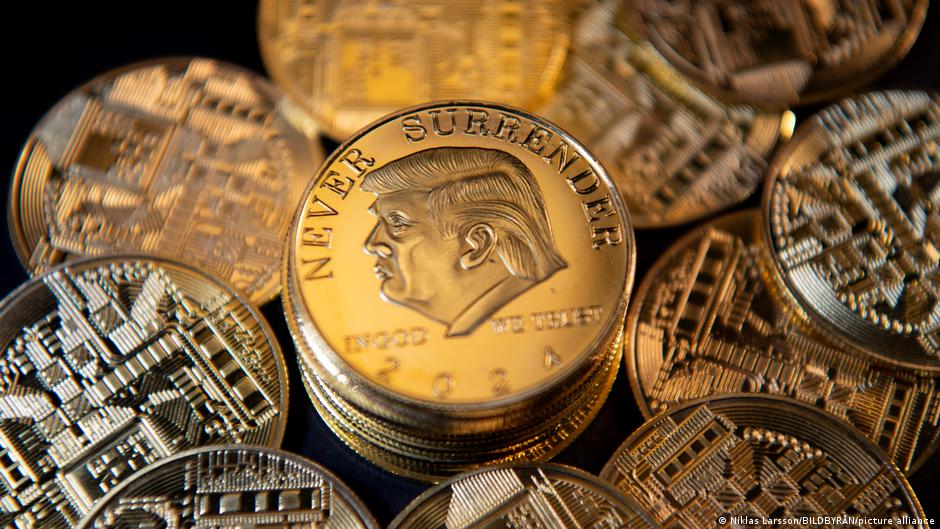
Despite once dismissing them, Donald Trump made over $1 billion from cryptocurrency sales last year. But the digital currencies, and their lobbyists, are having an effect on policy and politicians around the world. As recently as 2021, he described cryptocurrency as "a disaster waiting to happen” and a "scam." But digital, decentralized currency made Donald Trump well over $1 billion (€878 million) in 2025 alone, according to annual financial disclosures released on Tuesday. Most of the profits came from his World Liberty Financial business selling new crypto products ($500 million) and sales of so-called "meme coins" ($600 million). It comes at a time when the US president's policies on crypto have become increasingly favorable, with regulation cut and federal rules for stablecoin introduced. Trump is not alone in backing crypto as the future of finance. Over in the United Kingdom, populist leader Nigel Farage is facing a public backlash threatening the seemingly unstoppable rise of his Reform UK party over a £5 million ($6.6 million/€5.8 million) personal "gift" from Thailand-based British crypto billionaire Christopher Harborne. Reform, too, has a pro-crypto stance, with Farage promising to "bring crypto in from the cold" should he win power. Elsewhere in Europe, Pavel Blazek resigned from his position as justice minister in Czechia last year after accepting 468 bitcoins worth $45 million from convicted criminal Tomas Jirikovsky, while Spanish right-wing MEP Luis "Alvise" Perez Fernandez has also been accused of taking crypto financing from a convicted fraudster. In Argentina, Trump-friendly President Javier Milei has come under fire from financial authorities and the public over his promotion of boom and bust crypto scheme $LIBRA, which spiked after he made a social media post about it, before collapsing soon after.
He has denied wrongdoing, saying he made the post in good faith. How big is crypto's influence on politics? While there is no simple global answer, cryptocurrencies are an increasingly essential part of global economics. Governments are, as a result, grappling with how to regulate them. "Crypto is becoming increasingly significant in politics — not just as a form of political donation, but as a well-resourced industry seeking to shape regulation, a source of personal and campaign-related wealth, and a financial technology that can move value rapidly across borders," Eliza Lockhart, a senior research fellow, at the Centre for Finance and Security at the RUSI think tank in the UK, told DW. "Its political influence is rising as crypto businesses become more integrated into mainstream finance and governments make increasingly consequential decisions about how the sector should be regulated." Edoardo Beretta, adjunct macroeconomics professor at Swiss university USI, agreed, while also noting that a recent downturn — which came after the period of Trump's financial filings — has generally had a cooling effect. Kenya scammers lured abroad To view this video please enable JavaScript, and consider upgrading to a web browser that supports HTML5 video "With bitcoin's price having more than halved since its peak on October 6, 2026 ($126,198) and the crypto market capitalization having behaved similarly, there is currently less political but also economic hype around cryptocurrencies. However, this does not mean that economic actors might have lost their interest in the crypto market: the environment surrounding them has simply become a little bit quieter," he told DW. Do cryptocurrencies make foreign political interference easier? The anonymity and speed of digital wallets across borders make tracking campaign donations and suchlike a much trickier task than traditional transactions.
 The BriefWire