Assam Man Declared A Foreigner After Submitting 15 Documents To Prove Indian Citizenship
Assam Man Declared A Foreigner After Submitting 15 Documents To Prove Indian Citizenship Published By, Last Updated: July 01, 2026, 22:42 IST A division bench
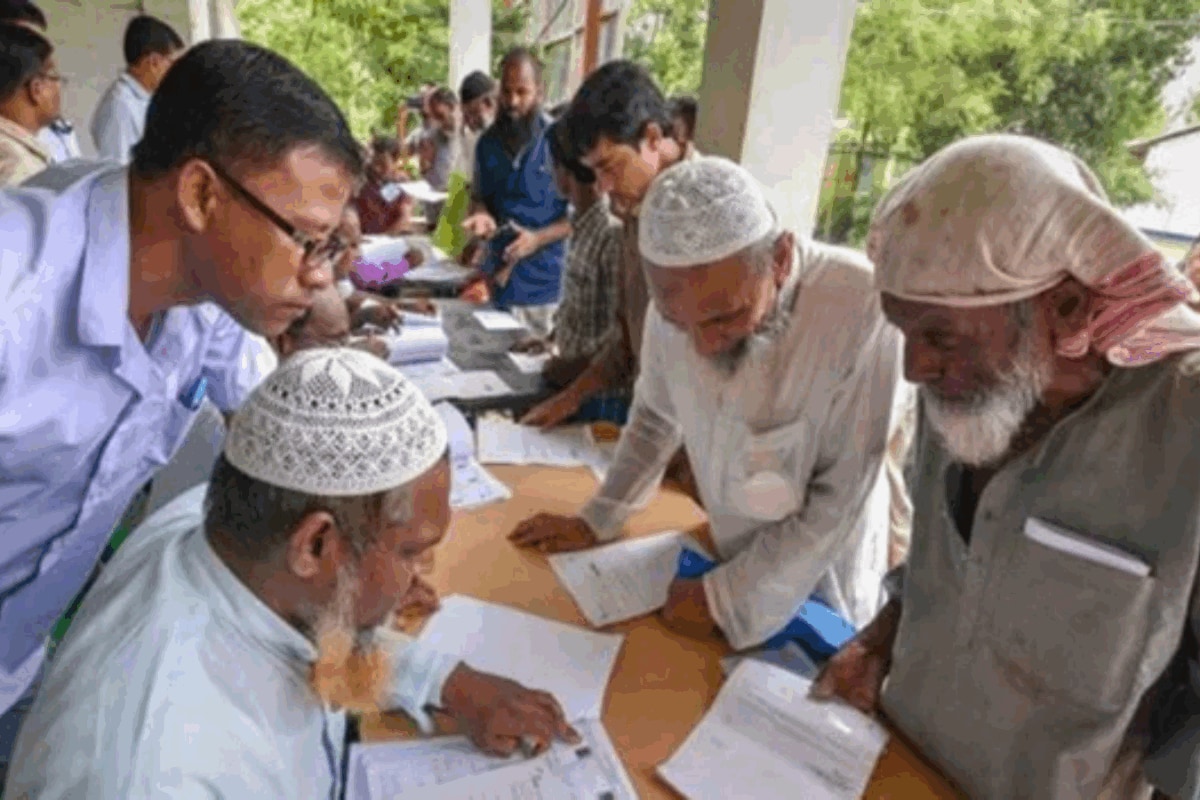
Assam Man Declared A Foreigner After Submitting 15 Documents To Prove Indian Citizenship Published By, Last Updated: July 01, 2026, 22:42 IST A division bench dismissed the writ petition filed by the daily wage labourer, holding that he failed to establish his claim of Indian citizenship. Register of Citizens (NRC) gets list released in Assam. (Source: PTI) The Gauhati High Court has upheld a Foreigners Tribunal’s decision declaring an Assam resident a foreigner, ruling that the 15 documents and oral testimony produced by him were either legally inadmissible or insufficient to establish his Indian citizenship. A Division Bench of Justices Kalyan Rai Surana and Shamima Jahan dismissed the writ petition filed by the daily wage labourer, holding that he failed to establish his claim of Indian citizenship, India Today reported. The Bench observed that the petitioner had failed to “discharge his burden as required under Section 9 of the Foreigners Act, 1946 to prove that he is not a foreigner but an Indian Citizen". What Documents Did The Man Submit Before Tribunal? The petitioner, who stated that he was born in 1988 and lives in rented accommodation in Guwahati, submitted 15 documents before the Foreigners Tribunal in support of his citizenship claim. The documents included computer-generated copies of the 1951 Register of Citizens (NRC) containing the names of his father and grandparents, certified copies of electoral rolls from 1996 to 2017 carrying the names of family members, a 1973 land purchase deed executed by his grandfather, a 2017 school certificate issued by Hashdoba Anchalik High School, a Permanent Account Number (PAN) card and an Elector’s Photo Identity Card (EPIC), according to India Today. He also stated that repeated river erosion forced his family to move from Charai Khasara to Dhobakura, then to Ghugudoba and later to Hashdoba, where he attended school.
Both the petitioner and his father deposed before the Tribunal to support the claim of lineage. Court Rejects 1951 NRC Extract The High Court agreed with the Tribunal’s finding that the 1951 NRC documents submitted by the petitioner were inadmissible. According to the judgment, the records were “a photocopy/computer generated details, which was not proved in accordance with law". Also Read: If Passports Don’t Prove Citizenship, What Does? The Long Road To India’s NRC Debate The Bench noted that the documents were “computer generated statement" carrying Image IDs and the note “Generated by DLDD Version 6.0", India Today reported. DLDD stands for Digitised Legacy Data Development and is typically found on printed legacy data slips or digitised extracts generated during the NRC updation process. The court held that “without a certificate as required under Section 65B of the Evidence Act, 1872 corresponding to Section 63(4) of the Bharatiya Sakshya Adhiniyam, 2023, would have no evidentiary value". It further observed that the “NRC extract produced to prove domicile in India is inadmissible in evidence", citing Section 15 of the Census Act, 1948, which bars the admissibility of Census records. School Certificate, Land Deed, PAN And EPIC Also Rejected The High Court also upheld the rejection of the petitioner’s 2017 school certificate, noting that neither the headmaster who issued the certificate nor the school’s admission register was produced to prove its contents. The 1973 land purchase deed executed by the petitioner’s grandfather was also found inadequate to establish lineage. The Tribunal observed that there was “no explanation that if the land existed, why the land did not devolve on the legal heirs of petitioner’s grandfather". The judgment further noted that no land revenue records were produced to explain the property’s succession or whether the petitioner’s father had relinquished his share.
 The BriefWire