Reality Check: India's EV Push Is Gathering Pace. But Where Will Millions Plug In?
Reality Check: India's EV Push Is Gathering Pace. But Where Will Millions Plug In? Written By, Last Updated: July 01, 2026, 15:42 IST Until charging
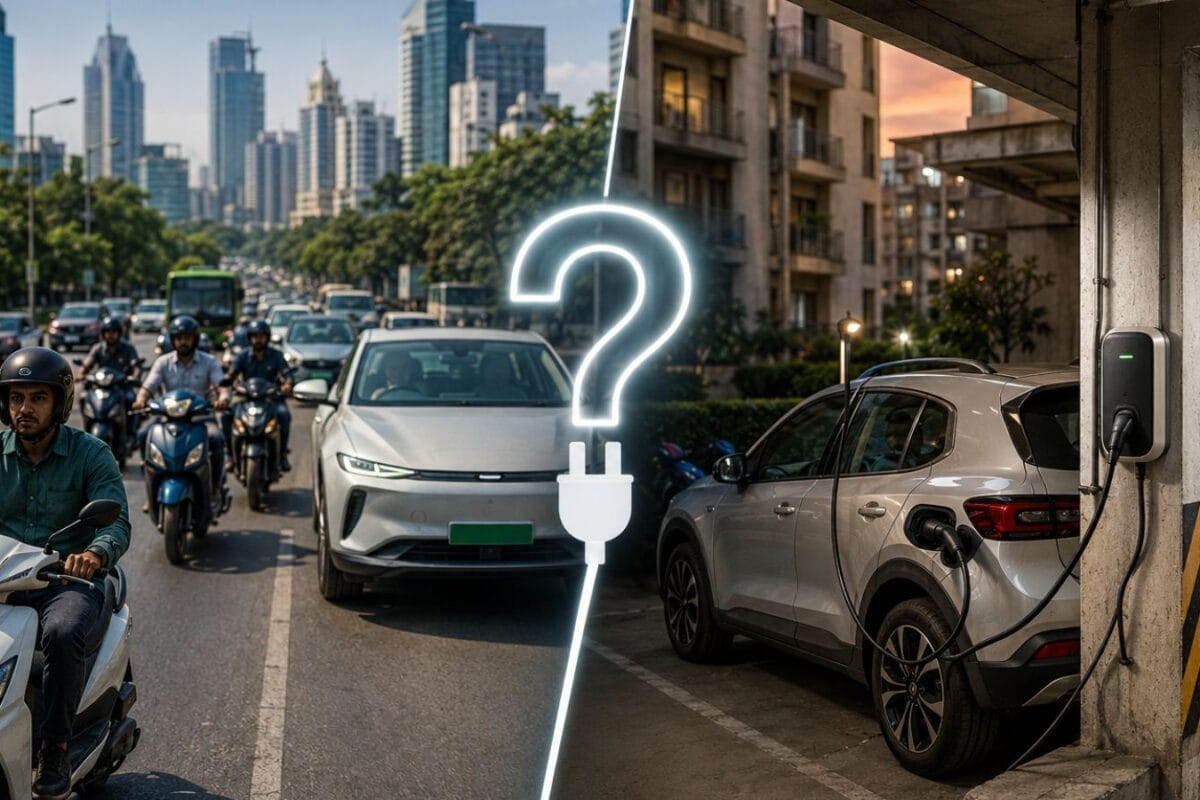
Reality Check: India's EV Push Is Gathering Pace. But Where Will Millions Plug In? Written By, Last Updated: July 01, 2026, 15:42 IST Until charging is as effortless as parking a vehicle at home overnight, infrastructure, and not consumer willingness, may remain the single biggest obstacle to India's EV ambitions Rapid Read India's EV success depends less on how many public chargers it installs and more on whether ordinary homes can support EV charging. (AI-Generated Image) For the past few years, India has aggressively pushed electric vehicles (EVs) through subsidies, tax incentives, manufacturing-linked schemes and state EV policies. The latest example is the revamped Delhi EV Policy, which doubles down on fully electric vehicles while dropping incentives for strong hybrids. The objective is clear: reduce oil imports, clean up urban air and build India into an EV manufacturing hub. However, a growing body of evidence suggests the biggest challenge may no longer be convincing people to buy EVs; it may be ensuring they can charge them conveniently, safely and reliably. A new study by the Alliance for an Energy Efficient Economy (AEEE) and EV charging company Kazam has thrown fresh light on what experts increasingly describe as the weakest link in India’s EV transition—residential charging infrastructure. The Surprising Problem One of the biggest misconceptions around EVs is that public charging stations are the backbone of the ecosystem. ALSO READ | Can Electric Vehicles Policy 2.0 Fix Delhi’s Air Pollution Woes? Explained According to the AEEE-Kazam study, around 90 per cent of India’s daily EV energy demand is met through home charging, especially because two- and three-wheelers account for nearly 90 per cent of all EV sales. Public chargers are primarily used during long-distance travel or emergencies.
That means India’s EV success depends less on how many public chargers it installs and more on whether ordinary homes can support EV charging. Nearly Half Of Indian Homes Aren’t EV-Ready This is where the biggest bottleneck emerges. The study, based on more than 80,000 residential charger installations across Tier-1, Tier-2 and Tier-3 cities, found that nearly 45 per cent of Indian homes require electrical upgrades before they can safely support EV charging. Also, only about 55 per cent of prospective EV buyers currently have access to home charging. Another 30 per cent can install chargers only after upgrading their electrical infrastructure. Many homes continue to rely on ordinary wall sockets, extension cords or shared electrical connections, arrangements that experts warn are neither ideal nor always safe for long-term EV charging. What Will Apartment Dwellers Do? The problem becomes even more complicated in cities like Delhi, Mumbai, Bengaluru and Gurugram. ALSO READ | Delhi EV Buyers Must Apply For Subsidy Within 30 Days Of RC Generation, Portal To Go Live In A Week Unlike independent houses, apartment residents often require approvals from Resident Welfare Associations (RWAs), housing societies, builders, landlords, and local electricity distribution companies (DISCOMs). Apart from this, parking spaces may not have dedicated electricity connections. In older buildings, wiring may be inadequate. Shared basements may lack sufficient power capacity. Experts say these structural issues, and not charger availability, are becoming the biggest barrier to EV ownership in urban India. Delhi Wants More EVs. Is It Ready? Delhi has among India’s most ambitious EV targets. The latest EV policy continues to favour battery-electric vehicles over hybrids and proposes expanding charging infrastructure alongside incentives for cleaner mobility. However, experts quoted after the policy’s approval cautioned that infrastructure rollout has not kept pace with policy ambitions.
 The BriefWire