Ram Gopal Kothari Becomes 1st Indian to Complete Volcano Marathon On Easter Island
Ram Gopal Kothari Becomes 1st Indian to Complete Volcano Marathon On Easter Island Published By, Last Updated: July 01, 2026, 15:07 IST In 2025, Ram
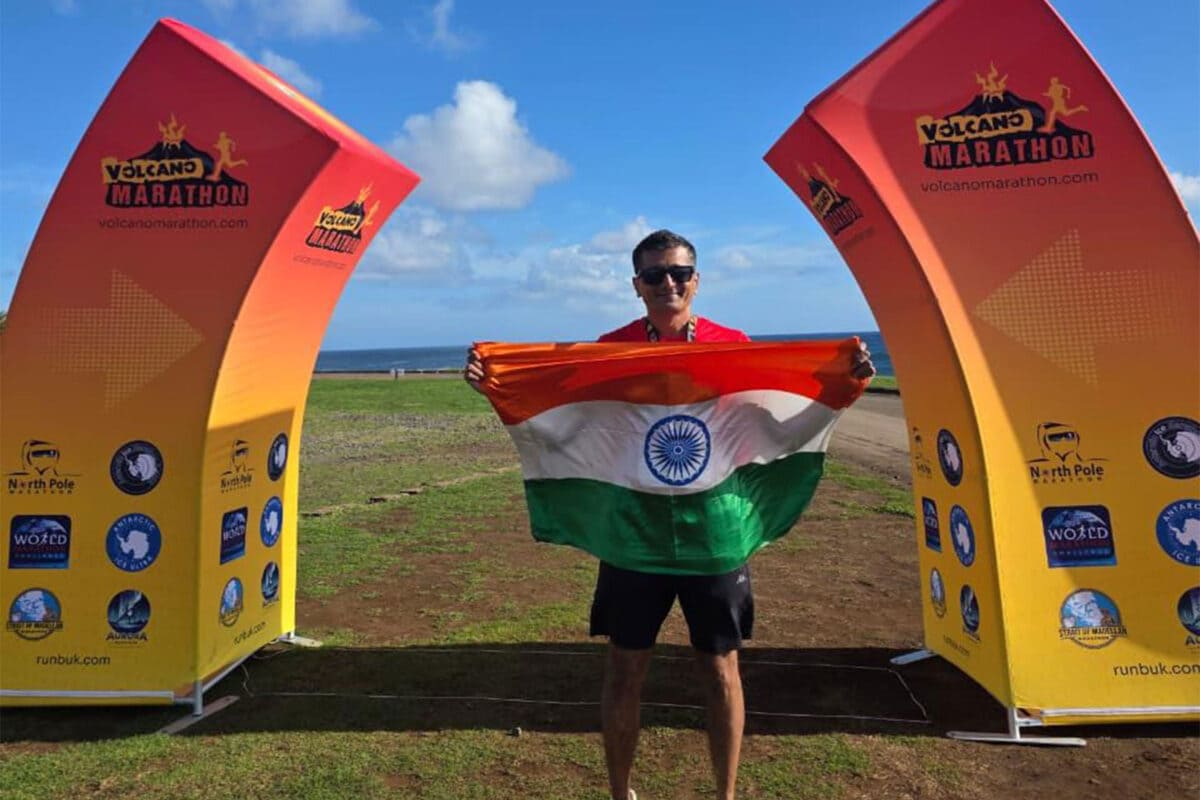
Ram Gopal Kothari Becomes 1st Indian to Complete Volcano Marathon On Easter Island Published By, Last Updated: July 01, 2026, 15:07 IST In 2025, Ram Gopal Kothari became the first Indian to complete the full marathon at the Geographic North Pole, News18 Less than a year after becoming the first Indian to complete a full marathon at the Geographic North Pole, Kolkata-based entrepreneur, explorer and endurance runner Ram Gopal Kothari has added another remarkable milestone to Indian sporting history by becoming the first Indian to complete the Volcano Marathon on Easter Island (Rapa Nui), Chile. The 42.195-kilometre Volcano Marathon, held was organised by Runbuk, the international organisation known for staging endurance marathons in some of the world’s most remote and extreme locations, including the prestigious North Pole Marathon, according to a release. With this latest accomplishment, Kothari has become the first Indian to complete both of Runbuk’s iconic marathons, each presenting a completely different set of physical and mental challenges. To reach Easter Island, one of the world’s most isolated inhabited islands in the Pacific Ocean, Kothari travelled nearly 24,000 kilometres from Kolkata via Mumbai, Istanbul and Santiago. The journey also marked his visit to his 80th country, another significant milestone in his pursuit of exploring the world. According to the official results, 21 runners registered for the full marathon, while 20 started and completed the race, representing countries from Asia, Europe, North America, South America and Oceania. Kothari completed the demanding course in 5 hours, 5 minutes and 8 seconds to finish seventh overall while becoming the first Indian ever to complete the event. “I am honoured to become the first Indian to complete the Volcano Marathon on Easter Island. My first full marathon took me to the Geographic North Pole, where I became the first Indian to complete a marathon at the top of the world.
My second marathon has now taken me to one of the world’s most isolated inhabited islands. For me, this achievement is about much more than running. It is the story of a boy who grew up in a small asbestos-roof room in Kolkata and went on to visit 80 countries across all seven continents while creating history in two of the world’s most extraordinary marathons. It proves that your beginnings never define your destination," said Kothari. The Volcano Marathon proved to be one of the toughest endurance races Kothari has experienced. The opening 21 kilometres consisted of continuous rolling climbs and descents on paved roads, with freely roaming horses and cattle occasionally crossing the route. After the halfway mark, the race transformed into a demanding trail marathon across rugged volcanic terrain, with several sections becoming so steep and technical that even walking became difficult. Around the 30-kilometre mark, runners climbed towards the spectacular Orongo Volcano Crater over a combination of paved and unfinished roads before ascending to nearly 600 metres above sea level. The technical terrain caught many runners off guard, with several participants slipping while wearing conventional road-running shoes. There were also no restroom facilities anywhere between the start and finish, adding another layer of difficulty to an already demanding race. Despite the challenging conditions, Kothari completed the marathon without suffering a single muscle cramp or injury, crediting months of disciplined preparation for his performance. “Unlike my North Pole Marathon, I prepared extensively for this race. My training included multiple long-distance runs, daily strength training, elevation walking on the treadmill and repeated ramp-running sessions inside Salt Lake Stadium to simulate continuous climbing and descending. Almost all my training was completed in Kolkata’s extreme summer heat and humidity. During one session I even suffered severe dizziness and remained bedridden for four days before resuming training.
 The BriefWire