Hormuz oil shock sends India back to Russia: Is this a peak or the new normal?
It is clear that Russia continues to be India's single most important crude supplier and remains at the core of the country's import strategy. (AI
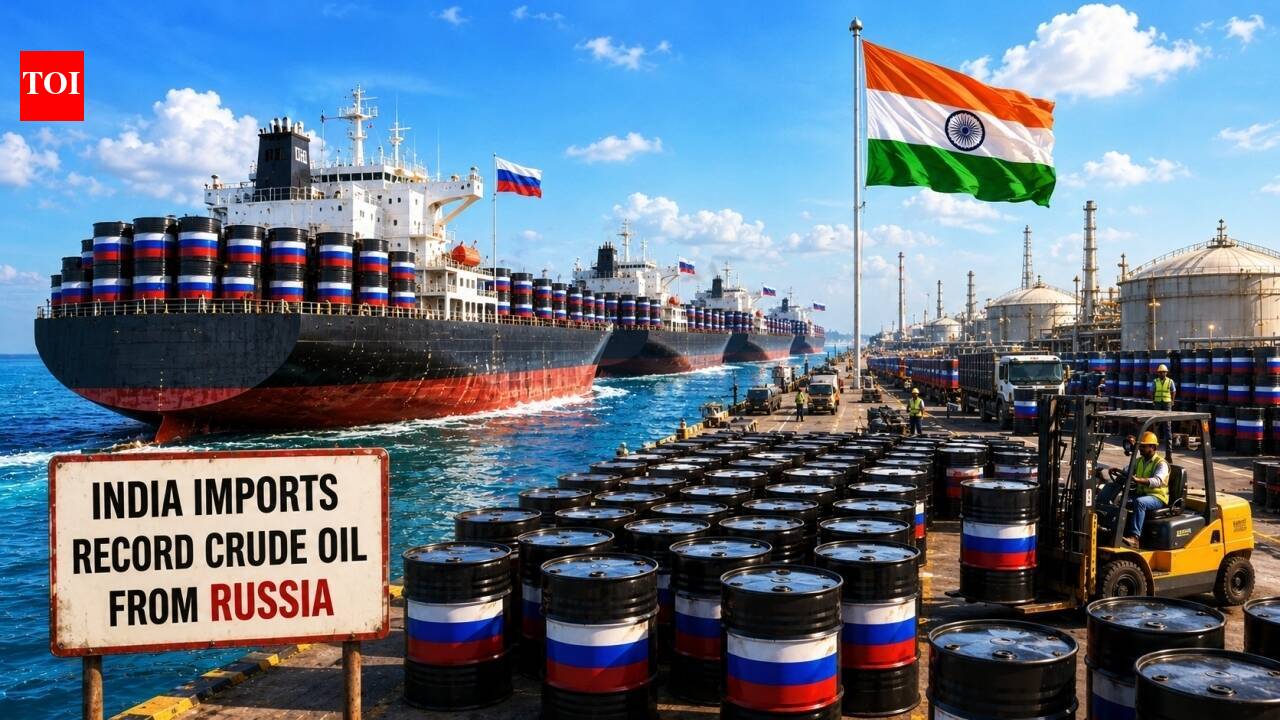
It is clear that Russia continues to be India's single most important crude supplier and remains at the core of the country's import strategy. (AI image) So, will Russia continue to be India’s largest crude oil supplier, or will the mix change? India’s Top 5 crude oil suppliers So, will Russia continue to dominate India’s crude oil imports? The Iran factor Importance of Hormuz for global oil flows Russian oil: Will high import levels continue? But the big question is: Will this high level continue? The US-Iran war has pushed India’s crude oil imports from Russia to an all-time high - beyond levels seen when Russian crude was available at big discounts in the first few years of Moscow’s war with Ukraine. At over 2.5 million barrels per day, Russian crude made up over 50% of India’s crude procurement in June as refiners stocked up on oil to ensure a more comfortable position for the coming months.This was in part aided by the Donald Trump administration’s waiver of sanctions on Russian oil. That waiver has now lapsed. Sanctions tend to make procurement economically unviable.It is clear that Russia continues to be India's single most important crude supplier and remains at the core of the country's import strategy. But will such high levels of imports continue? With sanctions waiver on Iran oil and reopening of the Strait of Hormuz, Middle East oil supplies will gradually be back for India to pick up. Proximity of Middle East countries to India also makes crude via that channel more lucrative.Russia has emerged as the dominant supplier of crude oil for India - with imports touching over 240 million barrels in the four months since the US-Iran conflict began.In fact, crude imports from Russia are over 4 times the nearest supplier - UAE at over 58 million barrels.Middle East crude through alternative routes continues to form a big part of India’s crude imports with UAE and Saudi Arabia ranking as the second and third largest suppliers since March respectively.
Yet another player that has emerged is Venezuela - it now ranks among the top 5.According to experts, India’s crude imports during the US-Iran war show a diversified and dynamic procurement strategy.Sumit Ritolia, Lead analyst, Modelling and Refining at Kpler says, “Over the past 100 days, India has arguably been one of the best-positioned major importers, successfully maintaining crude inflows through proactive diversification and procurement strategies.”Import data reflects this resilience. Despite supply disruptions in parts of the Middle East, India's crude imports from alternative suppliers have remained robust, he says.He notes the success of Indian refiners in securing replacement barrels while preserving refinery economics.What would be interesting to note in the long-term is the impact of the MoU between US and Iran as Iran would now be free to trade with a broader set of partners.The US has waived sanctions of Iranian crude oil for 60 days. That expires on August 21, 2026. But will India buy? Experts are not sure of how Indian refiners would see this limited window.“At this stage, we do not expect any meaningful increase in Iranian crude imports into India. Even if limited cargoes materialize, Indian refiners are already largely covered through the first half of August, leaving little immediate need for additional purchases,” says Kpler’s Ritolia.“Moreover, any increase would need to be viewed in the context of the current sanctions waiver. As a result, we may see one or two opportunistic cargoes during July or August, but any sustained or meaningful return of Iranian crude to India's import slate is more likely to be considered only after the first half of August—and only if the regulatory environment allows,” he adds.It’s evident that India’s decision to procure from Iran would be driven by long-term considerations of whether the sanctions waiver appears to be permanent.Sourav Mitra, Partner – Oil & Gas, Grant Thornton Bharat says that given Iran’s proximity to India, one can expect Iran to become a meaningful supplier in the long run which could impact the shares of Russia and Gulf countries in India’s crude basket.“This will, however, be subject to how stable the peace treaty between US and Iran would be and how India and Iran can establish a payment mechanism that is agreeable to both parties.
 The BriefWire