Why is Delhi targeting bikes first in its EV drive?
For years, Delhi's electric vehicle policy remained parked in the slow lane, stalled by debates over hybrids, charging stations, and the economics of going fully
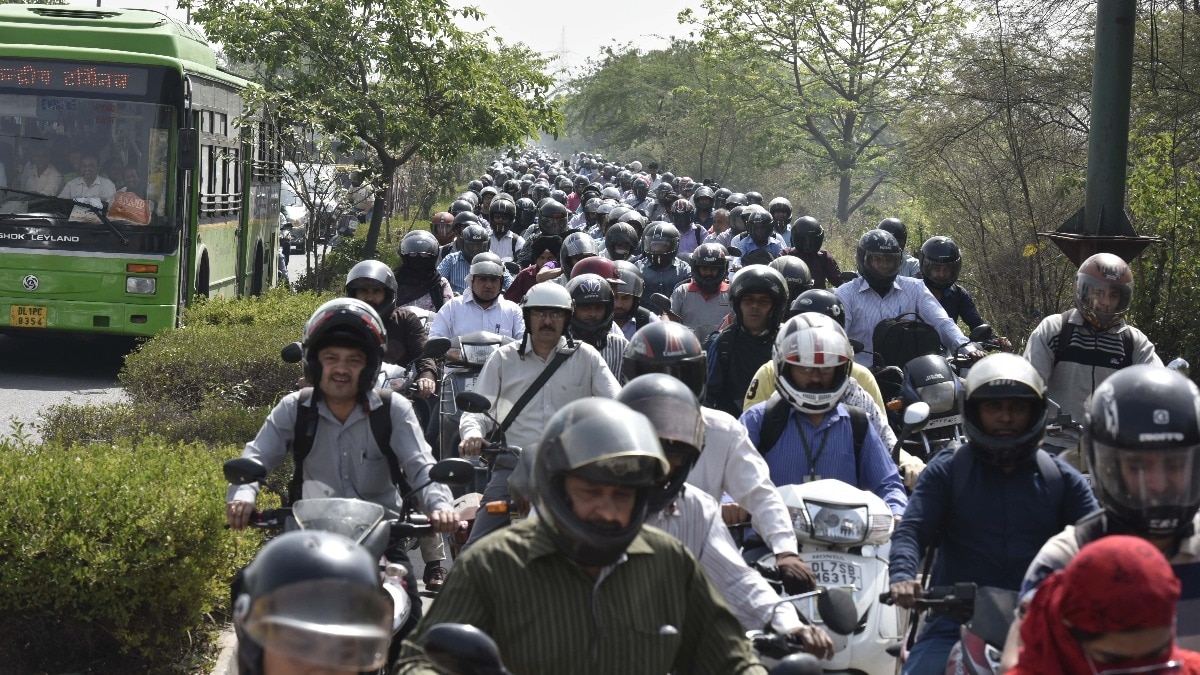
For years, Delhi's electric vehicle policy remained parked in the slow lane, stalled by debates over hybrids, charging stations, and the economics of going fully electric. But when the capital finally hit the accelerator, it did not begin with luxury electric sedans or family SUVs. It chose the humble motorcycle and scooter. From April 1, 2028, Delhi residents will no longer be able to register a new petrol-powered two-wheeler. Simply put, if one bought a bike after that date, it would have to be electric. The Rekha Gupta-led BJP government on Monday (June 29) announced the Delhi Electric Vehicle (EV) Policy. The government said that the aim of the policy is to achieve a minimum 30% electrification of Delhi's vehicle fleet by March 31, 2030, when the policy rolls out. Read Full Story At first glance, the decision might appear unusual. Cars occupy more road space, consume more fuel and dominate conversations around electric mobility. Yet the Delhi government's new EV Policy makes motorcycles and scooters the centrepiece of its clean-air strategy. The reason lies not in what occupies the most space on Delhi's roads, but in what occupies the largest share of them. DELHI'S POLLUTION PROBLEM IS WEARING A HELMET Delhi's air pollution is often blamed on diesel trucks, stubble burning of crops or construction dust. But transport remains one of the city's biggest pollution sources, particularly during the winters. According to the latest report that was cited by the Delhi Cabinet while clearing the policy, the Commission for Air Quality Management (CAQM) revealed that vehicular emissions contributed around 23% of Delhi's PM2.5 pollution during winter, making transport the single largest source of pollution in the city. And among vehicles, two-wheelers dominate the scenario. The CAQM estimated that around 67% of Delhi's entire vehicle stock consists of motorcycles and scooters. In other words, nearly two out of every three vehicles on Delhi's roads are two-wheelers. This sheer volume changes the pollution equation in the national capital. An earlier IIT Kanpur study estimated that around one-third of all vehicular PM2.5 and PM10 emissions in Delhi came from two-wheelers alone.
To put that into perspective, if all vehicles emitted 300 kilograms of harmful particulate matter, motorcycles and scooters would account for nearly 100 kilograms. Niharika Rai, principal secretary and commissioner of Delhi's Transport Department, while speaking on the EV Policy, cited a separate 2008 study and said that commercial goods vehicles accounted for 33% of vehicular pollution in Delhi, while two- and three-wheelers contributed 46%. Similarly, a 2021 draft emissions inventory prepared by think tank, The Energy and Resources Institute (TERI), concluded that vehicles remained the single largest contributor to Delhi's PM2.5 pollution during much of the pollution season. Across the Capital Region (NCR), two-wheelers alone accounted for 31% of transport-related PM2.5 emissions and more than half of CO emissions. Simply put, cleaning up Delhi's air requires cleaning up its fossil fuel-propelled two-wheelers first, and that is what the government is actually doing now. WHY DELHI GOVERNMENT'S EV POLICY DOESN'T INCLUDE CARS The simple answer to this question is the infrastructure. The biggest hurdle to electric vehicle mobility has never been the vehicle. It has been charging. Electric vehicles require widespread public charging stations. Cars are especially used for longer trips, they consume larger batteries, and take more time to recharge. Commercial vehicles face an even greater challenge. They usually require rapid charging or battery-swapping networks to minimise downtime. But the story of two-wheelers is different. Most motorcycles and scooters in Delhi are used for daily commutes of relatively short distances. Their batteries are significantly smaller, can often be removed for charging indoors, and in many cases riders can simply plug them into a normal household socket overnight. Battery swapping is also considerably easier and cheaper for two-wheelers than for larger vehicles. In metro cities like New Delhi, the expansion of two-wheeler battery-charging infrastructure (like battery-swapping points) has made electric scooters more practical for daily use. The growth of quick-commerce and last-mile logistics companies has accelerated adoption by driving demand for electric two-wheelers. That means Delhi can begin reducing emissions immediately without first building a citywide charging ecosystem comparable to what electric cars would require.
 The BriefWire