How India still hasn't closed the borewell trap
Every time a child falls into an open borewell, India watches the same tragedy unfold. The faces change. The locations change. The rescue equipment becomes
Every time a child falls into an open borewell, India watches the same tragedy unfold. The faces change. The locations change. The rescue equipment becomes more sophisticated. Yet the story remains painfully familiar. The latest reminder came from Ambala, where a four-year-old boy slipped into an abandoned borewell, triggering yet another desperate rescue operation. Within hours, the familiar scenes returned: anxious parents, villagers praying, television cameras broadcasting every development, heavy machinery rumbling through the night, and teams from the Army and disaster response agencies racing against time. However, the 21-hour rescue ended in heartbreak as the boy Nirvair Singh couldn’t survive. Rescue teams tried their best, but despite 21 hours of efforts in Haryana's Ambala, the boy died. Read Full Story For many Indians, it was impossible not to remember another little boy, Prince. This was the rescue that gave India hope. WHEN PRINCE MADE HEADLINES In July 2006, five-year-old Prince fell nearly 60 feet into a borewell in Haldaheri village, in Haryana's Kurukshetra district. What followed became one of the country's first nationally televised rescue missions. For nearly two days, the nation held its breath as the Indian Army soldiers, engineers, doctors, and local authorities worked tirelessly to reach the trapped child. A parallel pit was dug before rescuers carefully tunnelled sideways to pull him out alive. Prince's rescue was celebrated as a miracle. It demonstrated India's engineering ingenuity, the Army's professionalism, and the determination of ordinary citizens.
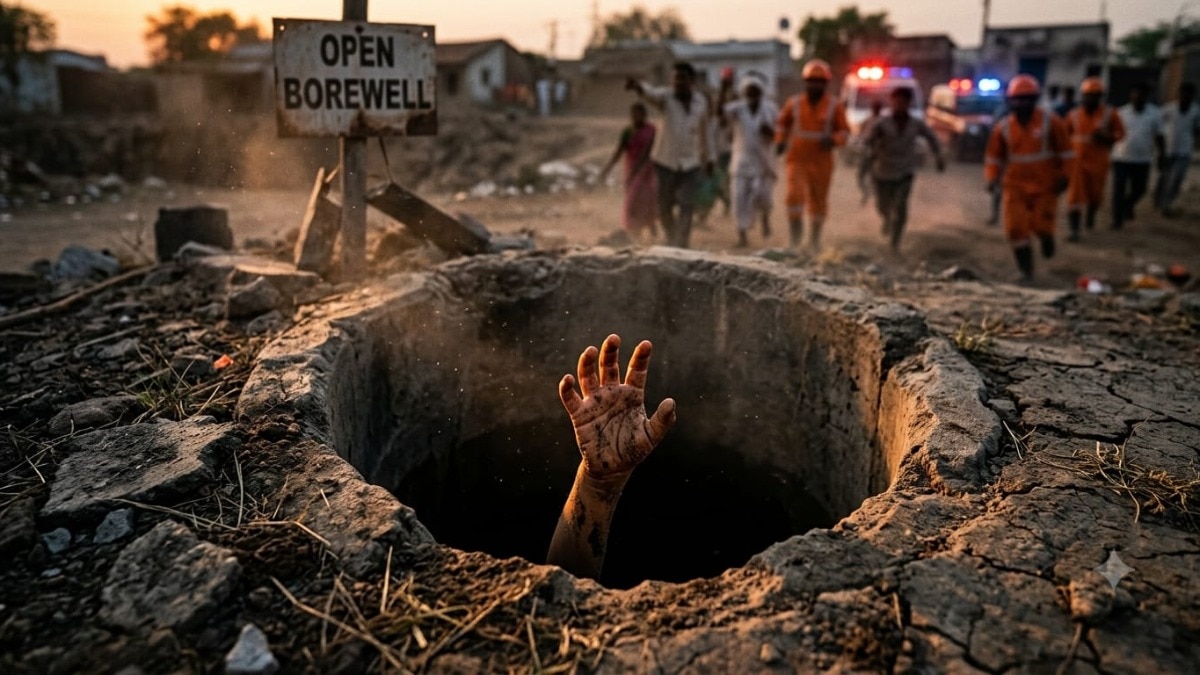
Many believed an incident requiring such a rescue would never be repeated. They were wrong. TRAGEDY THAT KEEPS REPEATING In the two decades since Prince's rescue, dozens of children have fallen into abandoned or uncovered borewells across states including Haryana, Madhya Pradesh, Rajasthan, Gujarat, Karnataka, Tamil Nadu, Punjab, and Uttar Pradesh. Some survived after marathon rescue operations. Many did not. Among the most heartbreaking cases was of Mahi, who remained trapped for several days before rescuers recovered her body in 2012 in Haryana’s Manesar. In 2019, toddler Fatehveer Singh, in Punjab's Sangrur district, spent more than 100 hours trapped before succumbing. Similar was the case of Sujith Wilson whose body was recovered from a borewell in a decomposed state in Tamil Nadu's Tiruchirappalli. Family and villagers paying tribute to the deceased two year old boy Sujith Wilson in Tamil Nadu in 2019. ((Photo: Daniel Kanagaraj/India Today) Each incident sparks outrage. Each rescue prompts promises of stricter enforcement. Yet abandoned borewells continue to dot India's rural landscape. WHY DO THESE ACCIDENTS HAPPEN? The answer lies in a mix of poor regulation, weak enforcement, and neglect. Across India, thousands of borewells are drilled every year to meet agricultural and drinking water needs. When a borewell stops yielding water, it is largely abandoned rather than permanently sealed. Some borewells are temporarily covered with loose wooden planks or plastic sheets. Others remain completely open. These shafts are often only a few inches wide but can extend hundreds of feet underground, making them invisible death traps for curious children playing nearby.
 The BriefWire