Global firms and German startups compete in realizing nuclear fusion
Companies around the world are competing to see who can build the first commercially viable nuclear fusion reactor. German startups are also in the race
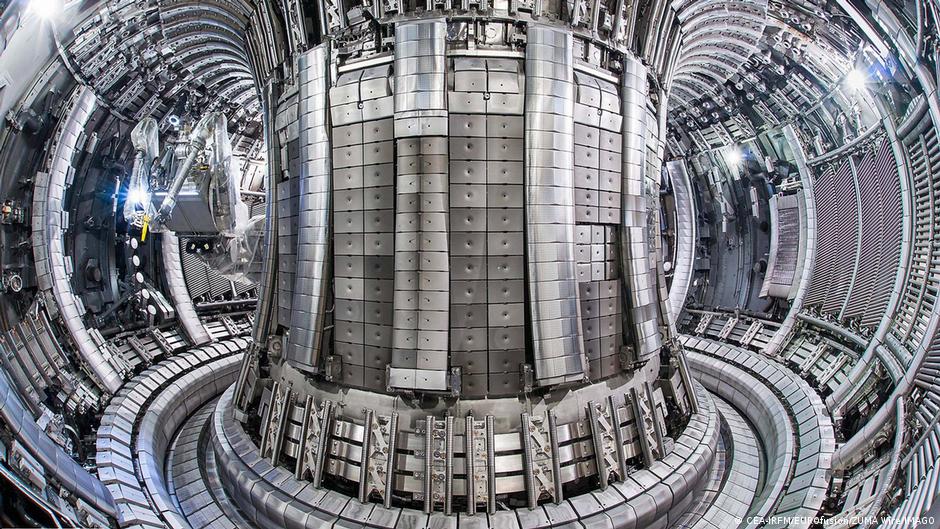
Companies around the world are competing to see who can build the first commercially viable nuclear fusion reactor. German startups are also in the race, supported by major corporations and private investors. The world's appetite for energy continues to grow, driven not least by the electrification of the economy. Data centers — which are essential for artificial intelligence (AI) — have significantly fueled this demand. Nuclear fusion appears to be the ideal solution. The International Energy Agency (IEA) estimates that by 2050, the fusion energy sector could be worth more than $350 billion (€307 billion). The principle is that light atomic nuclei fuse together, forming new elements and releasing energy in the form of heat. This heat can be used to generate electricity regardless of the weather, with a secure supply, without fossil fuels and without greenhouse gases. Unlike conventional nuclear fission, which generates energy by splitting atomic nuclei, the risk of an accident in nuclear fusion is very low, and no radioactive waste is produced. Four German startups in the race For decades, when it came to nuclear fusion, attention focused primarily on large-scale, government-funded projects such as the International Thermonuclear Experimental Reactor, or ITER. Thirty-five countries — including EU member states, the United States, Russia and China — are collaborating to build an experimental reactor in southern France. However, since construction began in 2007, costs have skyrocketed, while completion has been repeatedly delayed. Commissioning is currently scheduled for 2034–36. Meanwhile, numerous private companies have been founded worldwide with the aim of advancing the development of a nuclear fusion reactor, too. According to a report by the EU agency Fusion for Energy (F4E), around 77 companies are now working to bring nuclear fusion to market.
Forty-two are based in the United States, eight in China, and six in the United Kingdom. In Germany, Focused Energy, Marvel Fusion, Proxima Fusion, and Gauss Fusion have entered the market. Rapid rise in investment Nuclear fusion is not only research-intensive, it is also very expensive. While Germany would like to take the lead in this technology, most private and government funding is flowing into the U.S. and China. Still, enthusiasm for nuclear fusion is rising. Companies and investors seem determined not to miss out on this trend and are pouring more and more money into its development. Excluding public funds, nearly €13 billion ($14.8bn) were invested in private fusion research by the end of 2025. According to the F4E report, investments have grown by 30% since June 2025 alone. The majority of 53% went to U.S. companies, and about one-third to Chinese companies. "In fact, in both markets there are already some 'unicorns' valued at over $1 billion," the F4E report said. The remainder — just over €700 million — went to the eight European companies, with the German startups Marvel Fusion and Focused Energy receiving the largest sums. Concern about non-European dominance The imbalance is reminiscent of trends in many other economic sectors. Whether it is solar panels, wind power, semiconductors, electric vehicles, space exploration, social media, or AI — the United States or China often emerge as the market leader thanks to significant financial resources and government support. While the Chinese government is investing heavily in nuclear fusion, the industry in the United States is strongly supported by private investors including Big Tech companies. For over ten years, Google has not only provided the U.S. company TAE Technologies with hundreds of millions of dollars, but Google engineers have also been working directly at TAE on development projects.
 The BriefWire