Chinese proverb of the day: 'The toad wants to eat the swan' delivers a blunt reality check on overreaching ambition
This Chinese proverb gives a reality check to impossible dreams, delusions. Chinese proverb of the day 'The toad wants to eat the swan' Swan stands
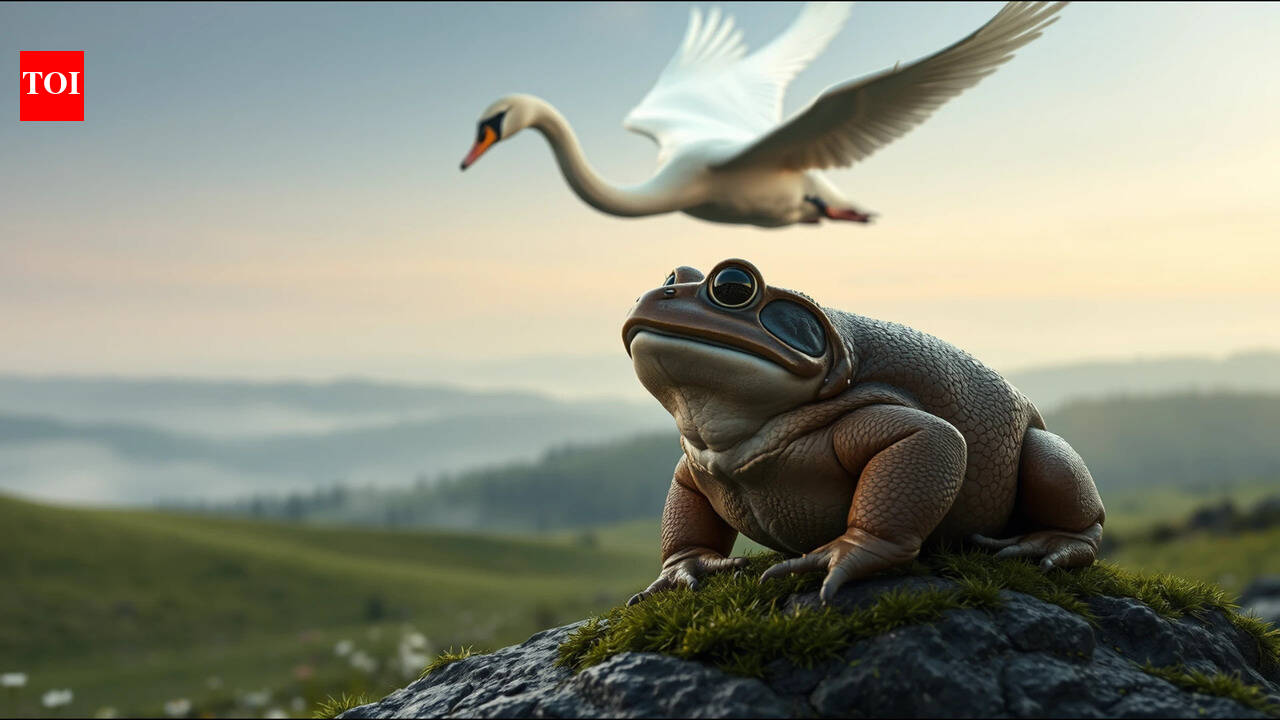
This Chinese proverb gives a reality check to impossible dreams, delusions. Chinese proverb of the day 'The toad wants to eat the swan' Swan stands for elegance, toad is at the bottom Origin of the Chinese proverb Killing ambition? Similar proverbs around the world Don't count your chickens before they hatch Building castles in the air, Asking for the moon Social media and delusion A toad can only dream about eating the swan. It can never happen in reality as it's a wild desire, an unrealistic dream. It is a famous and old Chinese saying that brings people down to earth, not by clipping their wings, but by reminding them of their capabilities. There is a touch of contempt in the proverb but that is to make this an unforgettable picture of impossible desire to discourage people from confusing fantasy with reality.In Chinese culture, as in the West, the swan is an emblem of purity, grace, elegance, and nobility. It is a creature of the heavens, capable of effortless flight, associated with high status and untainted beauty. The toad on the other hand represents the absolute bottom of the aesthetic and environmental hierarchy. It lives in the muck, moves with clumsy hops, and is visually unappealing.The proverb does not merely state that the toad admires the swan; it states that the toad wants to eat the swan.
Eating implies possession, consumption, and assimilation. Therefore, the proverb targets a specific type of desire, not passive admiration from afar, but an active, audacious pursuit to claim something far superior to oneself.While the exact origin of the phrase is rooted in ancient Chinese folklore and colloquial speech, it gained immense literary permanence through its usage in classic Chinese literature, most notably in Cao Xueqin’s 18th-century masterpiece, Dream of the Red Chamber (Honglou Meng).In the novel, characters use the phrase to mock those who attempt to climb into the rigid upper echelons of imperial aristocratic society through marriage or association.Historically, Chinese society was highly stratified, governed by strict Confucian hierarchies that dictated that marriages and partnerships should be formed between families of equal social status and wealth. Within this rigid framework, the proverb functioned as a social corrective and was mostly applicable for romantic relationships. If a poor scholar from a destitute village attempted to court the daughter of a high-ranking minister, people would say, "The toad wants to eat swan meat. "But what is wrong if a toad dreams big? Isn't the proverb demeaning the toad by asking it to return to its place? As the shackles of society have relaxed and now "marrying out of the league" is not frowned upon as much as it used to be, the proverb comes into play in other spheres of life when people foster delusion.
 The BriefWire