Israel peace deal greeted with skepticism, fear in Lebanon
Even Lebanese locals who don't like Hezbollah, the local group fighting Israel, are deeply concerned about the deal their government has made with the neighboring
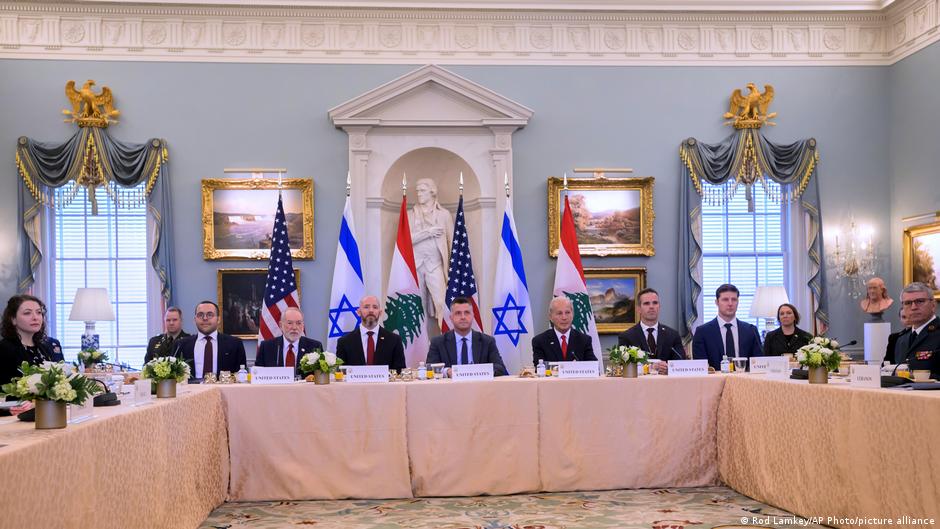
Even Lebanese locals who don't like Hezbollah, the local group fighting Israel, are deeply concerned about the deal their government has made with the neighboring country. Despite it being heralded as "the beginning of the beginning" of peace between Israel and Lebanon by the US' top diplomat Marco Rubio, the framework that's meant to end hostilities has been greeted with much skepticism. Fighting between Lebanese group Hezbollah and neighboring Israel has displaced over a million people in Lebanon as the Israeli military has taken over a so-called "security buffer zone." Irael says it wants to protect its own citizens living near the border in northern Israel from Hezbollah attacks. The latest fighting between the two belligerents, who have been opposed to one another for decades, began early March after Iran-aligned Hezbollah fired rockets at Israel, in retaliation for Israel's assassination of Iranian leader Ali Khamenei. And since March, Israeli attacks have killed over 4,000 Lebanese and injured over 12,000. It is thought that at least 34 Israeli soldiers have been killed in the fighting. The Israeli military has caused millions worth of damage in southern Lebanon to make way for a 'security buffer zone' Image: Zohra Bensemra/REUTERS To stop the violence, the US has overseen five rounds of direct talks between Lebanon and Israel. Last Friday, the result: A "trilateral framework" that would help the two countries move towards a peaceful settlement, agreed upon by both Israel and Lebanon as well as the US, which says it will support and monitor the agreement. Violence continues The framework, which specifies that the Lebanese government must disarm Hezbollah before Israeli troops withdraw from Lebanon, was obviously not going to please Hezbollah. In the hours after the deal was announced, Hezbollah supporters protested in Beirut, burning tires and running amok near government buildings. On Saturday, Hezbollah leader Naim Kassem denounced the framework, saying it was "humiliating, shameful, and a surrender of sovereignty." Kassem also said it could well see Lebanese land permanently annexed by Israel.
Israeli troops currently occupy around 600 square kilometers in Lebanon. Hezbollah plays a major role in Lebanese society, having had the support of most of the country's Shiite Muslim population. It has a political and social wing too and is often described as a "state within a state." The reaction of Hezbollah and its supporters was to be expected, observers said. But other Lebanese are also questioning the deal. "In general, I am against the war and how it started," says Raymond Khoury, a 39-year-old living in Beirut, referring to how Hezbollah fired rockets at Israel in March. "However the agreement is not good for us," Khoury told DW. That is even though he had been in favor of the earlier, direct talks between Israel and his country. "Article 13 of the agreement … is particularly problematic," he added. "Many victims died during this war yet this provision could mean there will be no accountability." The framework agreement has 14 points and the thirteenth says that neither party will pursue the other using international law. For example, that would mean Lebanese, whose homes and livelihoods have been destroyed by the Israeli army, cannot sue for damages or compensation in a place like the International Criminal Court. "The bottom line is that this agreement leaves Lebanon in a very weak position," another Beirut local, Steve, told DW; he didn't want to give his full name because the topic is politically sensitive, but he said he too had been in favor of direct talks between the two countries earlier this year. "There are so many compromises and Israel has been very clear in its cabinet meetings that it has no intention of acting in good faith." In the days since the framework was announced Israel has continued to attack targets in Lebanon, with bombs and drones. Hezbollah fighters and Israeli soldiers also continued to clash. Senior Israeli politicians, including the country's Prime Minister Benjamin Netanyahu, said that Israel did not plan on withdrawing from southern Lebanon until its conditions were met.
 The BriefWire