300-Year-Old Sikh Manuscript To Open For Devotees In Scotland. How Did It Get There?
300-Year-Old Sikh Manuscript To Open For Devotees In Scotland. How Did It Get There? Published By, Last Updated: June 30, 2026, 23:18 IST In a
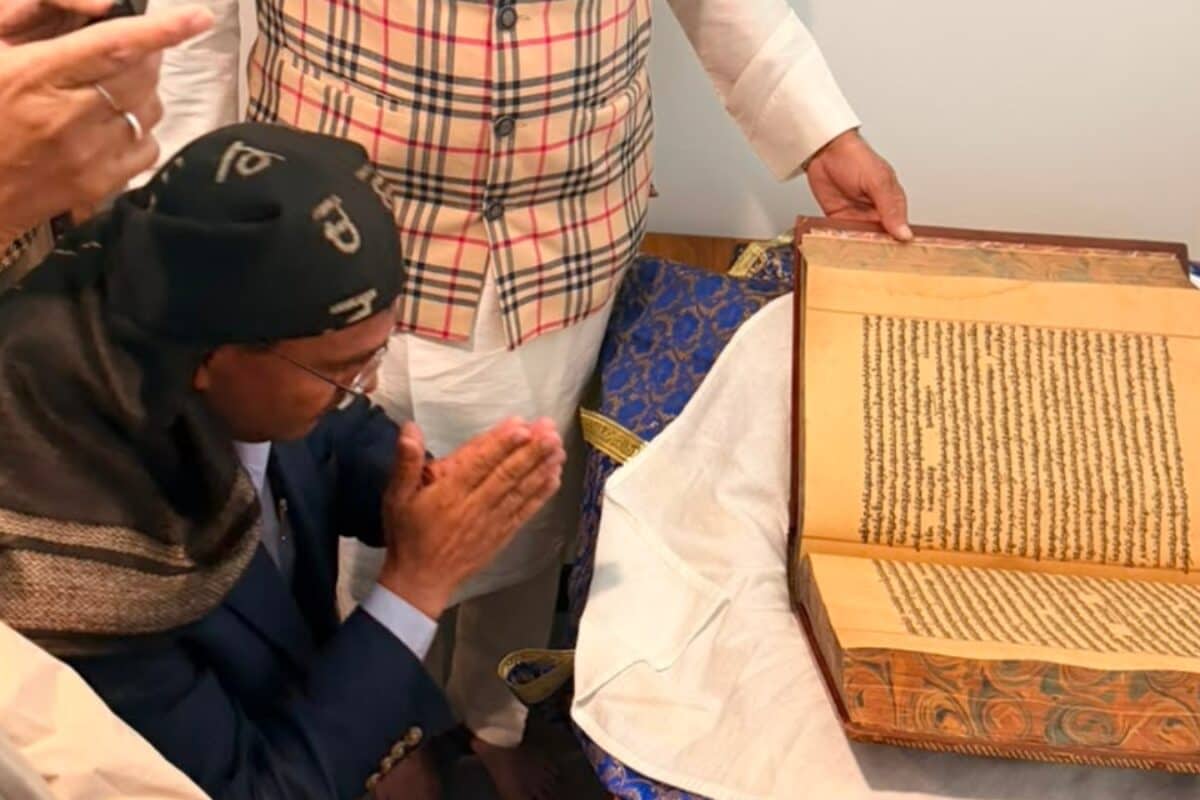
300-Year-Old Sikh Manuscript To Open For Devotees In Scotland. How Did It Get There? Published By, Last Updated: June 30, 2026, 23:18 IST In a statement on Tuesday, the Indian mission said the manuscript had undergone extensive restoration and preservation. Believed to be the oldest handwritten Guru Granth Sahib in the UK, the manuscript is one of three Sikh scriptures preserved by the University of Edinburgh. The Consulate General of India (CGI) in Scotland has announced plans to enable devotees to pay their respects to a 300-year-old handwritten manuscript of the Shri Guru Granth Sahib Ji at the Central Gurdwara in Glasgow. The announcement comes after a meeting involving officials from the CGI Scotland, representatives of gurdwaras in Edinburgh and Glasgow, the University of Edinburgh and Trishna Singh of Sikh Sanjog. In a statement on Tuesday, the Indian mission said the manuscript had undergone extensive restoration and preservation. “The sacred manuscript, once belonging to Maharaja Kharak Singh of Punjab, has undergone extensive restoration and preservation," the consulate said, calling the initiative as “a meaningful step in preserving and celebrating our shared heritage." The Consulate team was pleased to join Gurudwara Representatives from Edinburgh and Glasgow, Mrs. Trishna Singh of Sikh Sanjog and University of Edinburgh @uniofedinburgh officials for a coordination meeting to facilitate darshan of the 300-year-old manuscript of Sri Guru Granth… pic.twitter.com/Qz16iCVcos— India In Scotland (@IndiaInScotland) June 30, 2026 Believed to be the oldest handwritten Guru Granth Sahib in the UK, the manuscript is one of three Sikh scriptures preserved by the University of Edinburgh.
It was rediscovered in the university’s archives in 2020, bringing to light a significant piece of Sikh history that had remained largely unknown for decades. How the manuscript reached Scotland? According to the University of Edinburgh, the handwritten scripture once belonged to Maharaja Kharak Singh, the second ruler of the Sikh Empire. It is believed to have been taken from the Fort at Dullewalla in Punjab after the fort was captured in 1848 during British colonial rule. The manuscript later came into the possession of Sir John Spencer Login, the British administrator associated with transferring the Koh-i-Noor diamond from the Sikh Empire to Queen Victoria. It eventually became part of the University of Edinburgh’s collections. The manuscript was identified in 2020 after Sikh researchers from England searching for Sikh artefacts found references to the scriptures on the university’s website. Trishna Singh, who was serving as the university’s Honorary Sikh Chaplain, described seeing the manuscripts for the first time as a “mind-blowing experience".
 The BriefWire