US top court backs birthright citizenship in rebuke to Trump
US President Donald Trump had issued an executive order that would have changed constitutional guarantees that people born on US soil are citizens. The United
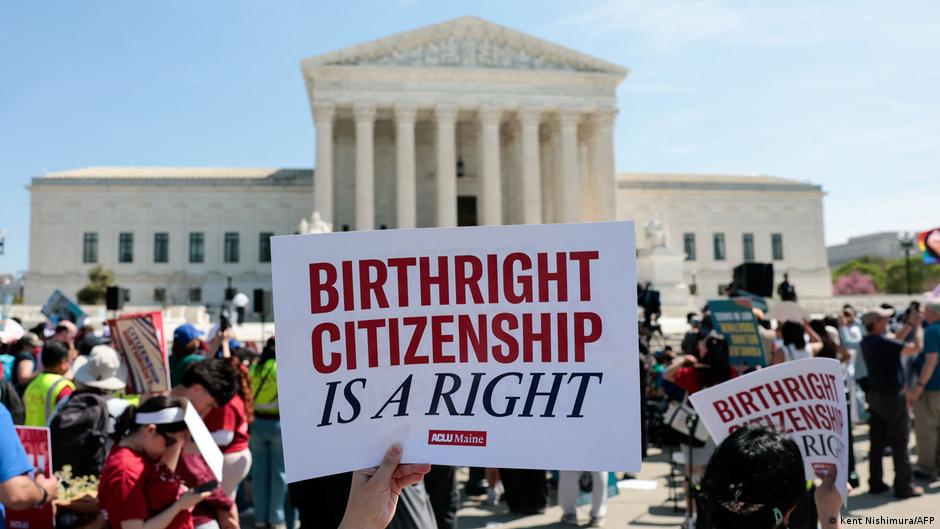
US President Donald Trump had issued an executive order that would have changed constitutional guarantees that people born on US soil are citizens. The United States' Supreme Court ruled on Tuesday that President Donald Trump's executive order restricting birthright citizenship is unlawful. In one of the most consequential decisions for the top court, which had waited until the final day of the term, justices ruled 6-3 to maintain the right to US citizenship for nearly everyone born on US soil. Trump issued the order on the first day of his second term in office last year as part of a range of policies aimed at cracking down on immigration, both legal and illegal. Justices had already expressed skepticism during oral arguments in April, which Trump personally attended in a highly unusual move for a sitting US president. The order had directed governed agencies not to recognize the citizenship of children born in the United States if neither parent is a US citizen or "green card" holder, a legal permanent resident.
Critics argue that the order violates the 14th Amendment, which is considered to confer automatic citizenship to those born on the territory of the United States. In its ruling, the court upheld that broader conception of birthright citizenship. "Citizenship, then and now, was the right to have rights—to freely participate in our political community. The Framers of the Fourteenth Amendment extended that promise to 'every free-born person in this land,'" Chief Justice John Roberts wrote for the court. "We keep that promise today," he added. US birthright citizenship: the 14th Amendment The provision in question, known as the Citizenship Clause, states: "All persons born or naturalized the United States, and subject to the jurisdiction thereof, are citizens of the United States and of the state wherein they reside." The Trump administration, however, claims that simply being born in the United States is not sufficient to render a person "subject to the jurisdiction thereof," and therefore a citizen.
Such people would include the babies of immigrants who are in the country illegally or whose presence is lawful but temporary, such as university students or those on work visas, the administration argues. Solicitor General D. John Sauer, the lawyer for the Trump administration, argued that birthright citizenship "demeans the priceless and profound gift of American citizenship" and "rewards illegal aliens who not only violate the immigration laws but also jump in front of those who follow the rules." Opponents have accused President Trump of racial and religious discrimination in his approach to immigration and several lower courts, including one in New Hampshire, have blocked the executive order, which Trump is now challenging. "It's one of the clearest statements of who we are as a country," said the American Civil Liberties Union (ACLU) in a statement. "No matter who your parents are, if you're born here, you belong here." How do most countries determine a child's citizenship?
 The BriefWire