Operation Muskaan must go beyond rescue drives to tackle child labour, says Telangana child rights commission
As Telangana prepares to launch this year’s Operation Muskaan on Wednesday — the annual month-long drive to rescue children from child labour, begging, trafficking and
As Telangana prepares to launch this year’s Operation Muskaan on Wednesday — the annual month-long drive to rescue children from child labour, begging, trafficking and other forms of exploitation — the focus must shift beyond rescue numbers to year-round enforcement, stronger rehabilitation and greater accountability, according to the Telangana State Commission for Protection of Child Rights (TSCPCR). While the State has rescued thousands of children through its annual Operation Smile in January and Operation Muskaan in July, the absence of regular inspections, weak follow-up on rehabilitation and a lack of transparency over the legal outcome of cases continue to undermine long-term efforts to eliminate child labour, said TSCPCR member Chandana Marripalli. The commission has called for monthly surprise inspections, fully functional district-level task force committees and sustained monitoring of rescued children, arguing that the current system leaves significant loopholes that employers continue to exploit.
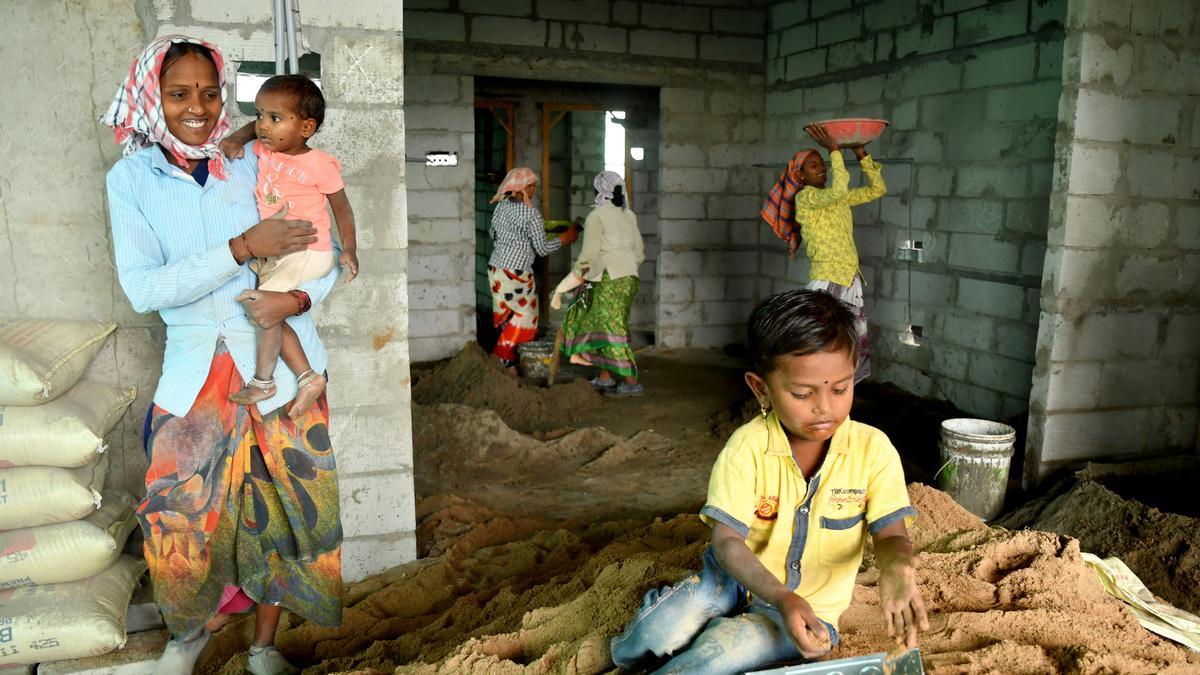
During Operation Muskaan-11 in July 2025, authorities rescued 7,678 children in Telangana, with large numbers of child labourers and migrant children identified in Hyderabad, Rangareddy, Medchal-Malkajgiri, Sangareddy, Khammam and Bhadradri Kothagudem districts. According to Ms. Marripalli, rapid urbanisation and construction boom across Hyderabad and neighbouring districts continue to drive the employment of children at construction sites. However, large-scale inspections are largely confined to the January and July drives, making enforcement predictable. “Employers know when these operations take place. Many simply keep children away from workplaces during these drives and re-engage them afterwards,” she said, stressing that child labour enforcement cannot remain a twice-a-year exercise. She said district task force committees, comprising officials from the Police, Labour, Women and Child Welfare, Education and other departments, are mandated in all 35 districts but are not fully functional in many places.
Moreover, while the number of children rescued during Operation Muskaan is announced every year, there is little publicly available information on how many FIRs eventually result in convictions, whether investigations are completed, or whether rescued children remain in school or return to exploitative work. According to Ms. Marripalli, every rescued child should have an individual rehabilitation plan, with authorities monitoring not only school enrolment but also educational continuity, family circumstances and access to government welfare schemes for at least two years. “Many children return to labour because of persistent poverty, migration and the absence of stable livelihoods for their families. Economic rehabilitation of the family is just as important as rehabilitation of the child,” she said. The commission has also called for stronger legal action against employers.
 The BriefWire