Why a passport may not prove you're Indian
A passport controversy has reignited debate over how citizenship is proven in India, with voter-list revisions exposing systemic gaps and raising fears of wrongful exclusion
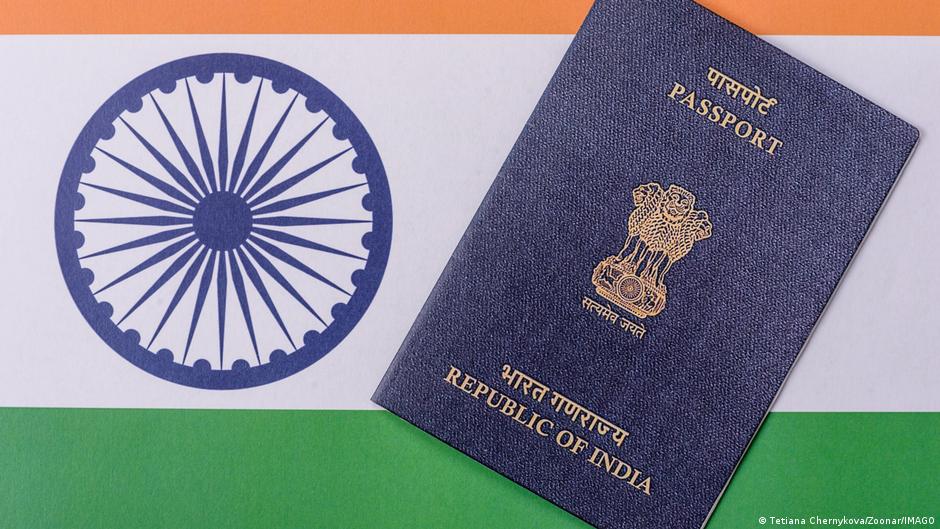
A passport controversy has reignited debate over how citizenship is proven in India, with voter-list revisions exposing systemic gaps and raising fears of wrongful exclusion. For decades, Indian citizenship was rarely questioned. Most people voted, obtained passports, enrolled in welfare schemes and went about their lives without having to demonstrate that they belonged in the country in which they were born. That assumption is steadily changing. Last week, a senior official of India's Ministry of External Affairs (MEA) said the Indian passport is primarily a travel document and should not be treated as a conclusive proof of citizenship, according to Indian media reports. Legally, that distinction is not new. diplomat Veena Sikri notes that the Ministry of Home Affairs — not the MEA — has the sole authority to grant and determine citizenship. "A passport is an attribute of citizenship, but does not itself confer it," Sikri told DW. The MEA official's reported statement comes at a time when citizenship itself has become one of India's most politically contested subjects. It also coincides with the election commission's ongoing Special Intensive Revision (SIR) of electoral rolls in several states and territories, including Bihar — one of India's largest states by population — and West Bengal, where Prime Minister Narendra Modi's party recently won state elections. The Election Commission of India (ECI) said the "intensive revision" was needed to remove ineligible voters, but critics say it is skewed against marginalized and minority communities.
Members of Modi's Hindu nationalist Bharatiya Janata Party (BJP) have long claimed that large numbers of undocumented Muslim migrants from neighboring Bangladesh have fraudulently entered India's electoral rolls. No single proof of citizenship India's citizenship law does not provide most people with a single document that conclusively proves their status. Instead, different documents serve different purposes. The Aadhaar biometric card establishes identity for welfare and public services. A voter identity card enables electoral participation. A passport certifies nationality for international travel. Birth certificates, school records and land documents may all become relevant in different circumstances. India forces Bengali-speaking Muslims into Bangladesh To view this video please enable JavaScript, and consider upgrading to a web browser that supports HTML5 video Rebecca Mammen John, a senior lawyer who has studied the issue closely, says the real problem is that India has no universal document that conclusively establishes citizenship. "A passport is issued only to an Indian citizen under the Passports Act, yet the government does not issue any separate citizenship certificate to people who acquire citizenship by birth or descent," she told DW. While acknowledging that a passport may not always be conclusive proof in exceptional circumstances, she said the timing of the clarification had unnecessarily fueled public anxiety. "At a time when citizens are already grappling with the SIR and recurring debates over a Register of Citizens, the government has raised doubts about the one document most Indians regard as the ultimate proof of belonging without offering any alternative," she said.
 The BriefWire