Does India's delegation for Khamenei funeral reveal a shift?
The state funeral of Iran's Supreme Leader Ayatollah Ali Khamenei, to be held from July 4 to 9 in Tehran, Qom and his birthplace, Mashhad
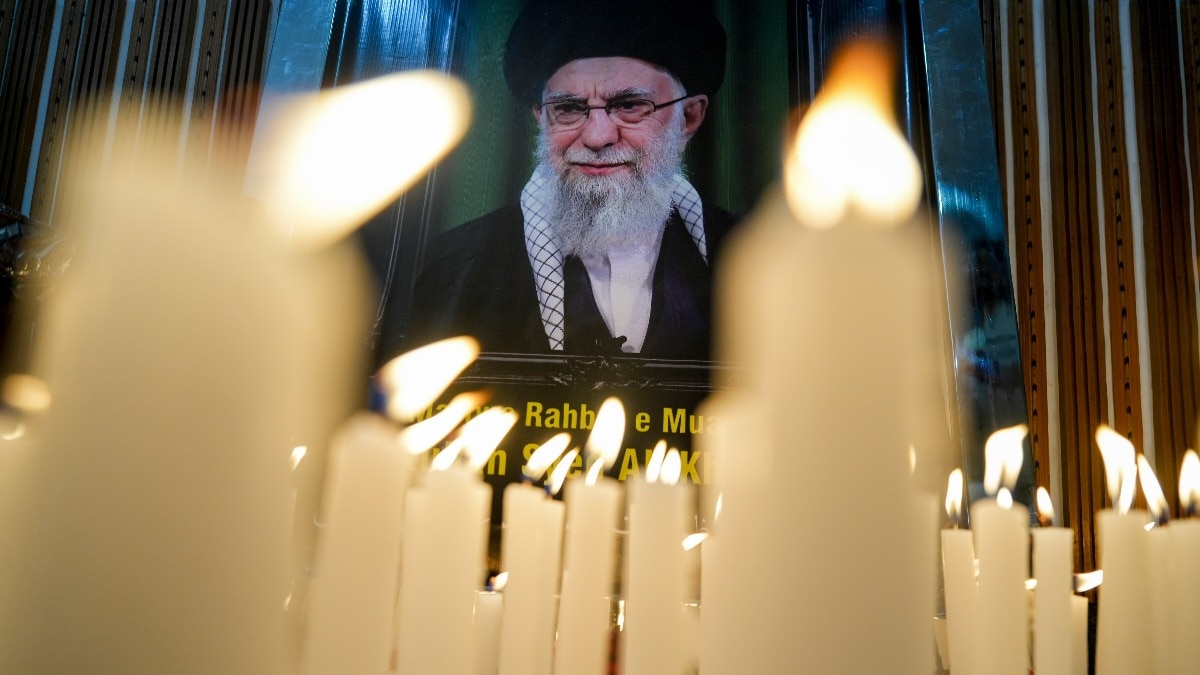
The state funeral of Iran's Supreme Leader Ayatollah Ali Khamenei, to be held from July 4 to 9 in Tehran, Qom and his birthplace, Mashhad, might be one of the largest funeral processions in recent history. While Iranian President Masoud Pezeshkian personally invited Prime Minister Narendra Modi for Khamenei's funeral, India has chosen to send Minister of State for External Affairs Pabitra Margherita and Bihar Governor Lt Gen Syed Ata Hasnain (Retd) instead. Experts are debating if the choice of representatives signifies a shift in India's Middle East policy vis a vis Iran. Read Full Story Those claiming that there is a change in stance compared the choice to India's representation at the 2024 funeral of Iranian President Ebrahim Raisi, where Vice President Jagdeep Dhankhar led the delegation. Those suggesting there wasn't any change in stance compared the representation to the funeral of then Ayatollah Ruhollah Khomenei in 1989. India had sent the serving foreign minister to Khomenei's funeral. Ayatollah Ali Khamenei, who served as Iran's Supreme Leader for decades, was killed in Tehran on February 28 in a US-Israeli airstrike. The multi-day funeral in July is expected to draw world leaders and other international dignitaries, underscoring Iran's significance in geopolitics through its influence over global energy markets, and the Strait of Hormuz. Ali Khamenei, being the Ayatollah, was also the leader of Shia Muslims across the world. India and Iran share longstanding historical, cultural, and strategic ties. Bilateral relations have encompassed energy cooperation, the development of Chabahar Port as a key connectivity project bypassing Pakistan, and collaboration in multilateral settings. However, these ties have navigated complexities arising from sanctions, regional conflicts, and India's growing partnerships with other Middle Eastern players, including Israel and Gulf nations like the UAE. IS INDIA'S MOVE AIMED AT NOT ANTAGONISING US AND ISRAEL? The composition of the delegation India is sending to Khamenei's funeral has elicited varied commentary. Some observers have questioned whether it adequately signals the depth of India's engagement with Iran, especially given the personal nature of the invitation to the Prime Minister.
They asked if it was aimed at not trying to antagonise ties with the US and Israel. Among the sharpest critics was lawyer and author Navroop Singh, who argued that the delegation signals a downgrade in ties with Tehran. "Sending a Governor of a state tells you how seriousness of rebuilding relationship with Iran (sic). Seems the tilt towards Israel and UAE is more pronounced. MEA has got its priorities messed up to be frank. On a personal invite may be Foreign Sect, MoS or MEA or VP would have made sense. This is not strategic autonomy, when your decisions are influenced by what third powers would perceive to be of our diplomacy. BRICS summit in India seems to be a non starter! When UAE & USA are talking, JD Vance is talking to Iranian leadership. We are being cagey!" Strategic affairs analyst Brahma Chellaney also drew a contrast with India's response after the death of Iranian President Ebrahim Raisi in 2024. "When Iranian President Ebrahim Raisi died in a helicopter crash in 2024, India dispatched its vice president to the funeral. But now the Modi government is sending much lower-level representation to the multi-day state funeral for Ali Khamenei, who was not only Iran's spiritual leader but also its head of state. The decision suggests that Modi's tilt toward the aggressor states in the Iran war still persists." "By avoiding higher-level representation, New Delhi appears intent on not antagonising Washington and Tel Aviv. The government would argue that it is calibrating its representation to honour India's historical and strategic relationship with Iran as a maritime neighbour while avoiding a high-profile political gesture that could complicate ties with Washington and Tel Aviv," Chellaney also said. Independent journalist and author Saba Naqvi echoed similar concerns, saying, "This is poor judgement as Pakistan is reportedly sending their Prime Minister. Come what may Iran will be determining so many things in the world including oil supply. Israel cannot win this war but can create trouble as it loses.
 The BriefWire