Will El Niño Make Your Morning Tea Costlier? Here's How A Weak Monsoon Can Hit Your Grocery Bill
Will El Niño Make Your Morning Tea Costlier? Here's How A Weak Monsoon Can Hit Your Grocery Bill Written By, Last Updated: June 30, 2026
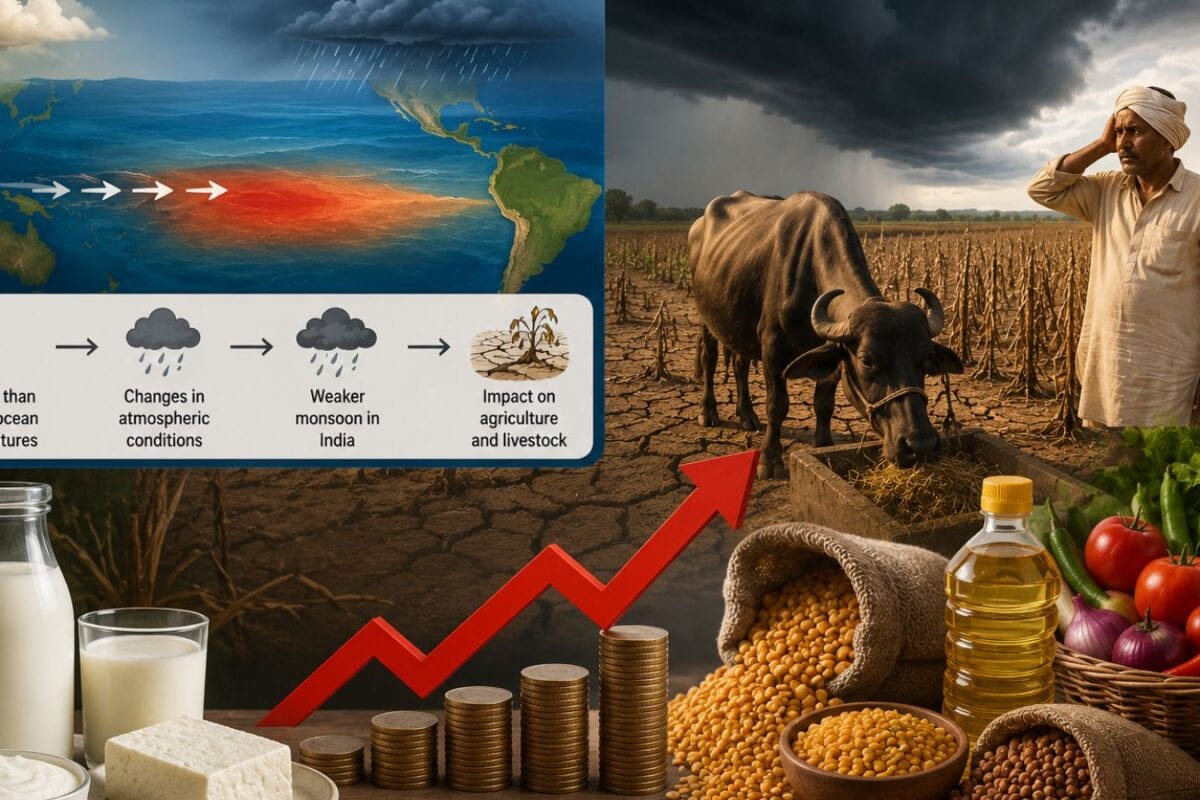
Will El Niño Make Your Morning Tea Costlier? Here's How A Weak Monsoon Can Hit Your Grocery Bill Written By, Last Updated: June 30, 2026, 11:00 IST Milk may only be the beginning. Experts warn that a weak monsoon could push up prices of several food items because rainfall directly affects agricultural output Rapid Read From pulses and vegetables to edible oils, a weaker-than-normal monsoon could push up grocery bills for millions of households. (AI-Generated Image) Can a weather pattern over the Pacific Ocean make your morning cup of tea more expensive? It may sound unlikely, but that’s exactly what industry experts are warning about. An intensifying El Niño could trigger another round of milk price hikes in the coming weeks by disrupting India’s monsoon, reducing fodder availability and squeezing dairy output. Dairy companies are already preparing for the possibility of another price revision. Parag Milk Foods Chairman Devendra Shah, speaking to The Times of India, said, “Milk prices have already increased by around 2-3 per cent and, if rainfall remains below normal in key milk-producing regions, a further 3-4 per cent increase is possible by July." And the impact may not stop at milk. From pulses and vegetables to edible oils, a weaker-than-normal monsoon could push up grocery bills for millions of households. ALSO READ | How Much Rain Deficit Is Too Much? What India’s Worst Monsoon Years Tell Us About 2026 Here’s how a climate phenomenon unfolding thousands of kilometres away could end up affecting your monthly food budget. How Can Weather Affect Food Prices? The connection isn’t obvious at first, but it follows a simple chain. El Niño leads to a weaker monsoon, which means less fodder and water. This is turn leads to lower milk production and thus, higher milk prices.
Most dairy animals depend on green fodder, crop residue and adequate water. Poor rainfall reduces fodder availability and pushes up feed costs. Farmers are then forced to spend more on maintaining cattle or reduce herd sizes, resulting in lower milk production. When supply falls but demand remains steady, prices typically rise. Didn’t Milk Prices Just Increase? Yes. Leading dairy firms like Amul, Mother Dairy, and Parag Milk Foods raised the price of milk by about 2-3 per cent in May. Industry insiders claim that there is a possibility of yet another rise of 3-4 per cent in July or August if the rains are less than usual in areas producing milk. ALSO READ | El Niño Is Here. Does It Always Mean Drought For India? Here’s What Past Data Shows This implies that apart from milk, consumers may have to shell out more for other dairy products like curd, paneer, butter, ghee, and cheese. What Else Could Become More Expensive? Milk may only be the beginning. Experts warn that a weak monsoon could push up prices of several food items because rainfall directly affects agricultural output. Speaking to Moneycontrol, Shashi Kant Singh, Partner, Agriculture, Food and Agribusiness at PwC India, warned that “a super El Niño is taking shape in the Pacific, and India’s rural economy is in the crosshairs. This is emerging as a key risk for India’s agriculture". He added that the impact may not be limited to the kharif season, with warmer winters potentially affecting rabi crops as well. Some of the biggest risks include Pulses: Tur (arhar) and other pulses are considered among the most vulnerable crops during a deficient monsoon. Government officials have warned of significant production risks if rainfall remains weak.
 The BriefWire