'Operation Sindoor Showed India's Resolve': Army Chief Says Future Wars Will Be Technology-Driven
'Operation Sindoor Showed India's Resolve': Army Chief Says Future Wars Will Be Technology-Driven Reported By, Edited By Last Updated: June 30, 2026, 09:39 IST Army
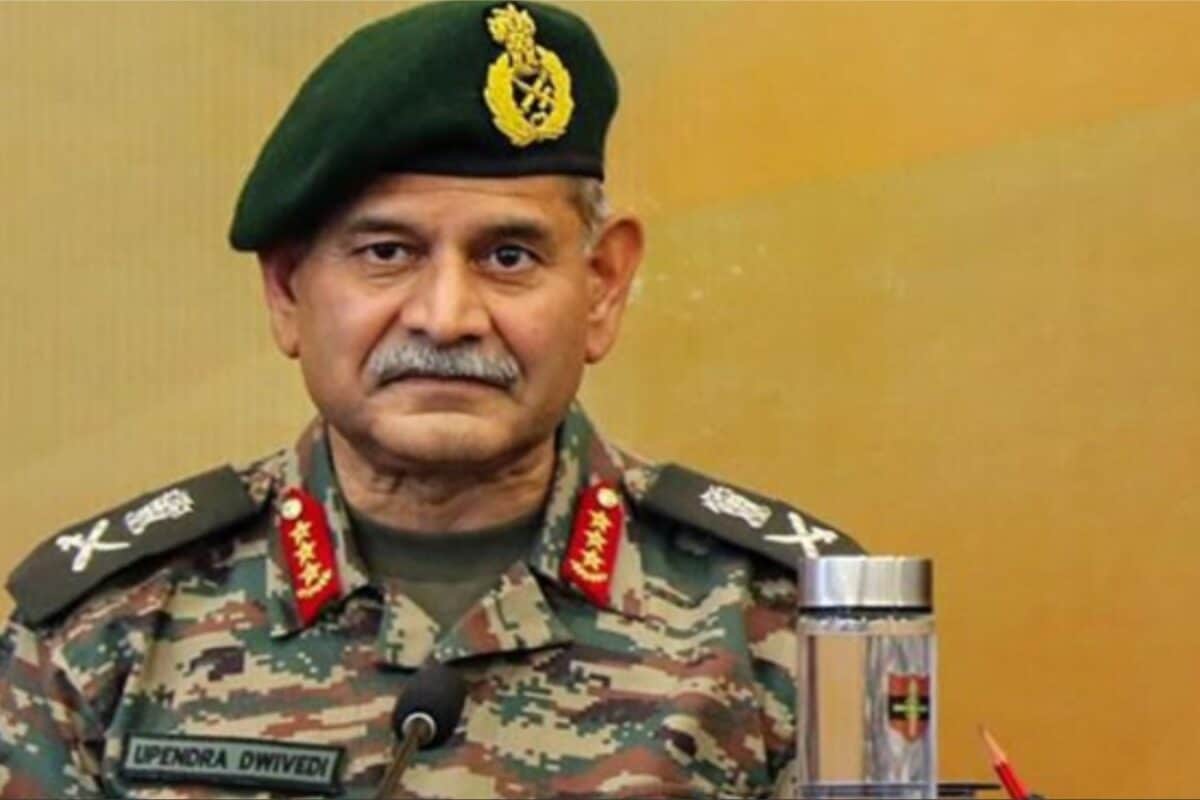
'Operation Sindoor Showed India's Resolve': Army Chief Says Future Wars Will Be Technology-Driven Reported By, Edited By Last Updated: June 30, 2026, 09:39 IST Army Chief Gen Upendra Dwivedi says the LAC remains stable but sensitive, outlines Army transformation, drone strategy, and calls Agnipath a work in progress. A file photo of Chief of the Army Staff, General Upendra Dwivedi (PTI) As he prepares to demit office after completing his tenure as Chief of the Army Staff, General Upendra Dwivedi said Operation Sindoor demonstrated India’s “resolve, capability and restraint" and underscored the importance of intelligence-led, technology-driven warfare. In an exclusive interview with CNN-News18, the outgoing Army Chief said India achieved its desired military objectives in “just 88 hours," adding that future conflicts would be intense, technology-driven and fought under constant information scrutiny. General Dwivedi also said the situation along the Line of Actual Control (LAC) remains “stable, but sensitive," while emphasising that the Indian Army’s priorities continue to be maintaining peace and stability, resolving local issues through established mechanisms, and retaining a strong and credible deployment posture. He further outlined the Army’s ongoing transformation, expansion of drone and counter-drone capabilities, and shared his assessment of the Agnipath scheme. Following are the excerpts from the interview Q. Operation Sindoor has generated considerable discussion on India’s military preparedness. What, in your view, was the most important takeaway for the Indian Army? Gen Upendra Dwivedi: Operation Sindoor was a clear demonstration of India’s resolve, capability and restraint. It was a calibrated military response to terrorism, executed with precision, clear purpose and disciplined planning. The most important takeaway was that modern operations require the effective integration of intelligence, surveillance, precision capability, secure communications, information management and joint planning. The operation showed that when credible information, national will and coordinated military action come together, decisive results can be achieved. While some global conflicts have been prolonged, we have been able to achieve desired outcomes in just 88 hours. Future conflicts would be intense and technology-driven, while being conducted under constant information scrutiny.
For the Indian Army, the key lesson is that precision must be backed by reliable intelligence, resilient networks, integrated command systems and clear direction. Q. The Army has been speaking of transformation for some time. How is this change being reflected on the ground? Gen Upendra Dwivedi: The transformation of the Indian Army is a continuous institutional process. Modernisation is no longer limited to inducting new platforms or equipment. It includes changes in structures, training, technology, doctrine, systems and human resource management. Recent operational experiences have shown that future effectiveness will depend on how quickly intelligence, surveillance systems, weapons, communication networks and commanders can work together. The Indian Army is therefore moving towards more agile, networked and technology-enabled units and formations. New structures such as Rudra Brigades, Bhairav Battalions, Ashni Drone Platoons, Shaktibaan Regiments and Divyastra Batteries are part of this larger transformation. The aim is to make the Indian Army more responsive, precise and better prepared for a technology-intensive battlefield. Q. Drones are becoming central to military operations worldwide. How is the Indian Army building its drone ecosystem? Gen Upendra Dwivedi: Drones are no longer limited to surveillance or specialised missions. They are now an important part of modern military operations and are used for intelligence, surveillance, target identification, precision engagement, logistics, battle damage assessment and force protection. The Indian Army’s approach is capability-driven rather than number-driven. Different categories of drones are required for different roles, ranging from small tactical tasks to long-range surveillance, logistics and precision missions. The focus is on building a complete drone ecosystem. This includes indigenous manufacturing, trained manpower, maintenance support, training infrastructure, doctrine, counter-drone capability and integration with operational planning. The aim is to ensure that formations and soldiers have the technological advantage required for future operations. Q. What is the purpose of Baaz Battalions, and how will they add to the Army’s capabilities? Gen Upendra Dwivedi: Baaz Battalions are being progressed to strengthen the Indian Army’s Remotely Piloted Aircraft capability. They will be built upon existing RPA Flights and will include a specialist pool of personnel trained to operate and manage these systems.
 The BriefWire