Lost for 50 years, Japan's WWII gold submarine was finally found nearly 3 miles underwater
How I-52 became one of Japan's most valuable submarines The messages that betrayed I-52 The night I-52 disappeared beneath the Atlantic A mystery that lasted
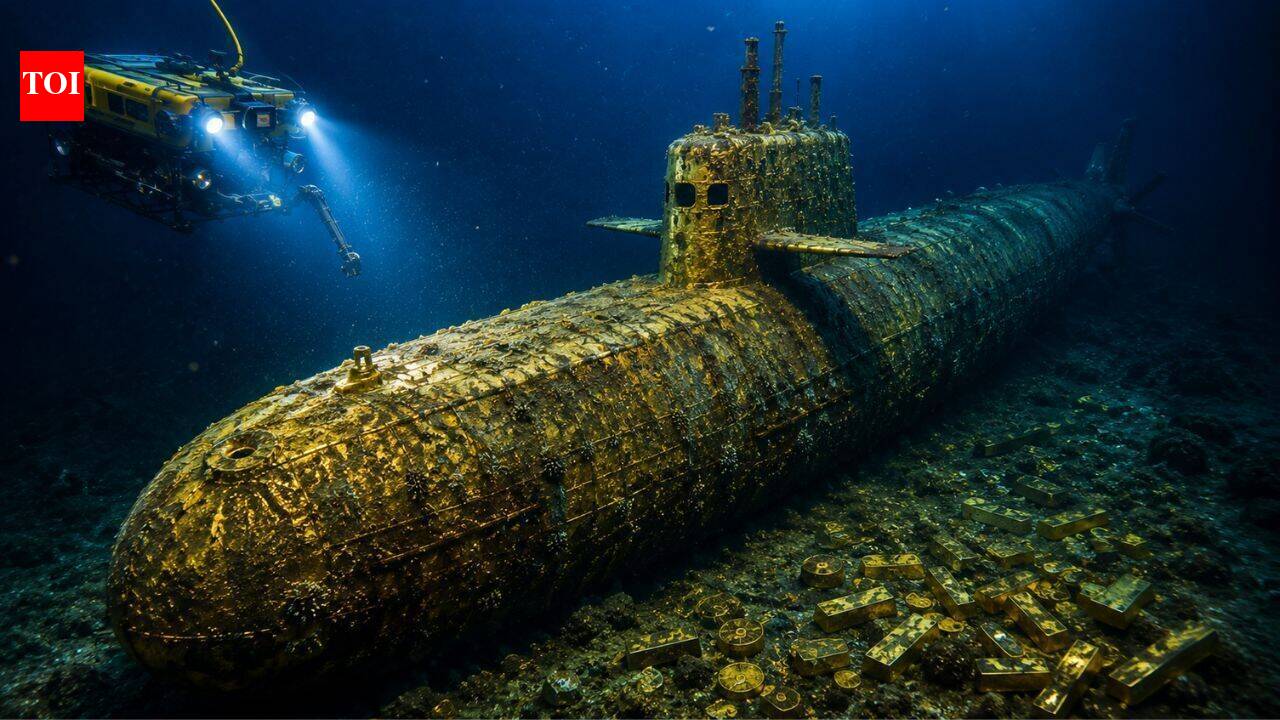
How I-52 became one of Japan's most valuable submarines The messages that betrayed I-52 The night I-52 disappeared beneath the Atlantic A mystery that lasted for decades How old records led to a new search The Atlantic finally gives up its secret The gold may still be inside The submarine slipped beneath the Atlantic during the summer of 1944 and then disappeared from history. For decades, its exact resting place remained uncertain despite wartime reports, scattered naval records and countless theories. Hidden beneath almost three miles of water, the Japanese submarine I-52 carried far more than its crew. Deep inside its hull was a valuable wartime cargo that included gold intended for Germany, strategic raw materials and medical supplies that reflected the increasingly desperate partnership between two Axis powers separated by vast oceans.It took more than fifty years, advances in deep-sea technology and painstaking historical detective work before the wreck was finally located. When explorers eventually reached the site in 1995, they discovered a vessel that had survived the enormous pressures of the deep remarkably well. Much of the submarine remained upright, preserving one of the Second World War's most unusual maritime stories and leaving behind unanswered questions about the fortune believed to remain inside.As reported by The New York Times, by 1944, ordinary merchant shipping between Japan and Germany had become almost impossible.Allied naval dominance meant surface vessels faced an overwhelming chance of being intercepted long before reaching Europe. Both nations increasingly relied on long-range submarines capable of transporting compact but valuable cargo across thousands of miles of hostile waters.The I-52 belonged to that small group. Built as a large transport submarine rather than a conventional attack boat, it departed Japan before calling at Singapore to complete its loading.
Among the cargo were metals such as tin, tungsten and molybdenum, together with natural rubber, quinine and opium intended for military use.Its most valuable shipment attracted attention long after the war ended. Around two tonnes of gold, packed into 146 bars, had been loaded to pay for advanced German equipment and industrial technology that Japan could no longer manufacture in sufficient quantities at home.The submarine's voyage appeared secret, yet much of it had already been exposed before it entered the Atlantic.British and American codebreakers had succeeded in reading important German and Japanese naval communications, allowing Allied commanders to monitor planned submarine movements with surprising accuracy. The Nauticos revealed, messages revealed where I-52 was expected to meet the German submarine U-530, when the transfer would happen and what sort of cargo was being carried.Armed with that intelligence, the United States Navy dispatched a hunter-killer group centred on the escort carrier USS Bogue. Rather than searching blindly across the Atlantic, its aircraft were sent toward a location already identified through intercepted communications.Reportedly, late on the evening of 23 June 1944, I-52 surfaced to rendezvous with U-530 in the middle of the Atlantic. The exchange had barely concluded before aircraft from Bogue arrived overhead.Lieutenant Commander Jesse Taylor, flying a TBM Avenger, first attacked with depth charges before making another pass using a Mark 24 acoustic torpedo. Although officially described as a mine during the war, the weapon was actually an early homing torpedo that tracked the sound produced by submarine propellers beneath the surface.Recordings collected through sonobuoys captured the sounds of the submarine diving, followed by an explosion and the crushing noises that suggested the vessel had been fatally damaged.
 The BriefWire