Earthquake Survival Guide: How Long Can People Trapped Under Rubble Stay Alive?
Earthquake Survival Guide: How Long Can People Trapped Under Rubble Stay Alive? Published By, Last Updated: June 29, 2026, 23:23 IST People trapped under rubble
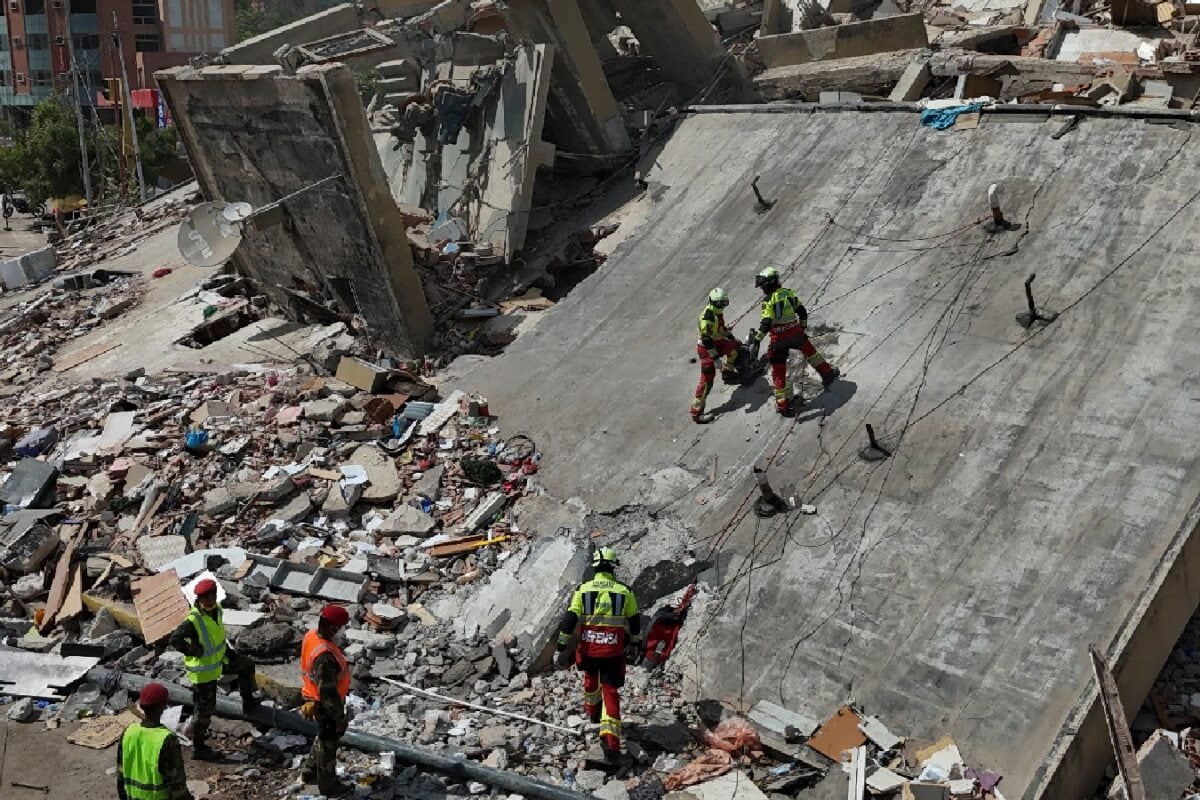
Earthquake Survival Guide: How Long Can People Trapped Under Rubble Stay Alive? Published By, Last Updated: June 29, 2026, 23:23 IST People trapped under rubble can survive for a week or longer if they escape serious injuries and have access to breathable air and water. Rapid Read Mexican Army rescue workers search for people trapped in collapsed buildings after earthquakes struck La Guaira, Venezuela, (IMAGE: AP PHOTO) As rescue teams continue searching for survivors after the powerful earthquakes that struck Venezuela’s La Guaira state last week, one question often arises after major disasters: How long can someone survive trapped beneath collapsed buildings? While the first 24 hours remain the most critical for rescue operations, experts say people trapped under rubble can survive for a week or longer if they escape serious injuries and have access to breathable air and water. Victor Tsai, a geophysicist at Brown University, told the Associated Press that survivors have the best chance when they are trapped inside a “survivable void"—a debris-free pocket created by sturdy furniture or parts of a building that protects them from being crushed.
Emergency response expert Dr Joseph Barbera, an associate professor at George Washington University, said access to air and water becomes increasingly important as time passes. While the human body can survive several days without food, dehydration poses a much greater risk, he told the news agency. Extreme temperatures, smoke or hazardous chemicals released after a collapse can further reduce survival chances. Rescue does not end when victims are pulled from the rubble. People suffering from crush injuries often require immediate medical treatment before being freed, as toxins released from damaged muscles can trigger life-threatening shock. Factor How It Affects Survival First 24 hours Most survivors are rescued during this period, making it the most critical window. Injuries People with minor injuries have significantly higher chances of survival than those with severe crush injuries. Air A pocket of breathable air beneath the rubble is essential for survival. Water Victims can survive longer without food than without water. Access to water greatly improves survival odds. Void spaces Being trapped in a survivable void, such as beneath a sturdy desk or reinforced structure, reduces the risk of fatal injuries.
Weather Extreme heat or cold can shorten survival time and complicate rescue operations. Hazards Fire, smoke, toxic gases or chemical leaks after a collapse can sharply reduce survival chances. Medical care Survivors with crush injuries often need treatment before being freed to prevent life-threatening complications. Longest known survivals A Japanese teenager and his grandmother survived nine days after the 2011 earthquake, while a 16-year-old girl in Haiti was rescued after 15 days beneath the rubble following the 2010 earthquake. The ongoing rescue effort in Venezuela illustrates how rapidly the odds change with time. According to the news agency, more than 2,600 rescuers, assisted by trained search dogs and heavy machinery, have joined operations after the earthquakes damaged or destroyed more than 770 buildings. History has shown that remarkable rescues are still possible days after disasters. Following Japan’s 2011 earthquake and tsunami, a teenager and his 80-year-old grandmother were found alive after nine days beneath their collapsed home. In Haiti, a 16-year-old girl was rescued from the rubble 15 days after the devastating 2010 earthquake in Port-au-Prince.
 The BriefWire