UK-Africa relations: Starmer's 'reset' that never delivered
Back in 2024 British Prime Minister Keir Starmer promised a fresh UK–Africa partnership. Two years later, his resignation leaves unfinished ambitions, scaled-back aid and questions
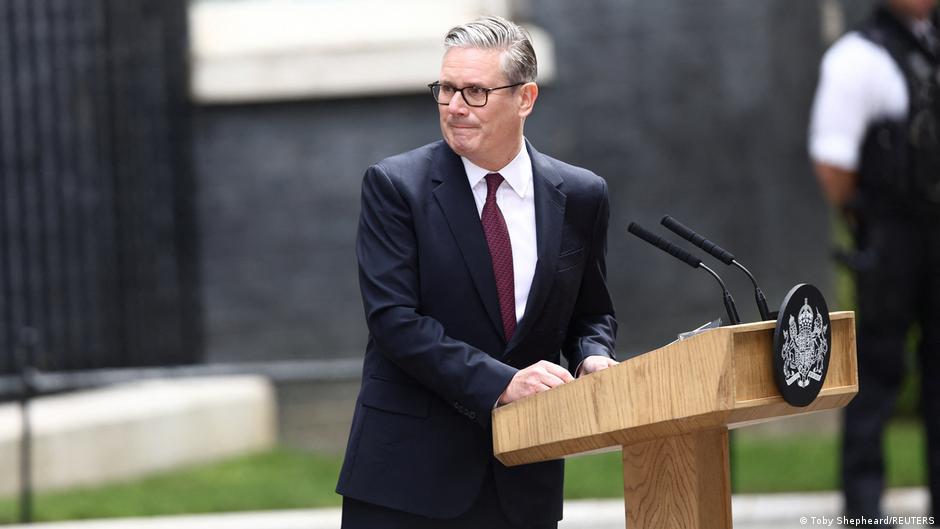
Back in 2024 British Prime Minister Keir Starmer promised a fresh UK–Africa partnership. Two years later, his resignation leaves unfinished ambitions, scaled-back aid and questions about Britain's long-term commitment. Outgoing United Kingdom (UK) Prime Minister Keir Starmer walked into Downing Street in July 2024 on the back of one of the Labour Party's strongest election victories in decades. He pledged to restore Britain's global credibility after years of Brexit upheaval and shrinking aid budgets. Africa featured prominently in that pitch: a continent of rising strategic, economic and geopolitical importance. The message was clear. Labour would fundamentally change how it relates to the African continent, focusing on partnership, not paternalism; investment, not dependency and this time, the UK was in for the long-term engagement. For many across African capitals, it felt like a reset. Then came Starmer's resignation in June 2026, less than two years after entering office, which left African countries again asking whether UK engagement can ever outlast political cycles. Britain's prime ministers over the last decade To view this video please enable JavaScript, and consider upgrading to a web browser that supports HTML5 video In the first months of Starmer's premiership, engagement with Africa intensified. South Africa became an early focal point. A UK presence at the G20 summit, alongside high-level visits and bilateral talks, signaled renewed intent. Trade, infrastructure and innovation dominated discussions, with particular attention to small business support, tech hubs and rail-sector reform through British expertise.
African start-ups, especially those from South Africa and Nigeria, kept appearing at major events, such as the London Tech Week. In March 2026, Nigeria's President Bola Tinubu made a historic two-day visit to the UK, where he was hosted by King Charles III. He secured an economic partnership deal to upgrade the Nigerian ports and deepen cooperation in the fight against Islamist insurgents. But beyond the announcements, delivery lagged. Many of the initiatives launched with fanfare struggled to translate into measurable outcomes. The gap between ambition and execution widened quickly. The 'reset' that stalled Labour officials framed the new Africa policy as a shift from aid-dependence to a model built on climate cooperation, energy transition, and critical minerals—sectors where Africa's global relevance is rapidly growing. Nigeria's President Bola Tinubu's official visit to the UK was the first by a Nigerian leader in more than three decades Image: Yui Mok/empics/picture alliance Yet that strategy was hit by internal reshuffles, which diluted focus. Russia's war in Ukraine and the conflict in the Middle East between Israel, the US and Iran, gradually pushed Africa out as a strategic priority. As a result, momentum slowed as policy attention drifted elsewhere. At the same time, fiscal reality set in. The UK entered this period with reduced international development spending, a trend dating back to 2020, when aid fell from 0.7% to 0.5% of gross national income, and is now expected to drop further to 0.3% by 2027 to fund increased defense spending.
 The BriefWire