The Rise Of Indigenous Flavours: How DS Group Is Shaping India’s Confectionery Market
The Rise Of Indigenous Flavours: How DS Group Is Shaping India’s Confectionery Market Published By Last Updated: June 29, 2026, 15:14 IST DS Group leverages
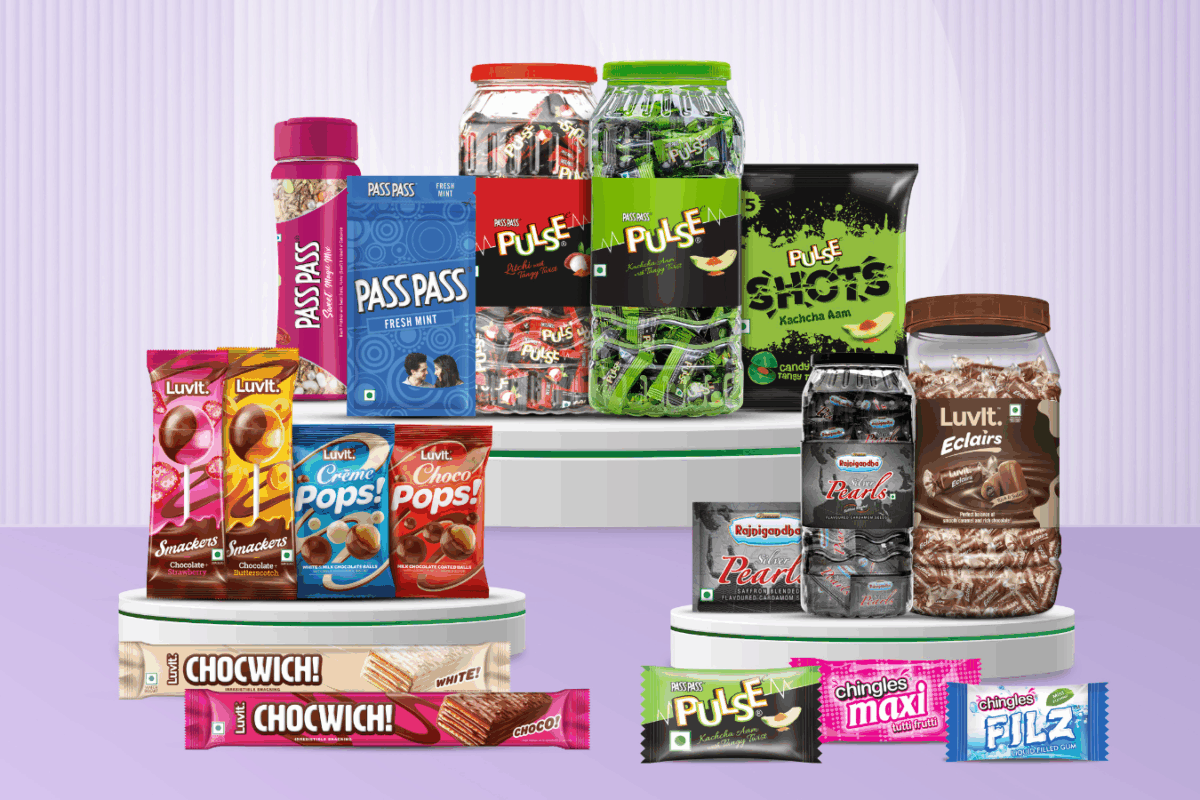
The Rise Of Indigenous Flavours: How DS Group Is Shaping India’s Confectionery Market Published By Last Updated: June 29, 2026, 15:14 IST DS Group leverages Indian taste memories with brands like Pulse and Pass Pass, reshaping ethnic confectionery, and reports its confectionery division reached Rs 1,000 crore. DS Group. A quiet confidence is reshaping India’s consumer market, most visibly in the confectionery aisle. Long dominated by global formats, chocolates, wafers and Western-style candies, the premium narrative is undergoing a reset. Indian consumers are increasingly gravitating towards products that mirror their own taste memories and cultural context, signalling a broader shift from imitation to identity. Few companies appear to have anticipated this transition as sharply as DS Group (Dharampal Satyapal Group). The multi-business conglomerate, known for brands such as Pulse, Pass Pass, Pulse Golmol, Rajnigandha Silver Pearls, Chingles, Pulse Pops, LuvIt, Pinata, Oval, Cherio and Pulse Natkaare, has aligned itself with a deeper evolution in consumer behaviour. Aspiration in India today is no longer about moving away from tradition but about reinventing it. At the core of this shift is a simple but often overlooked insight: taste in India is never just a flavour, it is a memory, a ritual, a cultural habit passed down through generations. DS Group’s product philosophy is built on the ability to trace these habits back to their roots and reimagine them for contemporary formats. For instance, Pulse emerged from a distinctly Indian flavour ritual, the familiar experience of eating raw mango with masala, a taste memory shared across generations.
By translating that sensory journey into a hard-boiled candy with a tangy outer layer and a spiced core, DS Group created a product that consumers connected with instantly. More than a category success, Pulse redefined the hard-boiled candy market through its uniquely Indian flavour proposition, going on to become the country’s number one hard-boiled candy brand for nine consecutive years. Its journey has also been recognised in academic circles, becoming the subject of a published case study at IIM Ahmedabad: a rare distinction for an Indian confectionery brand. Pass Pass drew inspiration from India’s long-standing tradition of post-meal mukhwas, where ingredients such as fennel, cardamom and sugar-coated seeds have been enjoyed across generations. Introduced in 1999, it became the first organised player in the Indian ethnic confectionery market, reimagining a familiar ritual through innovative packaging, quality ingredients and a convenient on-the-go format. Rajnigandha Silver Pearls, meanwhile, took a more focused approach, elevating the experience of flavoured elaichi through a refined, premium format that combines aromatic purity with contemporary appeal. Packaging innovation has been central to this evolution. Pass Pass is designed for portability and multi-flavour convenience, aligning with fast-moving consumption habits. Rajnigandha Silver Pearls, in contrast, leans into simplicity and elegance, positioning itself as a premium expression of familiar taste. Together, these design choices reflect how traditional flavour profiles are being reshaped for modern lifestyles. As a result, the confectionery shelf, once shaped by borrowed benchmarks, is now evolving into a space of cultural expression. Products once seen as regional are now travelling seamlessly across markets, from rural demand centres to urban shelves, and from kirana stores to modern trade and transit hubs.
 The BriefWire