What are Indian Army's Integrated Battle Groups that will change the way it fights?
The Indian Army is expected to operationalise its first Integrated Battle Groups (IBGs) as early as next month. It will mark a significant change in
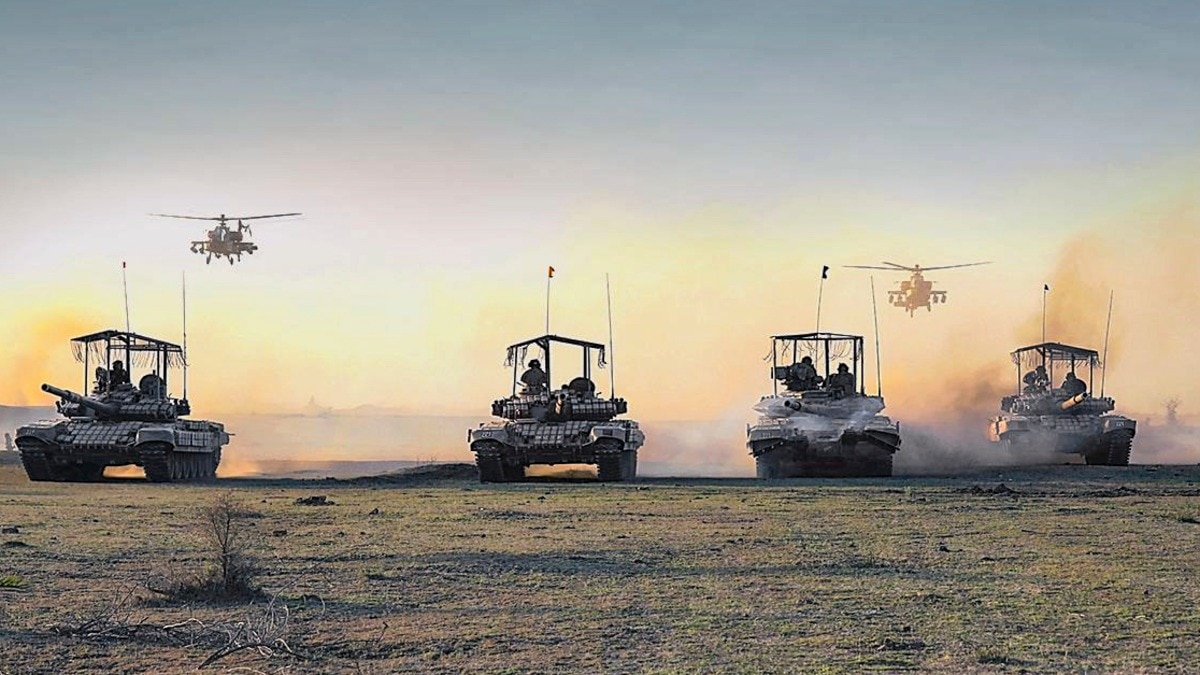
The Indian Army is expected to operationalise its first Integrated Battle Groups (IBGs) as early as next month. It will mark a significant change in how the Army's combat units are organised. Designed as self-contained, agile combat units, IBGs are meant to enable faster and more effective military operations, particularly in challenging terrains such as mountains. Unlike traditional large formations that take time to assemble and mobilise, these groups bring together infantry, artillery, engineers, logistics and medical support into a single, ready-to-fight formation. The operationalisation of the first IBGs, expected in around a month, was reported by The Indian Express. Read Full Story But what are Integrated Battle Groups? Conventional army formations typically draw personnel and equipment from multiple units before an operation. It is a process that can take time. An Integrated Battle Group (IBG) is designed to eliminate that delay by permanently integrating combat arms and support services into a single formation. Roughly brigade-sized, each IBG consists of about 5,000 troops from 12-13 units and is capable of operating independently. IBGs are built to be "all-arms" formations. A typical IBG includes: Infantry battalions, for ground fighting. Artillery, for firepower support. Combat engineers, for tasks like building bridges or clearing obstacles. Elements from the Corps of Electronics and Mechanical Engineers (EME), for vehicle maintenance. Army Service Corps (ASC) for supplies and transport, and a field hospital or medical support. IBGs would be tailored to specific tasks, terrains, and threats rather than following a one-size-fits-all model. This means that no two IBGs will be alike.
For example, an IBG posted ina mountainous areas facing China would focus on mobility and lighter logistics suitable for high altitudes. Reports suggest that the IBGs will be commanded by a Major General-rank officer, with a Brigadier possibly functioning as the chief operations officer. Integrated Battle Groups will operate with greater independence than standard brigades, which often rely more on higher headquarters for support. OTHER SPECIALISED SMALLER FORMATIONS ALONGSIDE IBGs Alongside the IBGs, the Army has been introducing several specialised smaller formations to enhance its combat edge. These include Bhairav battalions, which are focussed on specific roles. Bhairav battalions are a compact, technology-enabled combat unit of roughly 250 soldiers. Conceived as an intermediate force between Ghatak platoons and the Para Special Forces (SF), these battalions are designed for immediate deployment and specialised missions such as precision assaults, cross-border raids and other hybrid warfare operations. Then, there are Rudra brigades that integrate multiple combat elements under a Brigadier's command. These units combine infantry, artillery, armour, engineers, and other combat support elements into a single formation for enhanced coordination and firepower. Unlike the larger and more independent IBGs, Rudra brigades are designed to be highly agile but still rely on their parent divisions for additional logistics, reserves, or specialised support when required. Then, there are Divyastra batteries. They focus on advanced artillery capabilities, incorporating modern, long-range, and precision-guided systems that significantly boost the Army's firepower and targeting accuracy in difficult terrains. These units enable deeper strikes and better support for ground forces during both offensive and defensive missions.
 The BriefWire