Hezbollah Disarmament, Israeli Withdrawals: Four-Day Negotiations That Led To Israel-Lebanon Deal
Hezbollah Disarmament, Israeli Withdrawals: Four-Day Negotiations That Led To Israel-Lebanon Deal Published By, Last Updated: June 29, 2026, 07:21 IST A key factor that helped
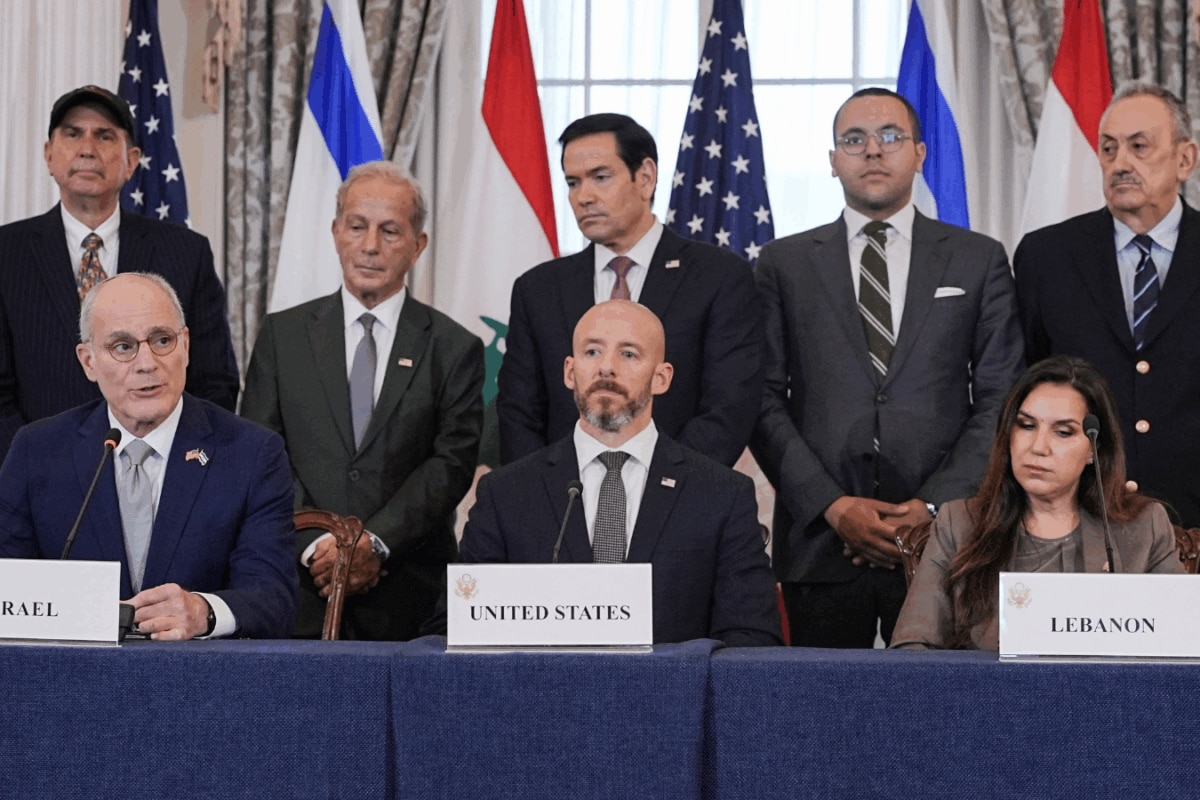
Hezbollah Disarmament, Israeli Withdrawals: Four-Day Negotiations That Led To Israel-Lebanon Deal Published By, Last Updated: June 29, 2026, 07:21 IST A key factor that helped bridge deep differences was a shared interest in limiting the influence of Hezbollah and Iran in Lebanon. Rapid Read Israel's Ambassador to the US Yechiel Leiter, US Secretary of State Marco Rubio, State Department Counsellor Daniel Holler, and Lebanon's Ambassador to the US Nada Hamadeh during a meeting in Washington, DC. (Source: Reuters) Israel-Lebanon Deal: Four days of intensive US-mediated negotiations between Israeli and Lebanese officials resulted in a framework agreement that both sides say could mark the beginning of a broader political process, even as significant challenges remain over its implementation and Hezbollah’s opposition. According to Axios report, citing US, Israeli and Lebanese officials familiar with the matter, a key factor that helped bridge deep differences was a shared interest in limiting the influence of Hezbollah and Iran in Lebanon. The talks, held in Washington last week, were described as the most significant political engagement between Israel and Lebanon in decades.
Negotiations began after Israeli officials questioned recent understandings reached between the United States and Iran regarding Lebanon during talks in Switzerland. Lebanese representatives also sought assurances that the Washington process would remain independent of any external influence. As per the report, both sides worked on three points- a political framework, a security annex and an agreement outlining an initial Israeli withdrawal from two pilot zones that would subsequently be handed over to the Lebanese Army. While negotiators made progress midweek, disagreements over the scope and terms of Israeli troop withdrawals nearly derailed the talks. Israeli Prime Minister Benjamin Netanyahu and Lebanese President Joseph Aoun sought additional consultations before US Secretary of State Marco Rubio joined negotiators on Friday to help bridge the remaining gaps. According to officials, Washington pressed Israel to accept changes including a withdrawal from one village in southern Lebanon and language committing to a broader redeployment process. Following high-level interventions from Rubio and other senior US officials, both sides agreed to the framework.
The agreement establishes a roadmap for strengthening Lebanese state authority, expanding the role of the Lebanese Army and reducing Hezbollah’s military presence, while creating a US-facilitated Military Coordination Group to oversee implementation. The United States also announced $100 million in humanitarian assistance for Lebanon, the report added. Israeli Ambassador Yechiel Leiter described the framework as the first step toward eventual peace, while Lebanese Ambassador Nada Hamadeh Moawad said it offers a pathway to restoring Lebanon’s sovereignty and securing a permanent cessation of hostilities. However, the agreement has already triggered sharp opposition from Hezbollah. The group’s leader, Naim Qassem, rejected the framework as “null and void," while senior Hezbollah officials warned that any attempt to enforce provisions requiring the group’s disarmament could push Lebanon toward civil conflict. The framework also leaves unresolved major issues, including the timing of Israeli withdrawals and Hezbollah’s future role. Israeli officials have maintained that troop redeployments will depend on Hezbollah being disarmed, while Hezbollah has repeatedly said it will not surrender its weapons beyond obligations contained in previous agreements.
 The BriefWire