'My Absence Is Not Silence': Sheikh Hasina Vows Return To Bangladesh, Says Awami League 'Cannot Be Erased'
'My Absence Is Not Silence': Sheikh Hasina Vows Return To Bangladesh, Says Awami League 'Cannot Be Erased' Published By, Last Updated: June 27, 2026, 15:09
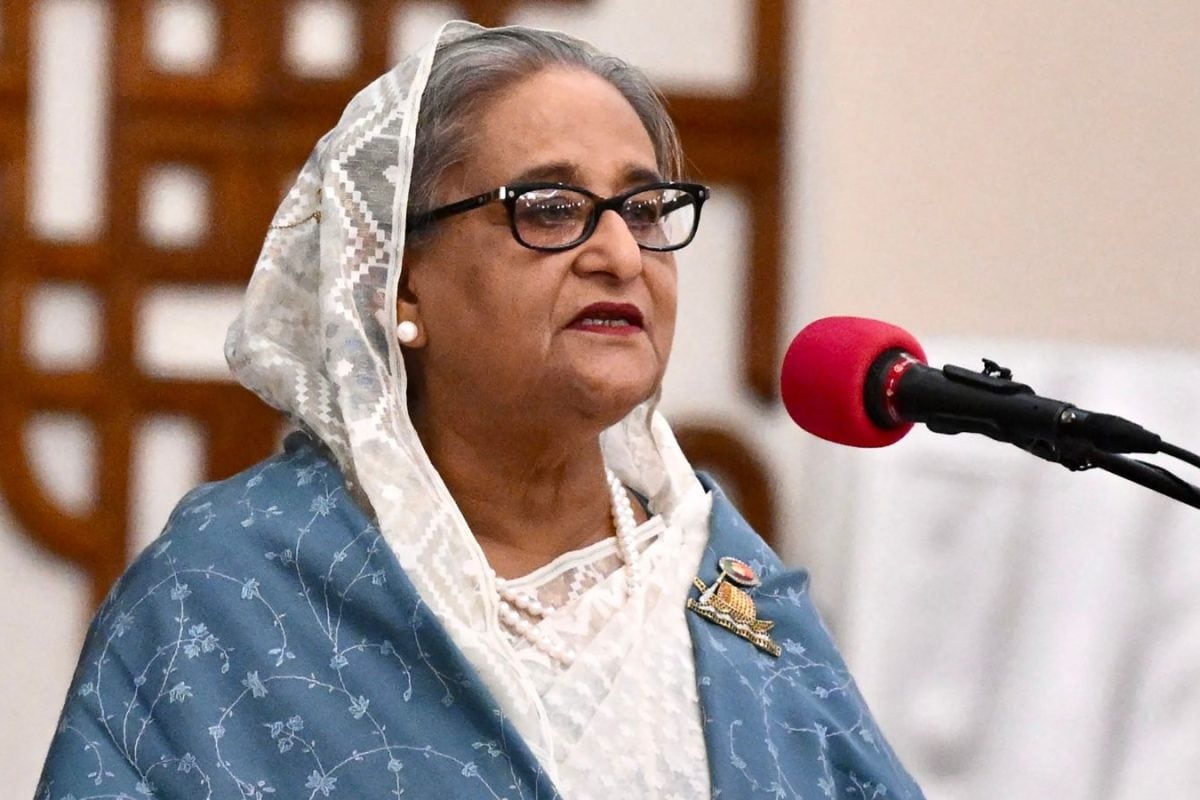
'My Absence Is Not Silence': Sheikh Hasina Vows Return To Bangladesh, Says Awami League 'Cannot Be Erased' Published By, Last Updated: June 27, 2026, 15:09 IST Hasina accused the governments led by Muhammad Yunus and the BNP of suppressing democracy through political bans, false cases, arrests and repression. Bangladesh Prime Minister Sheikh Hasina. (AP File) Bangladesh Prime Minister Sheikh Hasina, who is in exile, has said her absence from the country “is not silence" and pledged to continue the struggle to restore democracy, the rule of law and the political rights of the Awami League. In an article on Indian Express, marking the Awami League’s 77th anniversary, Hasina accused the governments led by Muhammad Yunus and the Bangladesh Nationalist Party (BNP) of suppressing democracy through political bans, false cases, arrests and repression. She also claimed that the Awami League had been kept out of elections because its opponents feared defeat. Stating that the party “cannot be erased from the hearts of the people", Hasina said the Awami League would rise again with public support and restore democracy in Bangladesh. ‘My absence is not silence’ In her message, Hasina acknowledged the difficulties being faced by Awami League leaders and workers.
“I know that the leaders and activists of the Awami League are going through a difficult time. Some are in prison, some are homeless due to false cases, some are injured, some are crippled, and many have lost loved ones," she wrote in the article. She said homes had been vandalised, businesses shut, jobs taken away and children intimidated, but claimed party workers had not given up. “My absence is not silence. Even though I am away, I am with the people of Bangladesh. I am with the sacrifice, courage, and sorrow of every worker of the Awami League," she said. Hasina added that the struggle to restore democracy was continuing through diplomatic, political and legal channels, along with efforts to build international public opinion. She said that although the activities of the Awami League might be banned, the party could not be erased from the hearts of the people. According to her, Bangladesh stood at a crossroads between democracy, secularism, the rule of law and development on one side, and vengeance, mob violence, fundamentalism, political bans and the distortion of history on the other. “The people of Bangladesh have never chosen the path of darkness, and they will not do so now," she said, adding that the Bengali nation could not be suppressed through intimidation.
 The BriefWire