What is the cost of a life in India? Is it zero?
"Save me please, papa," cried the voice on the other side of the phone on Monday. The desperate cry for help was from one of
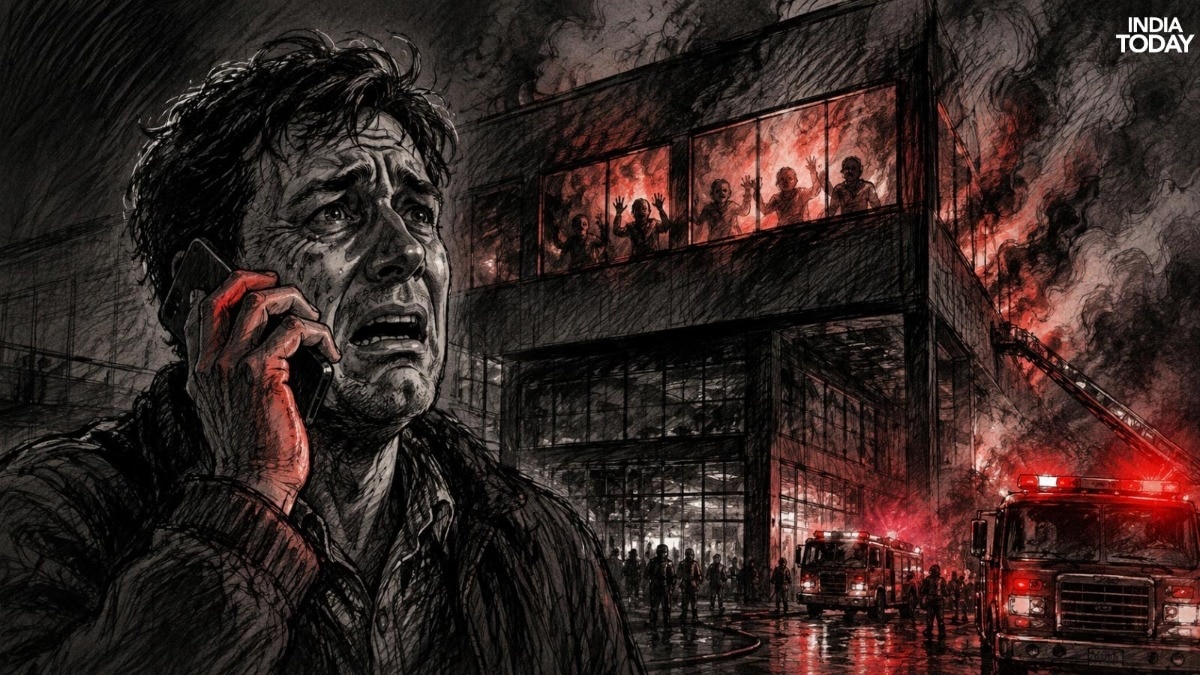
"Save me please, papa," cried the voice on the other side of the phone on Monday. The desperate cry for help was from one of the 15 young people who were killed in the fire at a building in Lucknow that housed an animation studio. Fifteen people who went to the building to build a future never came out alive. While the receiver of the call stood helpless, the administration could have helped. But like in the case of the fire in Delhi that killed 21 people on June 3, the nexus of the local administration, the police, businesses, and bureaucrats was the real reason why the people were killed in Lucknow. Corruption and administrative negligence have often turned preventable hazards into deadly tragedies in India. Time and again, inquiries into bridge collapses, stampedes, industrial accidents, and infrastructure failures have revealed a familiar pattern. (Image: India Today) Read Full Story Why do preventable accidents end up killing thousands every year? Is India casual about human lives? Does it hold the value of a citizen's life less than other countries do? Is there a quantifiable metric to understand how much Indians value lives? First, let us compare where India stands when it comes to preventable accidents. When it comes to preventable deaths outside the realm of disease, road accidents stand in a category of their own. They kill far more Indians every year than fires, industrial accidents, building collapses, railway mishaps, or even many natural disasters. Together, these incidents claim thousands of lives annually, but road crashes alone account for nearly 1.77 lakh deaths, making them India's largest man-made public safety crisis. India's roads have become one of the country's deadliest public safety crises, claiming more lives each year than many natural disasters combined. Road accident deaths have climbed steadily from 1.54 lakh in 2021 to 1.77 lakh in 2024, turning daily commutes into a silent national emergency.
(Image: India Today) Fire-related deaths might not command the same attention as major disasters, but they have continued to exact a heavy toll across India every year. But every death due to fire exposes recurring failures in safety compliance, emergency preparedness, and enforcement. (Image: India Today) The recklessness and the value we attach to our lives are most visible on Indian roads. On average, 485 people were killed in road accidents in India every day in 2024. It was a 2.3% increase over the previous year. The number is lower per 1,00,000 of the population compared to some Brics nations and the US, but in absolute terms, at 1.77 lakh deaths a year, it is huge. India's road fatality rate of 12.6 deaths per 100,000 people may be lower than that of countries such as South Africa (22.2), Sri Lanka (19.7), and Bangladesh (18.6), but the statistic masks the sheer scale of the crisis on Indian roads. (Graphic: India Today) Though dozens of other countries were listed by the OECD, we couldn't find data for India on how it performed on mortality from preventable causes or mortality from treatable causes. India's disaster toll has risen sharply in recent years. According to the Ministry of Statistics and Programme Implementation's EnviStats India report, deaths from extreme natural events increased from 2,616 in 2023–24 to 3,080 in 2024–25, an 18% rise and the highest level in over a decade, while preliminary data shows more than 1,600 deaths from hydro-meteorological disasters by July–August 2025. Disasters and accidents in India have claimed lakhs of lives, but behind every statistic lies a warning that was missed, a safeguard that failed, or an authority that did not act in time. (Image: India Today) Crime Records Bureau's (NCRB) Accidental Deaths and Suicides in India (ADSI) data also shows deaths due to "forces of nature" rising from 6,444 in 2023 to 7,903 in 2024.
 The BriefWire