'Operation Purgatory': Magyar moves to demolish Orban system
The new Hungarian government is moving swiftly to dismantle the system of former PM Viktor Orban. The focus is on fighting corruption, reforming the media
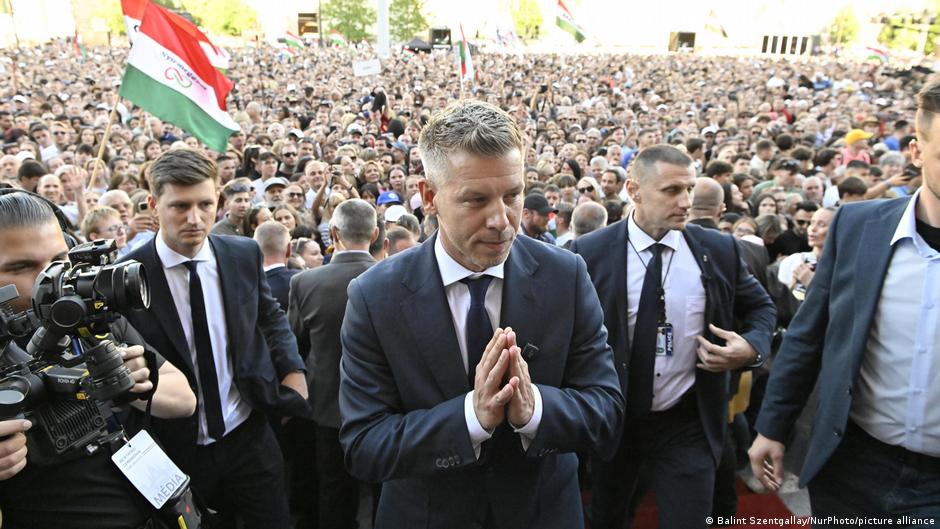
The new Hungarian government is moving swiftly to dismantle the system of former PM Viktor Orban. The focus is on fighting corruption, reforming the media and protecting democracy to prevent a slide back into autocracy. Hungarian Prime Minister Peter Magyar and his government are setting a fast pace of reform. In his first few weeks in office, Magyar kept his promise to bring Hungary back to Europe. He lifted EU blockades introduced by his predecessor, Viktor Orban, and launched a dialogue with Ukraine, which Orban had labeled "The Empire of Evil." Back home in Budapest, the parliament approved cuts to the salaries of lawmakers and ministers and limited a prime minister's time in office to a maximum two terms. Much of this was anti-Orban symbolism. But with these changes under his belt, Magyar has now turned his attention to the substance of his predecessor's regime. Orban had laid plans that stretched decades into the future: In the event of his party losing the election, civil servants who would be difficult to replace would sabotage the work of new governments. In addition, billions had been squirreled away to continue financing Orban's network. Taking the Orban system apart piece by piece Thanks to a comfortable two-thirds majority in parliament, the government of Magyar and his Tisza party can now dismantle these structures. In an address to parliament on Monday, Magyar called Orban's style of rule the "mafia system." He promised to root it out completely using what he called "Operation Purgatory," a name that likely comes from Magyar's penchant for religious and historical symbols. Prime Minister Viktor Orban was voted out of office in April after 16 years in power Image: Zoltan Mathe/MTI/AP Photo/dpa/picture alliance Magyar has promised that comprehensive investigations will be conducted to establish how Orban's family and friends as well as oligarchs and high-ranking party members lined their pockets and that illegally obtained assets will be recovered.
He has also pledged that state institutions, the judiciary and the media will be reformed in such a way that renders it impossible to return to the Orban system — i.e. to the political control of state institutions and the public. "Orban wanted to tie the hands of the next ten governments," said the online news outlet 444.hu. "The Magyar administration is now ripping up that plan." First package of laws passed On Tuesday, the parliament passed a first large package of laws relating to "Operation Purgatory." Most of them were anti-corruption measures. These were key to ensuring that the European Union releases about €17 billion ($19.3 billion) in EU funding for Hungary that was frozen by Brussels because of a perceived risk of corruption during Orban's time in power. The timing was very important because a deadline for the payment of one large tranche of these funds, some €10.4 billion, passes in August. One of the most important measures is the abolition of what is known as public interest asset management foundations (KEKVA), private foundations that hold and manage universities, cultural institutions and historical monuments in Hungary. Symbol of kleptocracy The KEVKAs were founded during Orban's time in office for the purpose of shifting huge amounts of public assets — some €5-9 billion — into private hands. The foundations are symbolic of the kleptocratic system under Orban. At the same time, some of these foundations were used to put a new administrative structure in place at most Hungarian universities. These structures were then filled with Orban loyalists, thereby destroying the autonomy of the universities in question. The house on the right, in the village of Felcsut, is where Viktor Orban grew up. The building behind it is a football stadium that was built while Orban was in power. Its capacity is greater than the population of the village, and it is seen as a symbol of the corruption of the Orban era Image: AFP/Getty Images The best-known KEVKA in Hungary is the Mathias Corvinus Collegium (MCC), the most important elite training and propaganda school for Orban's Fidesz party.
 The BriefWire