How China Is ‘Salami-Slicing’ Its Way To Greater Control In The Pacific
How China Is ‘Salami-Slicing’ Its Way To Greater Control In The Pacific Published By, Last Updated: June 26, 2026, 15:19 IST Beijing’s latest moves near
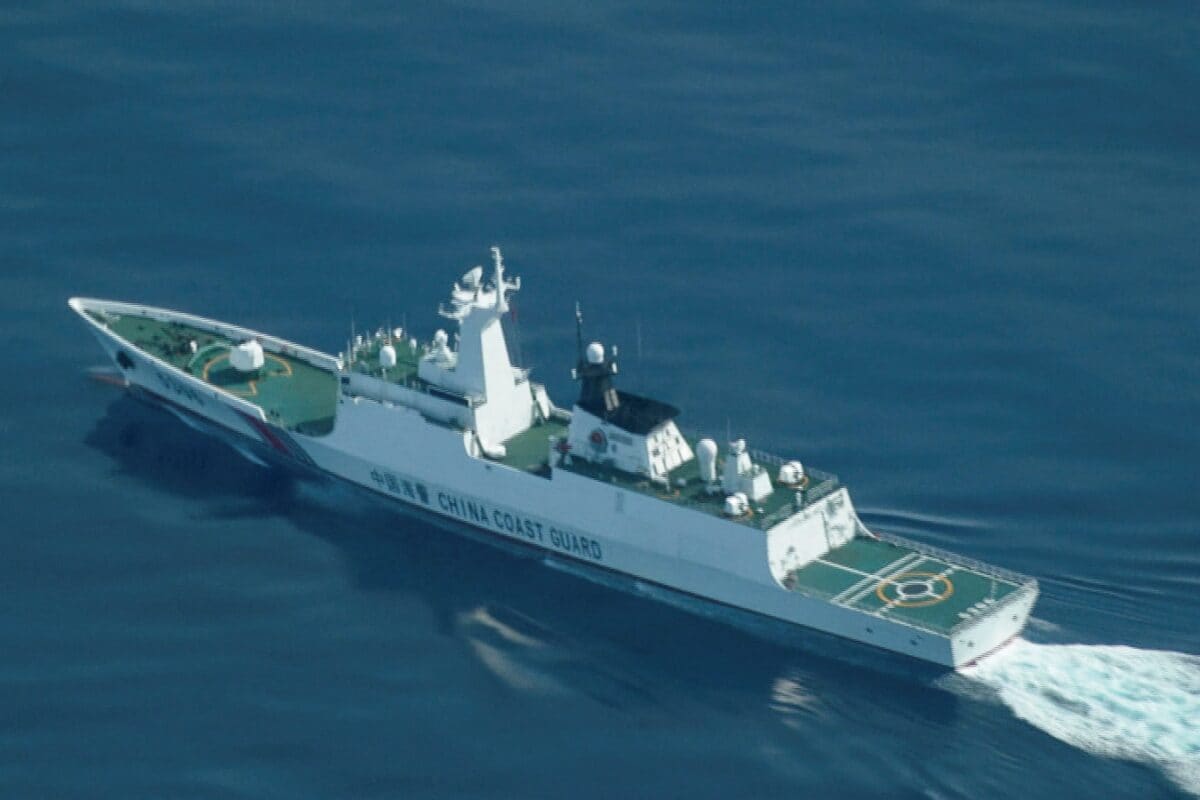
How China Is ‘Salami-Slicing’ Its Way To Greater Control In The Pacific Published By, Last Updated: June 26, 2026, 15:19 IST Beijing’s latest moves near Taiwan and the Philippines show how its ‘salami-slicing’ strategy seeks to expand control without triggering outright conflict. Rapid Read An aerial view of a China Coast Guard ship navigating near the disputed Scarborough Shoal. (REUTERS/File Photo) In recent weeks, Chinese vessels have conducted what Beijing describes as law-enforcement operations east of Taiwan, mapped the seabed in strategically sensitive waters and carried out research inside the lagoon at Scarborough Shoal, a disputed feature located hundreds of miles from China. Taken together, the moves suggest that Beijing is trying to extend its authority across some of the most contested waters in the western Pacific, raising concern in Taiwan and the Philippines. Analysts say the operations are part of a broader attempt to turn contested territorial claims into actual control without triggering an outright military conflict. China has long been accused of using “salami-slicing" tactics — taking small steps below the threshold of war to assert control over areas where its claims under international law are disputed or have no clear legal basis. What Has China Done East Of Taiwan? Earlier this month, three vessels operated by China’s Maritime Safety Administration, or MSA, sailed through the Bashi Channel between Taiwan and the Philippines. The civilian law-enforcement vessels then began conducting enforcement and mapping activities in waters east of Taiwan. Observers say it was the first time MSA ships had been seen operating east of the First Island Chain, a strategic arc stretching from southern Japan through Taiwan and the Philippines and towards Borneo and Singapore. The island chain is viewed by Beijing and Washington as a critical line of control in the western Pacific. Ray Powell, director of the SeaLight project at Stanford University’s Gordian Knot Center for Security Innovation, described the development as the “Bashi Breakout". Beijing “is essentially saying we have jurisdiction over this area on the other side of the First Island Chain. That’s pretty significant," Powell told CNN. “This is the first time we’ve seen them make some kind of a sovereignty patrol outside of the 9-Dash/10-Dash Line," he added.
China uses the dash-line map to assert claims over large parts of the South China Sea. These claims are disputed by several neighbouring countries, and an international tribunal in The Hague ruled in 2016 that Beijing’s sweeping claim had no legal basis. Powell said China was now trying to “create new facts on the water". China’s state-run Global Times described the movement of the MSA vessels as “a sovereignty declaration with both legal significance and political signalling". Why Is Taiwan The Main Target? The operation appears to have been directed largely at Taiwan, the self-governed island that China claims as its own territory. Beijing has vowed to achieve “reunification" with Taiwan and has not ruled out the use of force. Through Yuyuan Tantian, a semi-official social media account operated by China’s national broadcaster, Beijing said the MSA ships had mapped the seabed east of Taiwan for the first time. The account said the mission countered foreign assertions that China lacked the ability to exercise authority in those waters. “The waters east of Taiwan Island will constitute our ‘nearshore waters’ — the very waters where we maintain a presence and exercise jurisdiction and governance," it said. Experts said that if an official Chinese government agency formally adopted the “nearshore waters" designation, Beijing could seek to treat the area as sovereign territory where foreign vessels require permission to enter. Carl Schuster, a former director of the US Pacific Command’s Joint Intelligence Center, said foreign vessels would then be considered to have no automatic right of access. “Foreign vessels have no right of entry without permission of the nation with sovereignty over these near-shore waters," Schuster told CNN. Taiwanese President Lai Ching-te said Beijing’s purpose was clear. “Their real objective is to expand," he said. “China’s threats towards Taiwan know no limits," Lai added, accusing Beijing of repeatedly finding new ways to advance its territorial claims and pressure countries across the Indo-Pacific. Why Use Civilian Ships Instead Of Warships? China’s Maritime Safety Administration is not part of the People’s Liberation Army Navy. Its ships perform policing and regulatory functions, including enforcing maritime and environmental rules.
 The BriefWire