‘100%’ Claims In Bold On Front Labels Of Food Items, But Disclaimers Tiny: The Crackdown Explained
‘100%’ Claims In Bold On Front Labels Of Food Items, But Disclaimers Tiny: The Crackdown Explained Written By, Last Updated: June 26, 2026, 15:11 IST
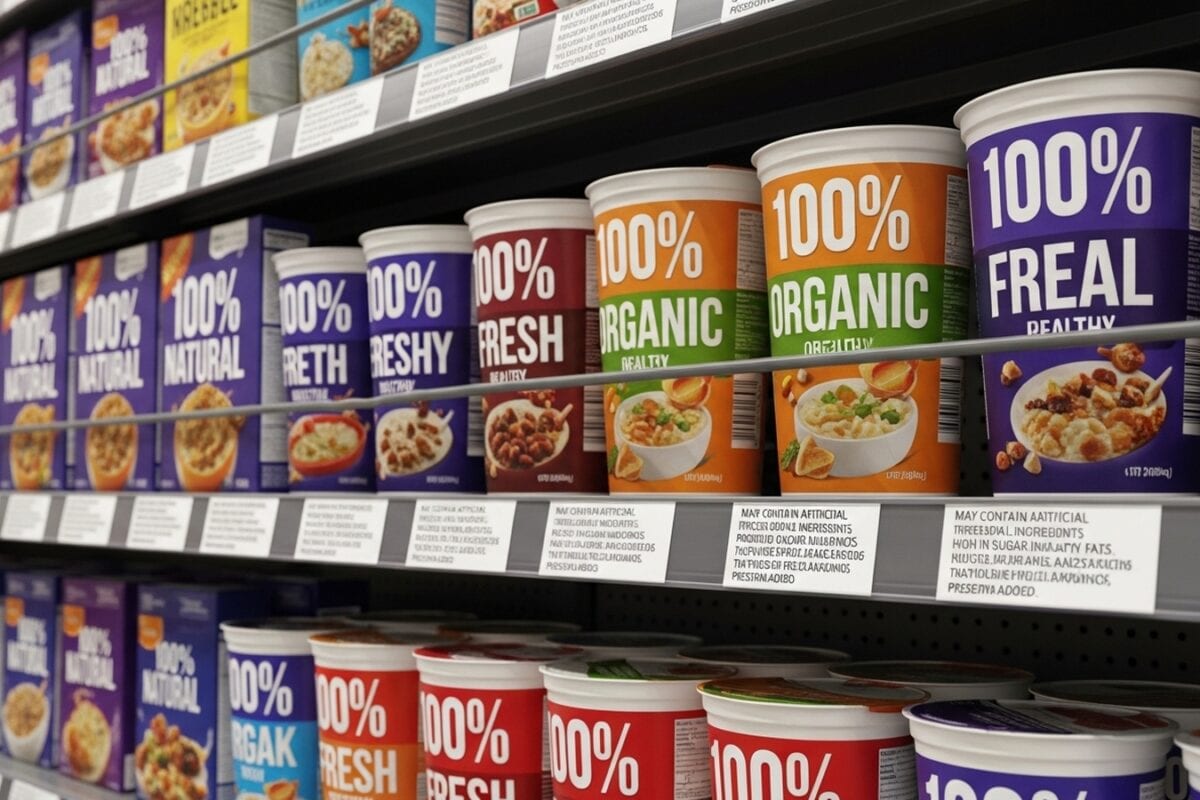
‘100%’ Claims In Bold On Front Labels Of Food Items, But Disclaimers Tiny: The Crackdown Explained Written By, Last Updated: June 26, 2026, 15:11 IST Brands exploit a "loophole" by splashing absolute claims in bold text on the front packaging to attract shoppers, while burying the composition inside a tiny disclaimer on the back Rapid Read News18 The Central Consumer Protection Authority (CCPA) and the Food Safety and Standards Authority of India (FSSAI) have cracked down on the deceptive practice of printing “100%" claims on front labels while hiding disclaimers on the back. Regulators have penalised major consumer brands, establishing that a technical compliance threshold cannot be used to justify absolute, misleading marketing. The Core Regulatory Issue Brands frequently exploit a regulatory “loophole" by splashing absolute claims in bold text on the front packaging to attract shoppers, while burying the true composition inside a tiny disclaimer on the back panel.
The CCPA and FSSAI rejected this practice using specific legal precedents The CCPA ruled that an average consumer interprets “100%" to mean the product is entirely composed of that single ingredient. Companies cannot elevate a minimum regulatory standard (e.g., a required percentage to use a specific name) into a justification for making an unqualified, absolute “100%" claim. While manufacturing standards may permit reconstitution or formulation blends, regulators draw a clear distinction between a legal manufacturing process and a deceptive marketing claim. The FSSAI Ban on “100%" Claims To stop this practice at the root, the FSSAI issued an advisory completely banning the use of the term “100%" on food labels, packaging, and. The phrase “100%" is completely undefined under the Food Safety and Standards Act. Absolute tags like “100% Pure" or “100% Natural" create a false impression of absolute superiority.
These claims imply that alternative, competing brands on the market are inferior or non-compliant. This followed an earlier targeted directive that ordered companies to remove “100% fruit juice" tags from products reconstituted from concentrates. Legal and Marketing Standards Moving forward, regulatory bodies require transparency over creative wording. Under Sub-regulation 4(1) of the and Claims Regulations, all claims must be unambiguous, clear, and scientifically verifiable. Government divisions have actively pushed to mandate that multiple primary ingredients must be clearly declared on the front of the packaging, right alongside the brand name. News18 Newsletter Handpicked stories, in your inbox A newsletter with the best of our journalism submit About the Author Manjiri Joshi At the news desk for 20 years, the story of her life has revolved around finding pun, facts while reporting, on radio, heading a daily newspaper desk, teaching mass media students to now editing speci...
 The BriefWire