China Says It Can Target People Overseas Under New Law: What It Means For Activists Abroad
China Says It Can Target People Overseas Under New Law: What It Means For Activists Abroad Published By, Last Updated: June 26, 2026, 13:52 IST
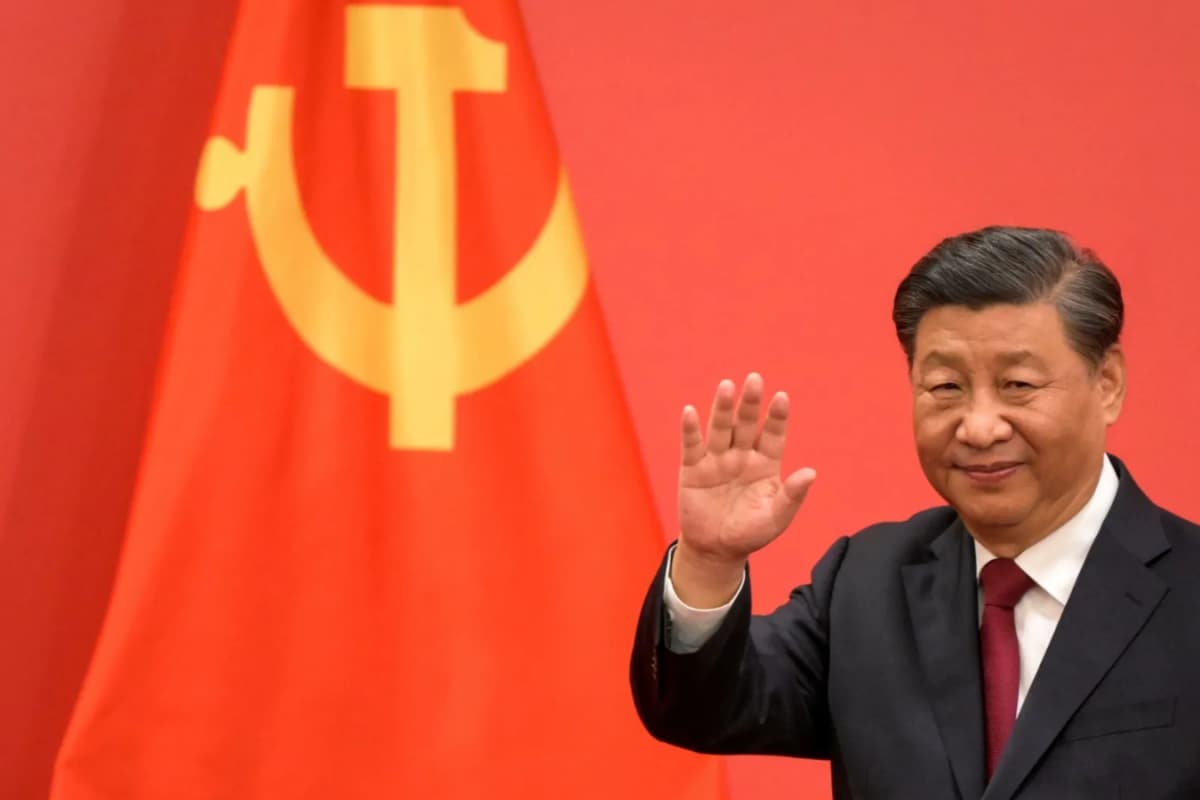
China Says It Can Target People Overseas Under New Law: What It Means For Activists Abroad Published By, Last Updated: June 26, 2026, 13:52 IST Ethnic Unity Law pushes minority groups to adopt a shared national identity and allows Beijing to hold people overseas legally accountable for acts it deems harmful to ethnic unity Rapid Read Chinese President Xi Jinping (Image: AP) China’s new ethnic unity law, set to take effect on July 1, will give Beijing an explicit legal basis to hold people and organisations outside the country accountable for conduct it considers harmful to national unity. Passed in March, the law is intended to promote a “shared" national identity among China’s 56 officially recognised ethnic groups, including the Han majority and 55 minority groups such as Tibetans, Uyghurs, Mongols, Hui and Manchus. While Beijing says the legislation will strengthen ethnic unity and protect national sovereignty, its overseas provision has raised concerns among rights groups, Tibetan organisations and academics in Taiwan over whether it could be used against activists and critics based abroad. What Does China’s New Ethnic Unity Law Say? The law, titled Promoting Ethnic Unity and Progress, formalises China’s policies on ethnic integration. Han Chinese account for more than 91 per cent of China’s population of about 1.4 billion. Minority communities are largely concentrated in regions that together cover roughly half of the country’s land area. The legislation seeks to promote integration through education, housing, migration, culture, tourism and development policies. It mandates Mandarin as the language of instruction in schools and promotes its use in public spaces and official work. Parents and educational institutions are also required to instil in children a shared national identity and loyalty to the Communist Party and the Chinese state. Critics argue that these provisions could weaken the linguistic, cultural and religious identities of minority communities.
What Is The Overseas Provision? The most controversial part of the law is Article 63, which states that individuals and organisations outside China can be held legally accountable for undermining “ethnic unity and progress or inciting ethnic separatism". This means conduct beyond China’s borders can be treated as an offence under Chinese law if Beijing considers it separatist or damaging to ethnic unity. The provision has caused particular concern in Taiwan, which China claims as part of its territory. Taiwanese academics and civic groups fear that political speech, commentary or advocacy relating to Taiwan, Tibet or Xinjiang could fall within its scope. China, however, says the clause has been misrepresented. Vice Justice Minister Hu Weilie told a news conference in Beijing that some Western media had “distorted and misinterpreted" the overseas provision. “This provision is based on China’s national conditions, conforms to legal principles, and is consistent with international practice. It is a legitimate, lawful, necessary, and feasible legal provision," Hu said. “Countries around the world all have the right to prevent separatist and destructive activities, and to maintain social solidarity and normal order, through domestic legislation." Hu said the clause was aimed at guarding against unlawful acts involving ethnic affairs from outside China and protecting the country’s sovereignty, security and development interests. “It will not affect normal people-to-people exchanges between China and other countries, academic discussions, economic and trade cooperation, or other activities," he said. How Does China Define Separatism? The reach of the law will depend heavily on how Beijing interprets “separatism". Under Chinese law and policy, separatism is not limited to armed rebellion or a formal attempt to declare independence. It can include speech, advocacy, fundraising, cultural activism and symbolic political acts if authorities believe they threaten national unity. China considers support for the independence of Taiwan, Tibet, Xinjiang or any other territory it claims to be separatist activity.
 The BriefWire