Archaeologists discover Roman soldier buried inside a 5,000-year-old Spanish fortress
PC: Archaeology News Inside the 5,000-year-old fortress in Spain built during the Copper Age A Roman-era burial hidden within the 5,000-year-old fortress Why was a
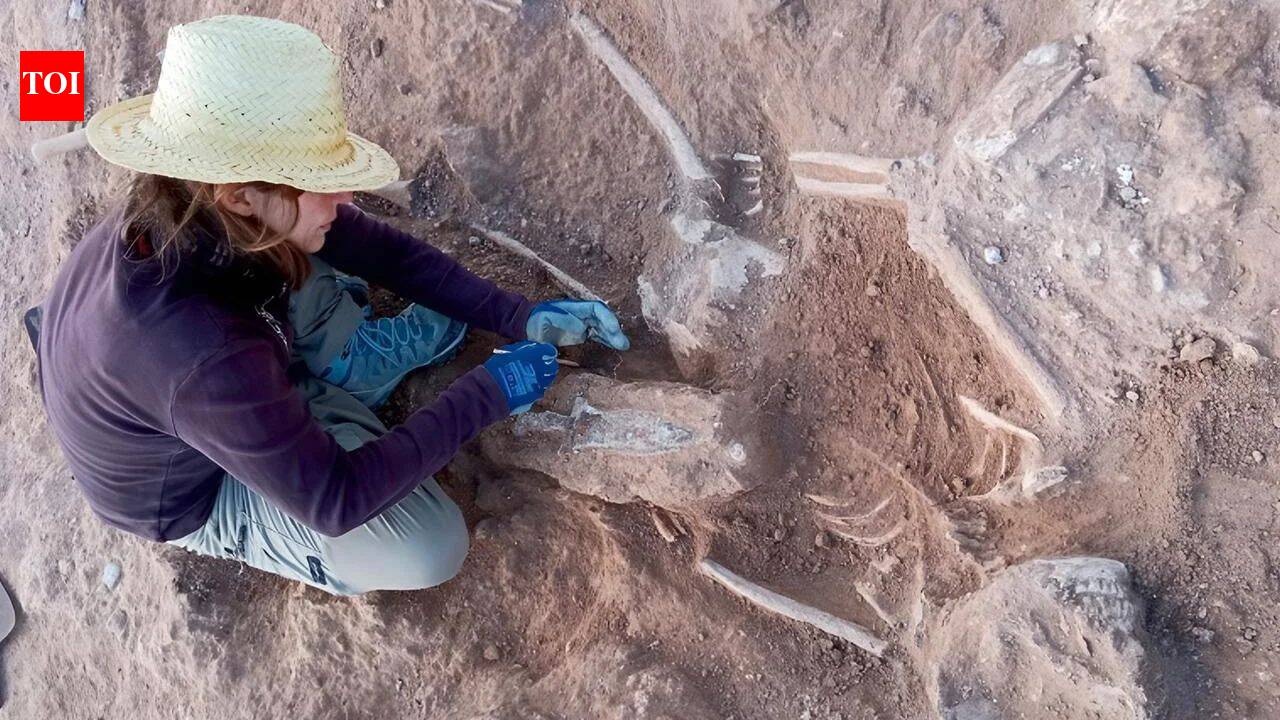
PC: Archaeology News Inside the 5,000-year-old fortress in Spain built during the Copper Age A Roman-era burial hidden within the 5,000-year-old fortress Why was a Roman soldier buried there Forensic work may reveal more of his story A prehistoric hilltop enclosure in southern Spain has presented archaeologists with two very different moments in history occupying the same place. What first appeared to be the remains of an ancient fortified settlement dating back around five millennia soon revealed something far less expected beneath its weathered stonework. Buried within the abandoned complex was the skeleton of a man from the Roman period, separated from the fortress's original builders by roughly 2,500 years, as reported by UNN. The discovery has prompted a new set of questions, not because the burial itself is unusual, but because of where it took place. Sites abandoned for thousands of years are sometimes reused by later societies, yet every such case carries its own story. The Spanish excavation is offering a rare opportunity to examine how one location served completely different purposes across distant chapters of European history.The remains came to light during archaeological investigations carried out before construction work linked to a solar energy project.
Situated on elevated ground near Almendralejo in the Extremadura region, the site had escaped attention despite its size.Once excavation expanded, the outline of a carefully planned enclosure began to emerge. Dating suggests the fortress was built around 3000 BC, during the Copper Age, when communities across parts of Europe were beginning to adopt metal alongside long-established stone tools. Rather than a simple defensive wall, the structure appears to have been designed with considerable thought, reflecting organised construction on a large scale.Reportedly, the fortification stretches across roughly 77 metres and follows a deliberate geometric arrangement. Rounded bastion-like projections stand at each corner, allowing anyone defending the enclosure to monitor approaches from several directions.Within the outer walls lay smaller protected sections arranged around a central open space. Defensive ditches added another layer of security, suggesting the settlement was intended to withstand threats rather than merely mark territory. The overall design points towards a community capable of coordinated planning, labour organisation and engineering knowledge that is often associated with much later periods. Across the Iberian Peninsula, prehistoric fortified settlements have been documented for decades, yet the Extremadura site stands apart because of both its scale and the complexity of its construction.The most puzzling discovery emerged near the centre of the abandoned enclosure.
 The BriefWire