If Passports Don’t Prove Citizenship, What Does? The Long Road To India’s NRC Debate
If Passports Don’t Prove Citizenship, What Does? The Long Road To India’s NRC Debate Written By, Last Updated: June 25, 2026, 19:17 IST Until a
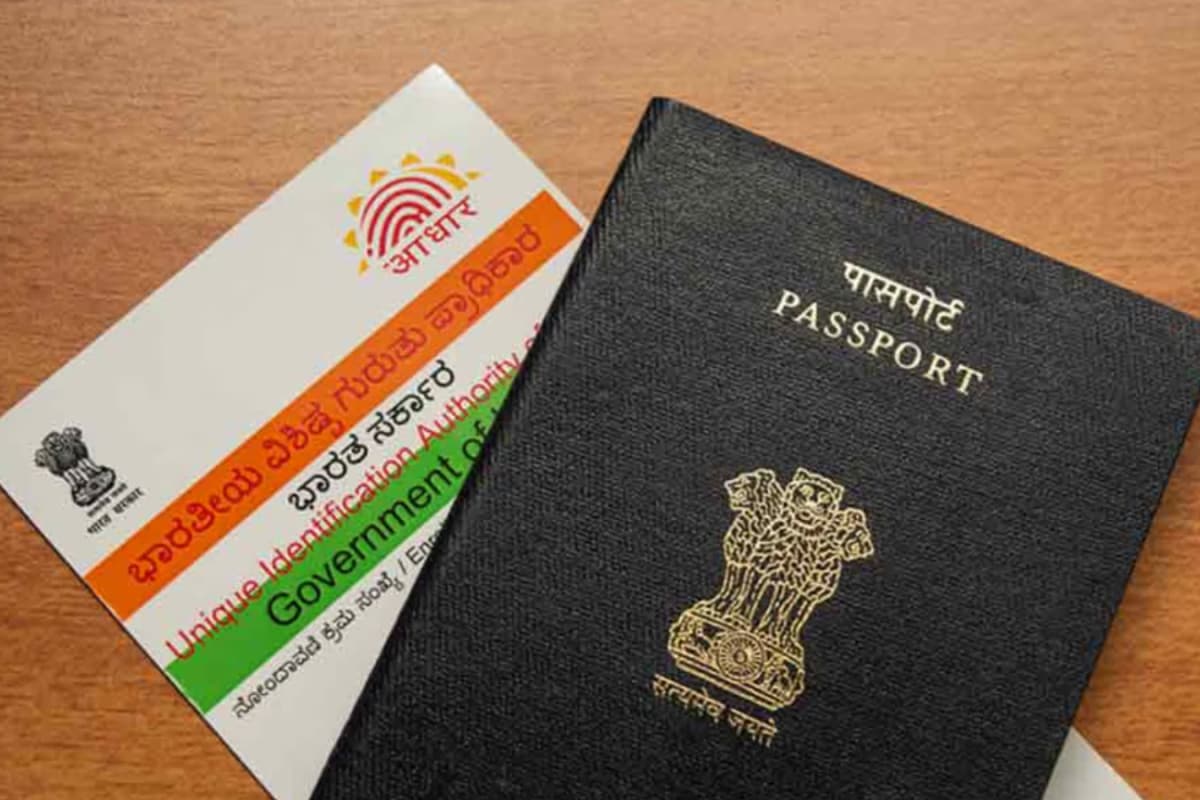
If Passports Don’t Prove Citizenship, What Does? The Long Road To India’s NRC Debate Written By, Last Updated: June 25, 2026, 19:17 IST Until a comprehensive Register of Citizens is officially enacted across India, proving citizenship requires presenting a robust combination of legacy documents According to a Ministry of Home Affairs clarification provided in the Lok Sabha on 4 February 2020, Indian citizenship can legally be acquired through four distinct routes: birth, descent, registration, or naturalisation. Representational image The Ministry of External Affairs’s assertion that an Indian passport is not a definitive document of citizenship has reignited a long-standing national debate. This position is supported by legal precedent; in 2003, the Bombay High Court ruled that a passport standalone does not constitute proof of citizenship. The government is currently citing this landmark ruling to demonstrate that the MEA’s stance reflects established legal consensus rather than a shift in policy. This raises a fundamental question: What exactly has been the government’s policy for recognising a resident as an Indian citizen? The Genesis of the Register of Citizens The challenge of defining and documenting Indian citizenship first arose immediately after Independence. In 1951, following the country’s first official census, the Register of Citizens (NRC) was compiled. This served as the first formal record of Indian citizens in a newly divided nation. While the 1951 NRC gradually lost its operational relevance across the rest of India, it became a critical historical repository of “legacy data" for Assam. The massive refugee crisis accompanying the creation of Bangladesh in 1971 necessitated an official, legally binding mechanism to identify genuine Indian citizens in the region.
Decades later, individuals who could trace their ancestral lineage directly back to the 1951 pan-India NRC were automatically registered in the Supreme Court-monitored Assam NRC published in 2018. By the turn of the millennium, a wide array of documents—including PAN cards, Voter ID cards, Ration cards, school-leaving certificates, and local domicile certificates—were routinely used by residents to access state welfare benefits. However, rising concerns over illegal migration introduced a critical complication: did the possession of these everyday administrative documents automatically make a resident an Indian citizen? The 2003 Push for a Register The next major attempt to establish a definitive, pan-India record of citizenship occurred under the Vajpayee administration in 2003. The government introduced sweeping amendments to the Citizenship Act of 1955. For the first time, these changes codified that children born within India to illegal immigrants would not be entitled to automatic Indian citizenship. Furthermore, the Citizenship (Amendment) Act of 2003 made it a statutory obligation for the central government to revise the 1951 framework and maintain an updated, nationwide Register of Indian Citizens (NRIC). The Aadhaar System versus the Population Register During the UPA era, the Unique Identification Authority of India (UIDAI) introduced Aadhaar as a biometric-based unique identity card for all residents. Although explicitly designed as an identity and residency marker based on submitted demographic and biometric data, Aadhaar rapidly became the foundational document in public perception. It became mandatory for banking transactions, welfare schemes, academic admissions, and mobile connections, leading many citizens to view it as definitive proof of nationality.
 The BriefWire