Equal access to law is the first step to equality, says Chief Justice Surya Kant
Chief Justice of India Surya Kant on Wednesday said that the first step to equality is ensuring equal access to the law, and stressed that
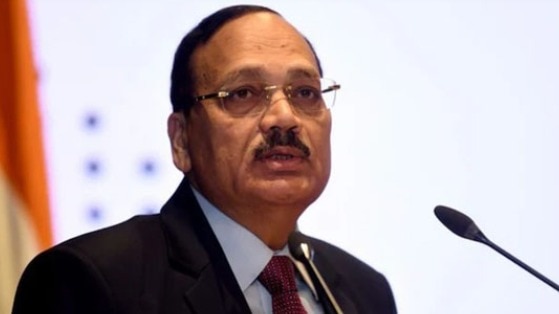
Chief Justice of India Surya Kant on Wednesday said that the first step to equality is ensuring equal access to the law, and stressed that this should not remain only a procedural formality. Speaking at an event in Russia, he said access to the law must lead to the conferment of actual rights and not remain a hollow statutory declaration. He said the real challenge is not merely to state constitutional guarantees, but to deliver them across geographical distances and despite economic and social disadvantage, language barriers and cultural diversity. He also said equal justice and equal law are not ceremonial phrases, but conditions under which a legal order can credibly call itself law.
Read Full Story "We must ask ourselves what it actually takes for equality before the law to become real? My answer, which I draw from my experience presiding over the world's largest and most complex judicial systems, is that the first step to equality is providing equal access to the law," Kant said at the XIV St Petersburg International Legal Forum. "Such access cannot merely be a procedural nicety and must fructify in the conferment of actual rights rather than hollow statutory declarations," he added. The said the birthplace of equality was not necessarily the Magna Carta of 1215. "Rather, my own personal belief is that its roots are traceable to Kautilya's Arthashastra, which belongs to the Indian subcontinent and propounded the theory of equality in the fourth century," he said.
He said the Indian Constitution, at its inception, promised a new dawn and gave people a series of Fundamental Rights, including equality before the law, life with dignity and equal justice. "The true challenge was never to solely recite these guarantees but to deliver them across geographical distances, irrespective of any economic and social disadvantages, language barriers and cultural diversity," he said. Kant said the biggest obstacle to equality is not the absence of legal or statutory support, but geographical, social and economic disparities. He said Indian constitutional courts have adopted a broad and expansive interpretation of constitutional guarantees to remove these barriers. "This approach ensures that access to law and justice is not just a technical convenience but a non-discriminatory founding principle of governance," he said.
On the international legal framework, he said many countries in the global east and south are still building institutions, dealing with the effects of colonialism and tackling poverty. "These countries frequently endure scrutiny and pressure that are not proportionally applied to wealthier and more influential States, whose own compliance records are not necessarily irreproachable," the said, underlining his broader point that equality must be made real through fair access to law and justice. Ends
 The BriefWire